Cranes have changed more in the last few decades than the familiar silhouette suggests. Hydraulics, electronics and software now do work that used to depend entirely on the operator's feel. Some things haven't changed at all, and those are worth knowing too.
From friction and cables to hydraulics
Older lattice boom cranes were largely mechanical. Clutches and brakes on friction machines asked the operator to manage the drum by feel, and boom length changes meant pinning in sections on the ground. Hydraulic telescopic cranes changed the job: the boom extends from the cab, set-up is faster, and smooth control comes from proportional hydraulics rather than brake work.
Lattice crawler cranes are still the workhorses of heavy lifting, but modern ones are hydraulically driven with electronic controls, and they share much more with telescopic cranes in the cab than their predecessors did.
Electronics that watch the load
The biggest safety change has been operational aids. A load moment indicator, also called a rated capacity indicator or limiter, compares the actual load and radius to the chart and warns or locks out motions as you approach capacity. Anti-two-block devices stop the hook block from being pulled into the boom tip. OSHA's crane standard (29 CFR 1926.1416) sets requirements for these aids, including what to do when one is not working.
These systems only know what you tell them. If the configuration entered in the computer doesn't match the real setup, the protection is wrong. That's why operators still learn to calculate capacity by hand, and why the NCCCO written exams test chart reading directly.
Variable outrigger setups and smarter charts
Several manufacturers now offer systems that let a telescopic crane work with outriggers at different extensions, calculating capacity in real time for the actual footprint. On a tight urban site, that can be the difference between a lift that fits and one that doesn't. The tradeoff is complexity: the operator has to confirm that the system's picture of the setup matches reality, beam by beam.
Cameras, sensors and connected cranes
Cameras at the hook, on the winches and around the carrier help operators see what used to be blind. Wind sensors at the boom or jib tip report conditions where the load actually is, not at ground level. Telematics systems send hours, faults and location data back to the owner, which helps with maintenance planning and inspection records.
Battery and plug-in electric cranes have also started to appear from several manufacturers, mostly aimed at indoor work and job sites with noise or emission limits.
Simulators in training
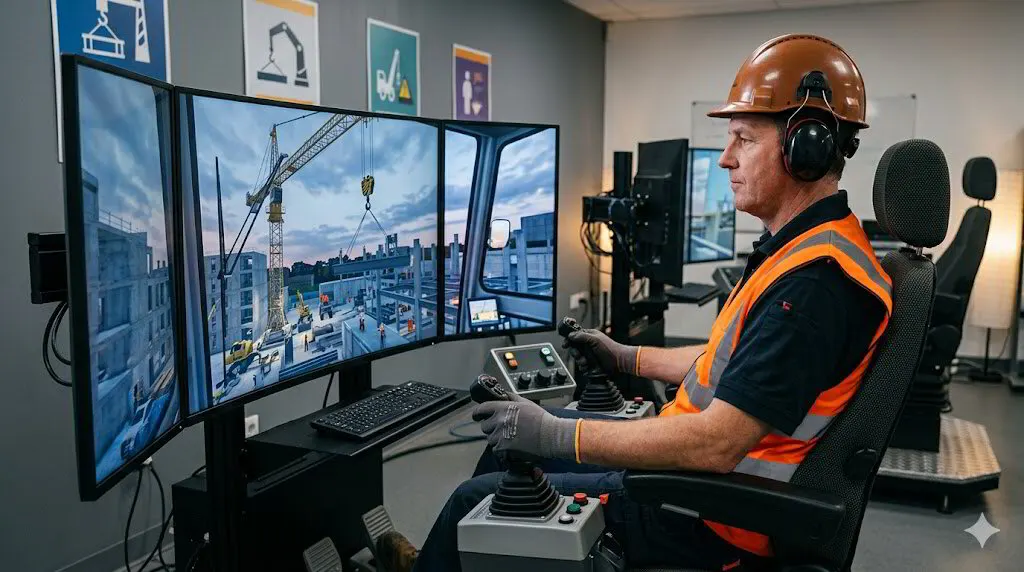
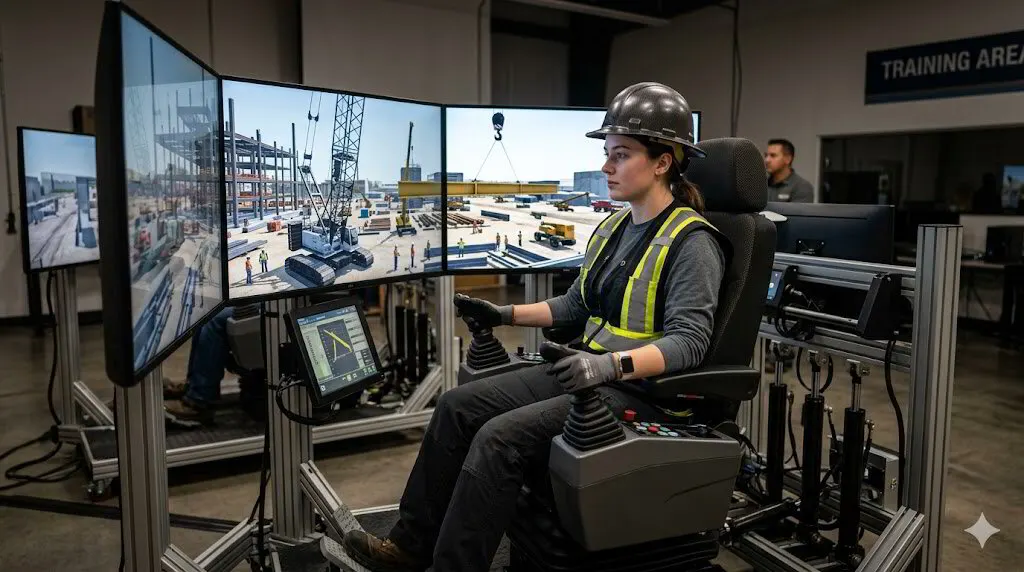
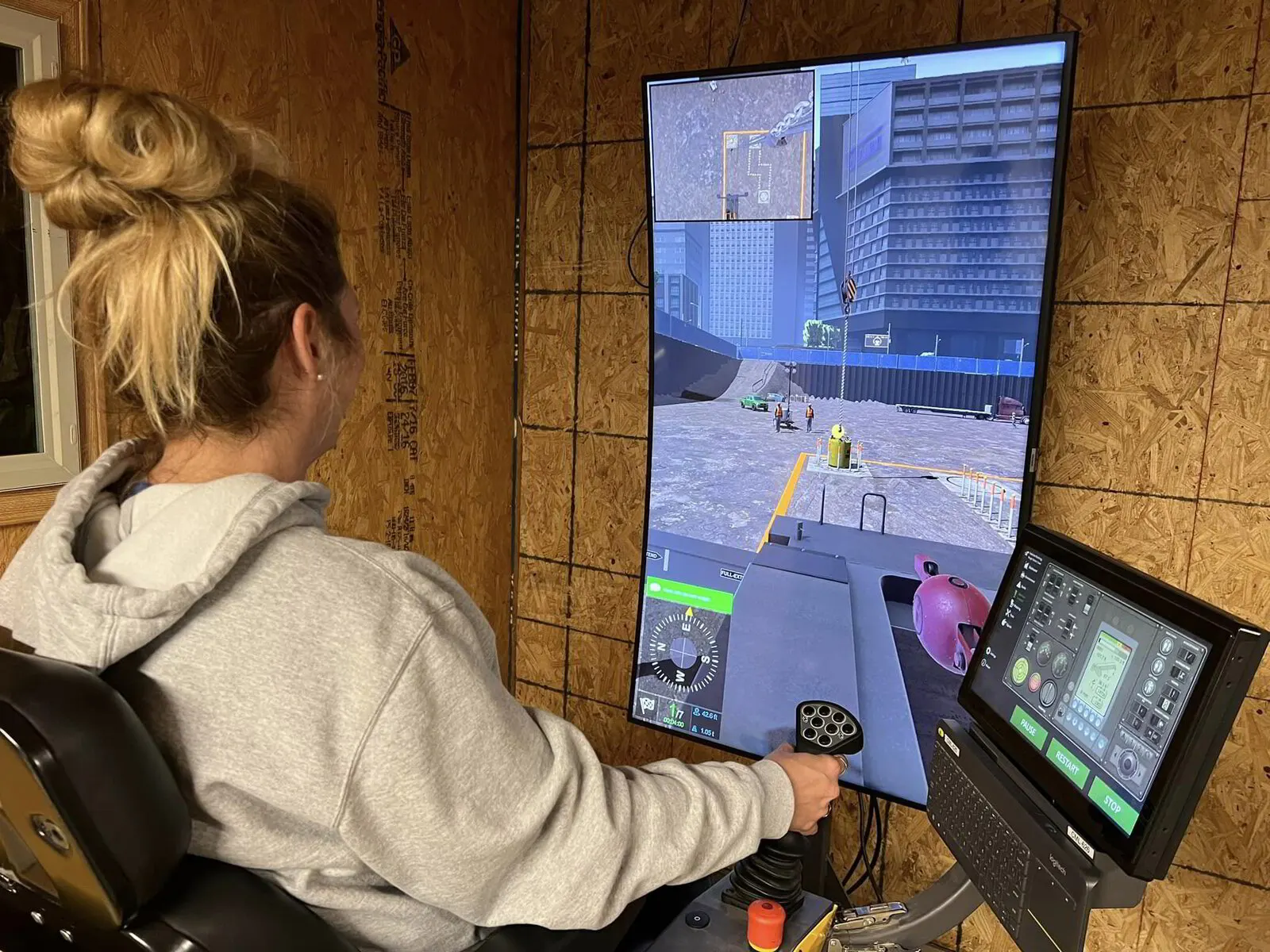
Crane simulators have become a normal part of operator training. They let a new student learn control coordination, practice emergency responses and make mistakes with no risk to people or equipment. Our classroom in Seagoville has a crane simulator, and new students use it before and alongside seat time in the yard.
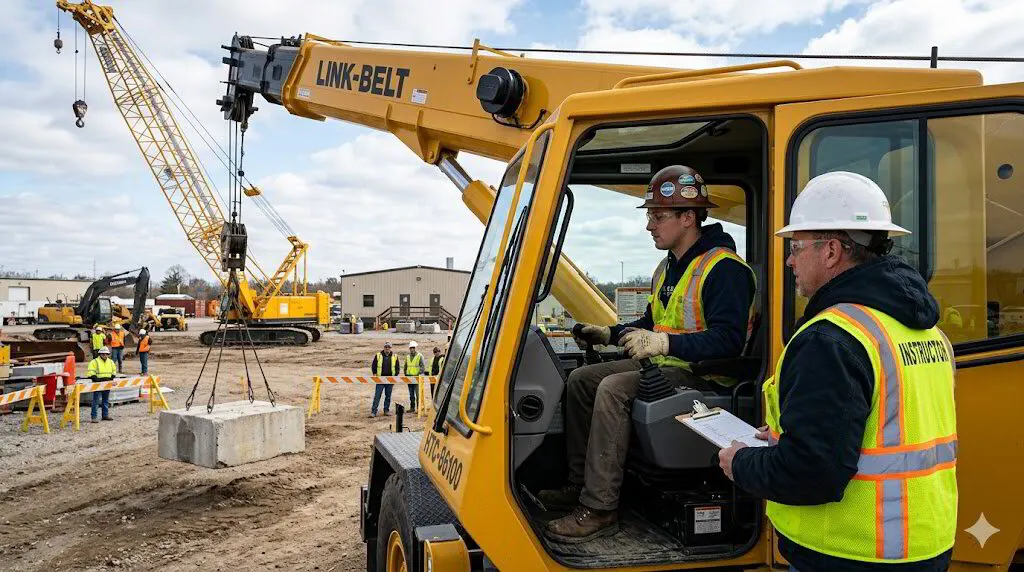
Simulators don't replace real cranes. The way a real boom deflects, the sound of the engine under load and the feel of ground under the outriggers still have to be learned in a real seat, which is why our training yard has telescopic, lattice boom and tower cranes.
What hasn't changed
Ground still fails. Wind still catches loads. Signals still get missed. Every new system adds information, but the operator still decides. The core of training stays the same: load charts, set-up, controlled operation and communication with the crew. New operators who want that foundation usually start with Mobile Crane Operations Fixed/Swing Cab 120 Hours. If you want to learn a modern lattice crawler, see Mobile Crane Operations Lattice 40 Hours.
Questions about crane technology
If a crane has a load moment indicator, do I still need to read the load chart?
Yes. The indicator relies on the configuration entered into it. Operators must verify capacity from the chart, and NCCCO written exams test chart reading directly.
Does simulator time count as seat time?
Simulators are a training tool for building control skills. Your NCCCO practical exam is on a real crane, so real seat time remains essential.
What does OSHA say about a broken anti-two-block device?
29 CFR 1926.1416 sets rules for operational aids, including temporary alternative measures and repair timelines when an aid is not working. Follow the rule and the manufacturer's instructions.