
Introduction
The construction industry continues to evolve with technological advancements that prioritize both efficiency and safety. Among the most critical aspects of construction operations is crane operation, where precision, skill, and safety awareness can mean the difference between project success and catastrophic failure. Traditional crane operator training methods, while effective, often present challenges including high costs, safety risks during learning phases, and limited exposure to diverse operational scenarios.
In recent years, the integration of advanced simulation technology has revolutionized how professionals approach crane operator training. These sophisticated systems provide aspiring operators with immersive, risk-free environments to develop essential skills before stepping into real-world scenarios. Understanding how crane simulators enhance operator skills has become crucial for training institutions, construction companies, and individual professionals seeking comprehensive preparation for NCCCO certification.
Modern crane simulators offer unprecedented opportunities to practice complex maneuvers, experience challenging weather conditions, and respond to emergency situations without the inherent risks associated with actual equipment operation. This technological advancement represents a significant leap forward in construction safety protocols, enabling operators to build confidence and competency through repeated practice in controlled environments. As the construction industry continues to prioritize safety and efficiency, crane simulators have emerged as indispensable tools for developing skilled, safety-conscious operators who contribute to safer construction practices across all project types.
Understanding Crane Simulators
Crane simulators represent sophisticated technological solutions designed to replicate real-world crane operation experiences through advanced virtual environments. These comprehensive training systems utilize cutting-edge hardware and software combinations to create immersive experiences that closely mirror actual crane operation conditions. Modern simulators incorporate realistic controls, visual displays, motion platforms, and audio feedback systems that collectively provide students with authentic operational experiences without the associated risks of working with actual heavy machinery.
The evolution of simulator technology has produced several distinct categories tailored to specific crane types and operational requirements. Mobile crane simulators focus on teaching operators the complexities of truck-mounted and rough-terrain crane operations, including setup procedures, load calculations, and maneuvering in confined spaces. These systems emphasize the unique challenges associated with mobile crane operations, such as outrigger positioning, ground conditions assessment, and coordination with rigging and signal-person teams during complex lifting operations.
Tower crane simulators address the specialized requirements of high-rise construction projects, where operators must master precise load placement at significant heights while managing wind conditions and coordinating with multiple ground crews. These advanced systems simulate the unique perspectives and operational challenges inherent in tower crane work, including climb procedures, load swing management, and emergency response protocols specific to elevated operations.
Lattice crane simulators cater to heavy lifting applications common in industrial construction, power plant installation, and infrastructure projects. These specialized training systems focus on the complexities of operating large-capacity lattice boom cranes, including boom assembly procedures, counterweight management, and coordination of multiple crane operations for exceptionally heavy lifts.
Recent technological advancements have significantly enhanced simulator capabilities, incorporating virtual reality headsets, haptic feedback systems, and artificial intelligence-driven scenario generation. These innovations create increasingly realistic training environments that adapt to individual learning patterns and provide personalized skill development pathways for aspiring crane operators seeking comprehensive preparation for professional certification and real-world application.
The Benefits of Using Crane Simulators
The implementation of crane simulators in training programs delivers substantial benefits that extend far beyond traditional instructional methods. Enhanced skill development represents perhaps the most significant advantage, as simulators provide unlimited opportunities for repetitive practice without equipment wear, fuel costs, or safety concerns. Students can repeatedly practice complex maneuvers, emergency procedures, and precision placement operations until movements become instinctive, resulting in more confident and competent operators.
Understanding how crane simulators enhance operator skills becomes evident through their ability to accelerate learning curves while maintaining comprehensive safety protocols. Simulators enable students to experience dangerous scenarios safely, including equipment malfunctions, adverse weather conditions, and emergency response situations that would be impossible or extremely risky to recreate during traditional training sessions. This exposure builds critical thinking skills and emergency response capabilities that prove invaluable during real-world operations.
Risk reduction and safety improvement constitute fundamental advantages of simulator-based training programs. By allowing operators to make mistakes and learn from consequences in virtual environments, simulators eliminate the potential for accidents, property damage, or injuries during the learning process. This approach enables instructors to introduce challenging scenarios progressively, building operator confidence while maintaining absolute safety standards throughout the training progression.
Cost-effectiveness represents another compelling benefit when comparing simulator training to traditional methods. While initial simulator investments require substantial capital, the long-term operational costs prove significantly lower than maintaining fleets of training cranes, fuel expenses, equipment maintenance, and insurance requirements. Additionally, simulators enable training regardless of weather conditions, maximizing instructional time and reducing schedule disruptions common with outdoor equipment-based training programs.
Realistic scenario training capabilities allow simulators to expose operators to diverse operational conditions that might take years to encounter through traditional training methods. Virtual crane training environments can instantly replicate various job site conditions, load types, weather scenarios, and equipment configurations, providing comprehensive exposure to operational variables. This diversity ensures operators develop versatile skills applicable across multiple construction environments and project types.
Furthermore, simulators provide detailed performance analytics and progress tracking capabilities that enhance both individual learning outcomes and instructor effectiveness. These systems generate comprehensive reports on operator performance, identifying specific areas requiring additional attention while documenting skill development progression for certification purposes and continuing education requirements.
Comparison: Simulators vs. Real-World Training
The evaluation of simulator training versus traditional real-world instruction reveals distinct strengths and limitations inherent in each approach. Simulator-based training excels in providing safe, controlled environments where operators can develop fundamental skills without risk exposure. These systems offer unlimited practice opportunities, instant reset capabilities for repeated exercises, and exposure to scenarios that would be dangerous or impractical to recreate with actual equipment. Additionally, simulators provide consistent training conditions unaffected by weather, equipment availability, or site constraints.
However, simulator training cannot fully replicate certain aspects of real-world crane operation, including the physical sensations of equipment vibration, actual load dynamics, and environmental factors such as wind effects on crane stability. While advanced simulators incorporate motion platforms and sophisticated physics engines, experienced operators often note subtle differences between virtual and actual equipment responses that can only be fully understood through hands-on experience with real machinery.
Real-world training provides irreplaceable benefits including authentic equipment feel, genuine load handling experiences, and exposure to actual job site conditions that influence operational decisions. Traditional training methods enable operators to develop intuitive understanding of equipment capabilities, limitations, and responses under various operational conditions. The tactile feedback, equipment sounds, and environmental awareness gained through real-world training contribute significantly to operator confidence and competency development.
The optimal training approach combines both simulator and real-world instruction to maximize learning outcomes while minimizing risks and costs. Initial skill development through simulator training allows operators to master basic controls, understand operational principles, and practice emergency procedures safely before progressing to actual equipment operation. This progressive approach reduces the time required for real-world training while ensuring operators arrive at practical training sessions with foundational knowledge and basic competency.
Effective training programs typically begin with extensive simulator sessions covering fundamental operations, safety procedures, and theoretical knowledge application. Once operators demonstrate proficiency in virtual environments, they transition to carefully supervised real-world training that builds upon simulator-acquired skills while introducing authentic operational experiences. This combined approach optimizes both safety and learning effectiveness while preparing operators for comprehensive NCCCO certification examinations and professional practice requirements.
Case Studies: Successful Implementation of Crane Simulators
Several leading construction companies and training institutions have successfully integrated crane simulators into their educational programs, demonstrating measurable improvements in operator competency and safety outcomes. A major international construction contractor implemented comprehensive simulator training for their mobile crane operations, resulting in a forty-percent reduction in equipment-related incidents during the first year following implementation. The program combined initial simulator instruction with traditional hands-on training, enabling operators to develop confidence and competency more rapidly than previous training methods allowed.
The company's training director reported that new operators demonstrated significantly improved spatial awareness and load handling precision after completing simulator-based instruction. Students showed enhanced understanding of rigging and signal-person coordination, having practiced these interactions extensively in virtual environments before encountering real-world operational pressures. The simulator training also enabled instructors to identify and address individual learning challenges more effectively, personalizing instruction to optimize each operator's skill development progression.
A prominent crane operator training academy integrated tower crane simulators into their certification programs, achieving remarkable improvements in student preparation for NCCCO certification examinations. Instructors noted that simulator-trained students arrived at practical training sessions with advanced theoretical knowledge and basic operational competency, allowing more efficient use of actual equipment time.
Feedback from instructors consistently highlighted the value of simulators for teaching complex procedures safely and efficiently. One certified instructor noted that simulators enabled students to experience and respond to emergency scenarios multiple times, building confidence and competency that would require months of real-world experience to develop naturally. The ability to pause, review, and repeat challenging procedures proved invaluable for ensuring comprehensive understanding before progressing to actual equipment operation.
Student feedback revealed overwhelming positive responses to simulator training integration. Students appreciated the opportunity to practice operations repeatedly without time pressure or safety concerns associated with actual equipment use. Many students reported feeling significantly more confident when transitioning to real crane operation after extensive simulator practice. The immediate feedback and performance analysis provided by simulator systems helped students identify and correct operational errors quickly, accelerating their learning progression.
A heavy industrial construction company implemented lattice crane simulators for their specialized heavy lifting operations, achieving substantial improvements in project efficiency and safety performance. The program enabled operators to practice complex multi-crane lifts and coordination procedures in virtual environments before attempting these challenging operations on actual projects. This preparation resulted in reduced setup times, improved precision, and enhanced safety during critical lifting operations.
The company's safety manager reported that simulator-trained operators demonstrated superior hazard recognition and emergency response capabilities compared to traditionally trained personnel. The virtual training environment allowed operators to experience and respond to various emergency scenarios, building critical decision-making skills essential for safe heavy lifting operations. This enhanced preparation contributed to the company's achievement of their best safety record in company history during the first year following simulator implementation.
Practical Training Sessions and Equipment Practice
The integration of simulators into practical training sessions creates synergistic learning environments that maximize both safety and educational effectiveness. Modern training programs strategically combine simulator instruction with hands-on equipment practice to optimize skill development while minimizing risks and costs associated with traditional training methods. This approach enables instructors to introduce complex concepts and procedures through simulator technology before applying these skills with actual crane equipment.
Effective scheduling of practice time with simulators requires careful consideration of individual learning progression and specific certification requirements. Training programs typically allocate initial sessions to simulator-based instruction, allowing students to master fundamental controls, understand load dynamics, and practice safety procedures in risk-free environments. As students demonstrate competency in virtual operations, training schedules incorporate increasing amounts of actual equipment practice time, building upon simulator-acquired skills with authentic operational experiences.
Equipment operators consistently provide positive feedback regarding the value of simulator training for building confidence and competency before transitioning to real-world operations. Many operators report that simulator practice enabled them to understand crane capabilities and limitations more thoroughly than traditional training methods alone. The ability to practice challenging maneuvers repeatedly in virtual environments builds muscle memory and operational intuition that translates effectively to actual equipment operation.
Instructors utilize simulators to demonstrate proper techniques, illustrate safety principles, and provide immediate feedback on operator performance. The detailed analytics and performance tracking capabilities of modern simulators enable instructors to identify specific areas requiring additional attention, personalizing instruction to address individual learning needs. This data-driven approach ensures comprehensive skill development while optimizing training efficiency and effectiveness.
The combination of virtual crane training with practical sessions also enables training programs to accommodate larger class sizes while maintaining high-quality instruction standards. Simulators allow multiple students to practice simultaneously, maximizing facility utilization while providing individualized learning experiences. This efficiency enables training institutions to serve more students while maintaining the personalized attention essential for developing competent, safety-conscious crane operators prepared for professional certification and career advancement.
Moving Forward: The Future of Crane Training
The trajectory of crane simulator technology continues advancing rapidly, incorporating emerging technologies that promise to further revolutionize operator training methodologies. Virtual and augmented reality systems are becoming increasingly sophisticated, providing immersive experiences that blur the distinction between virtual and actual operational environments. These advancements enable training programs to create hyper-realistic scenarios that prepare operators for complex real-world challenges while maintaining absolute safety standards throughout the learning process.
Artificial intelligence integration represents a significant frontier in simulator development, enabling systems to adapt training scenarios dynamically based on individual operator performance and learning patterns. AI-driven simulators can identify specific skill deficiencies and automatically adjust training parameters to address these areas, optimizing learning outcomes while ensuring comprehensive competency development. This personalized approach promises to accelerate operator preparation while maintaining rigorous safety and performance standards essential for professional certification.
The evolution of simulator technology directly impacts how crane simulators enhance operator skills by providing increasingly sophisticated training environments that replicate real-world complexity with unprecedented accuracy. Advanced physics engines, enhanced graphics capabilities, and improved haptic feedback systems create training experiences that closely approximate actual crane operation while maintaining the safety and cost advantages inherent in virtual training environments.
Continuous learning and certification requirements in the construction industry align perfectly with simulator capabilities for ongoing professional development. Modern simulators can provide refresher training, introduce new equipment types, and deliver specialized instruction for unique operational scenarios without the logistical challenges associated with traditional training methods. This flexibility enables operators to maintain current certifications while expanding their capabilities to meet evolving industry demands.
The role of simulators in workforce development extends beyond individual operator training to encompass comprehensive team coordination exercises. Advanced simulator systems can accommodate multiple operators simultaneously, enabling training programs to practice complex multi-crane operations, rigging and signal-person coordination, and emergency response procedures that require seamless teamwork. This collaborative training approach prepares entire crews for complex construction projects while building communication and coordination skills essential for safe, efficient operations.
Industry trends indicate increasing integration of simulator technology into standard training curricula, with many organizations recognizing the substantial benefits these systems provide for developing competent, safety-conscious operators. As simulator technology becomes more accessible and affordable, smaller training institutions and construction companies can implement these advanced training tools, democratizing access to high-quality crane operator education across the industry.
Conclusion
The integration of crane simulators into operator training programs represents a transformative advancement in construction industry education and safety practices. Through comprehensive examination of simulator capabilities, benefits, and real-world applications, it becomes clear that understanding how crane simulators enhance operator skills is essential for modern training institutions, construction companies, and aspiring operators seeking comprehensive preparation for professional careers in crane operation.
The evidence overwhelmingly supports simulator technology as a valuable complement to traditional training methods, providing safe environments for skill development while reducing costs and risks associated with equipment-based instruction. The combination of virtual and practical training creates optimal learning conditions that prepare operators for NCCCO certification success and long-term career advancement in the construction industry.
As simulator technology continues evolving, incorporating advanced features and capabilities, the potential for enhanced operator preparation and improved construction safety outcomes grows exponentially. Organizations that embrace these technological advancements position themselves at the forefront of industry best practices while contributing to the development of highly skilled, safety-conscious crane operators essential for successful construction projects.
Miller Crane Works offers comprehensive crane operator certification programs that integrate cutting-edge simulator technology with hands-on practical training. Our expert instructors combine virtual crane training with real-world experience to prepare you for NCCCO certification success and professional excellence. Whether you're pursuing mobile crane, tower crane, or lattice crane certification, our programs provide the skills and knowledge essential for safe, successful crane operation.
Visit millercraneworks.com to explore our course offerings and take the first step toward advancing your crane operation career with industry-leading training that prioritizes both competency and safety.
-
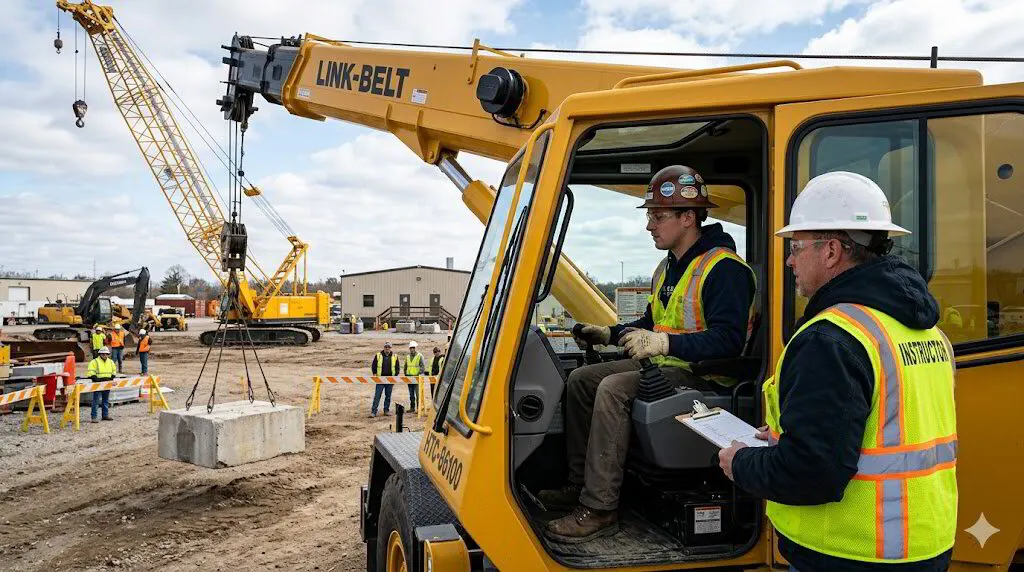 The Ultimate Guide to Crane Operator Field Training Programs: Certification & Career SuccessIn the ever-evolving construction industry, the need for certified crane operators is paramount, making effective…
-
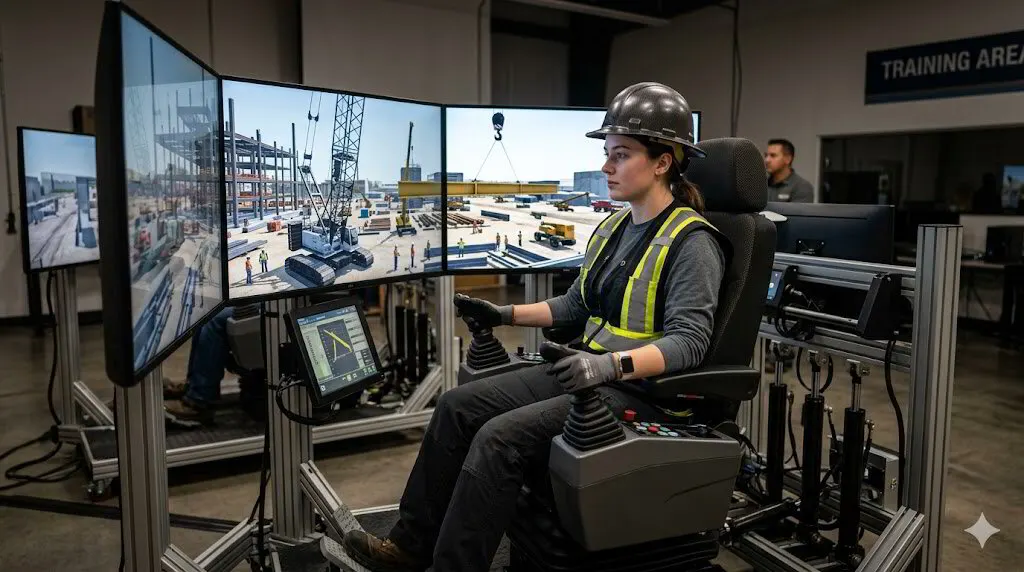 Unlocking Efficiency: The Benefits of Crane Simulator Training for Aspiring OperatorsCrane simulator training is revolutionizing the skill development of aspiring crane operators, offering a safe and…
-
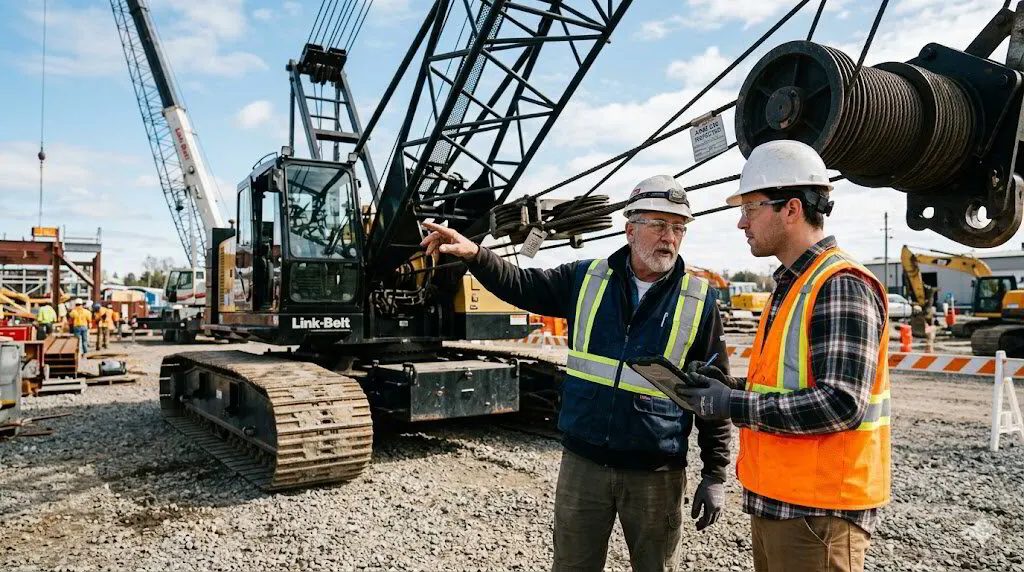 Understanding ASME B30 Crane Safety Regulations: A Comprehensive Comparison for OperatorsNavigating the complexities of crane operation requires a solid understanding of safety regulations, and the ASME B30…