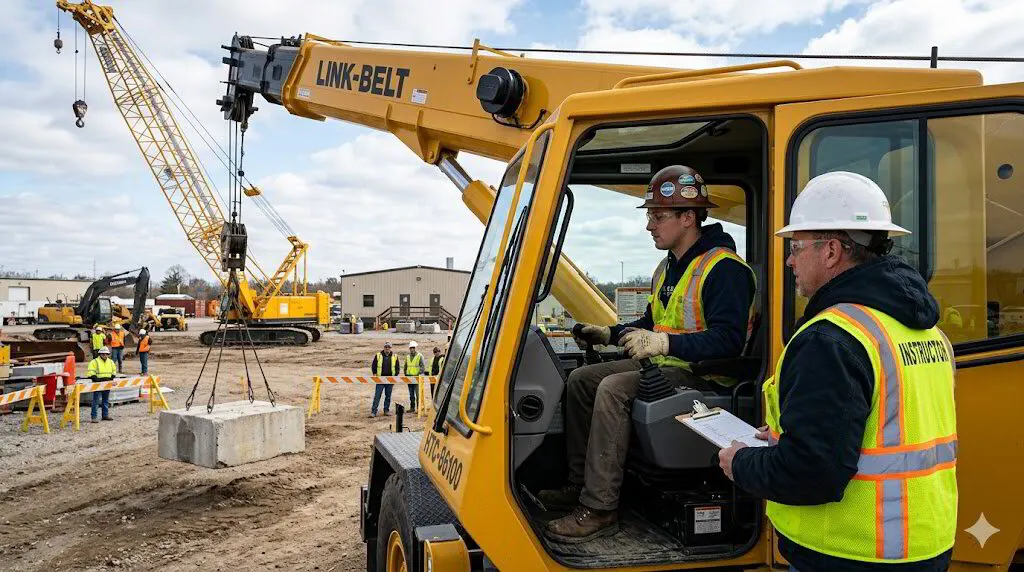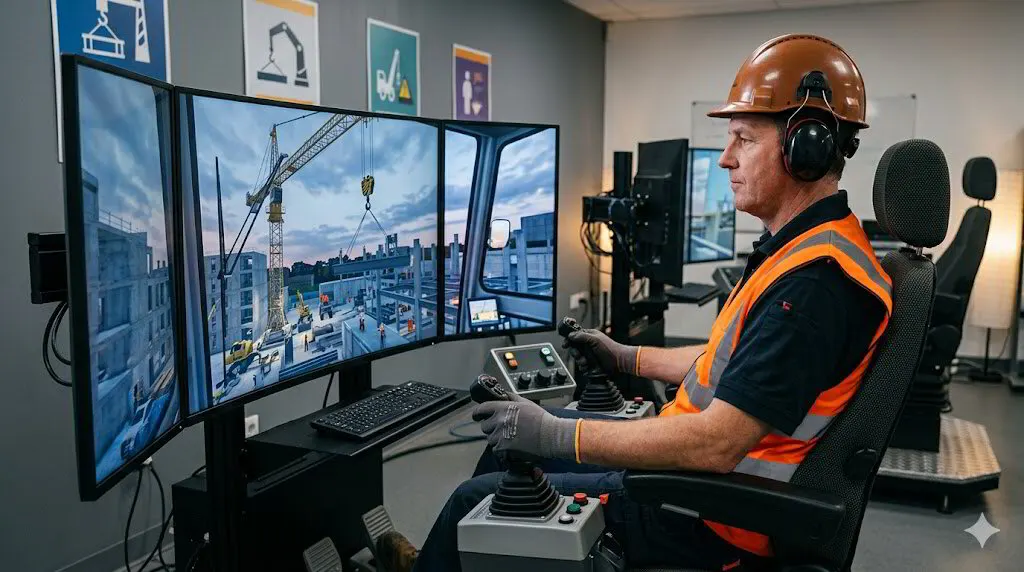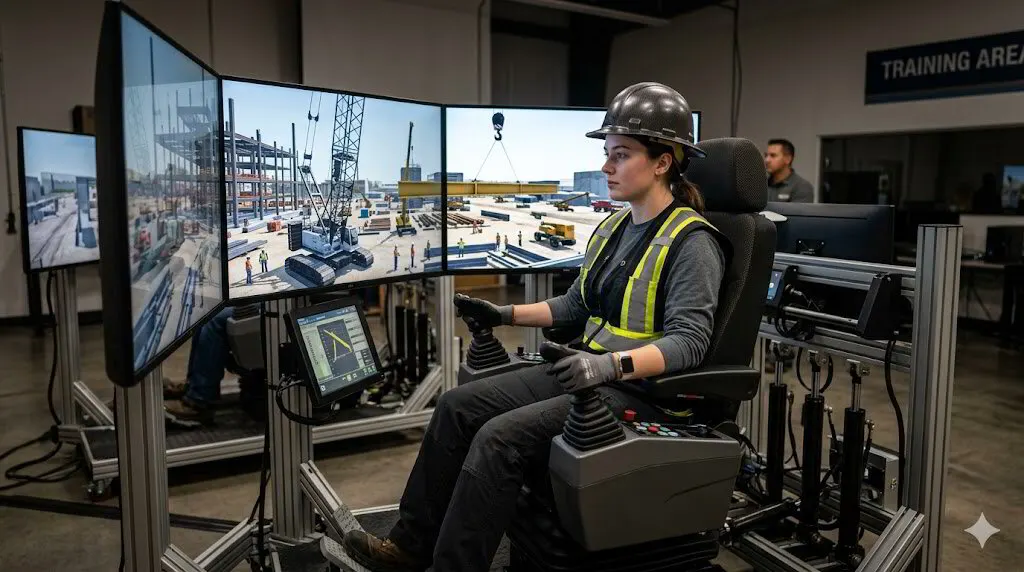
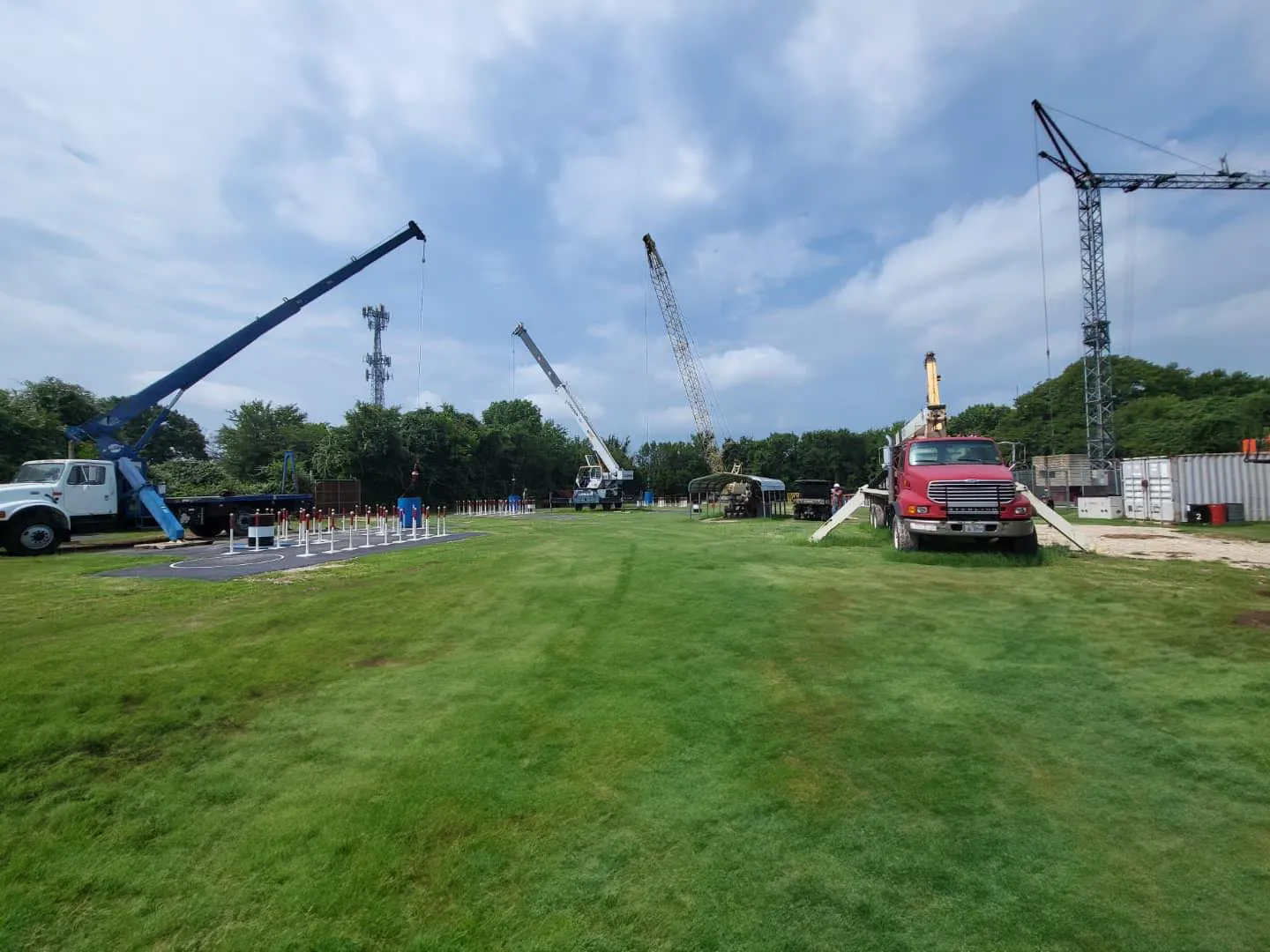
Picking a course starts with one question that has nothing to do with the school: what crane do you want to be running, and where? Once you know that, the choice narrows quickly.
Start with the crane, not the course
Crane certification is issued by machine type, so the first decision is which type matches the work you want. Here is how the main options line up with common kinds of jobs:
| Kind of work | Crane you'd usually run | Credential to aim for |
|---|---|---|
| General commercial and industrial construction, material deliveries, mechanical units on roofs | Telescopic hydraulic crane (rough-terrain, all-terrain, truck-mounted) | NCCCO mobile crane, telescopic swing cab or fixed cab |
| Bridges, heavy civil, refineries and plant work, large steel | Lattice boom crawler | NCCCO lattice boom |
| High-rise buildings, large hospital or campus projects | Tower crane | NCCCO tower crane |
| Any crane job, working from the ground | None: you rig loads and direct the operator | NCCCO Rigger Level I and Signalperson |
If you don't know yet, look at job postings in the area where you want to live and note which cranes they mention. That is better information than any general advice.
Then decide on course length
Your experience level decides how long a course you need.
No crane experience
Plan on the longer course. Learning controls, set-up and load charts from zero takes many hours in the seat, and a short course leaves little room to build that skill before testing. Our 120-hour fixed/swing cab course exists for this situation.
Some seat time, no card
If you've run cranes under supervision, or held a certification that lapsed, a 40-hour course is often enough to sharpen skills and prepare for the exams.
Already certified, adding a type
Operators adding lattice or tower crane to an existing card can often take a 20-hour or 40-hour course, depending on how much time they have on that type of machine.
Don't overlook rigging and signaling
Rigger and signal person training is sometimes treated as a side course, but it can be the right first step. It costs less, takes far less time, and gets you hired onto a crane crew, where you learn by watching experienced operators every day. OSHA also requires riggers and signal persons on many lifts to be qualified, so contractors value people who can show it.
It also makes better operators. An operator who understands sling angles, hitch types and load center of gravity makes better decisions in the cab.
Four questions to settle it
- What crane does the work I want use? That decides the certification.
- How many hours have I actually spent at the controls? That decides the course length.
- How will I pay? GI Bill benefits, workforce funds, employer sponsorship and self-pay all work differently. See funding options.
- Can I commute to Seagoville, or do I need housing? If you live far away, a premium course with optional room and board may make more sense than a standard course plus a hotel.
If you can answer those, a short phone call with us usually settles the rest. You can also browse every program side by side on the courses page.
Common mistakes when choosing
- Picking the shortest course to save money when you have no seat time. If you aren't ready for the practical exam, retesting costs time and money too.
- Choosing a crane type nobody near you uses. A tower crane card helps most where tower cranes are going up.
- Ignoring the written exams. Load chart questions trip up people who can run a crane well. Make sure your course includes real classroom time.
- Waiting on funding without asking. Workforce and VA approvals take time. Start the paperwork early.
Where our courses fit
For first-time operators heading into telescopic work, the Mobile Crane Operations Fixed/Swing Cab 120 Hours course is the usual choice. If tower cranes are your goal, look at Tower Crane Operations 40 Hours. For a start on the ground side of a crew, Rigger/Signal Person Certification Level I 28 Hours prepares you for NCCCO Rigger Level I and Signalperson. Every course is taught at our Seagoville yard, which is also an NCCCO practical exam site.
Questions we hear
Should I start with mobile crane or tower crane certification?
Start with the crane used on the work you want. Telescopic mobile cranes are the most common on general construction sites, while tower cranes are concentrated on large building projects.
Is a 40-hour course enough if I've never run a crane?
Usually not. The 40-hour courses suit people who already have seat time. Beginners generally need the longer course to build skill before the practical exam.
Is rigger and signal person training worth it if I want to be an operator?
Often, yes. It can get you onto a crane crew sooner, and understanding rigging makes you a better operator later.