
North Texas can throw a hard freeze, a line of thunderstorms and a 100-degree afternoon at a job in the same year. Each one affects a crane differently. Here is how operators think through them.
Wind: the condition that ends the most lifts
Wind pushes on the boom and, more importantly, on the load. A large flat load such as a wall panel, roof truss bundle or HVAC unit acts like a sail. Even when the crane is well within its chart capacity, a gust can swing that load into people or structures, or side-load the boom in a way the chart doesn't account for.
What operators do about it:
- Check the manufacturer's limits. The operator's manual and load chart notes say what wind speeds the crane is rated for and when capacity must be reduced or work stopped.
- Measure at height. Wind at the boom tip is usually stronger than on the ground. An anemometer on the boom tells you what the load will feel.
- Use tag lines to control rotation, with the people holding them positioned clear of the load path.
- Plan sail-area lifts for calm windows, often early morning.
If gusts are building or the load starts to swing in a way you can't control, set it down. A lift can always be rescheduled.
Lightning and storms
A raised boom is the tallest thing on many job sites. When thunder is within range, the usual practice is to stop lifting, lower the load, and get people away from the crane until the storm has clearly passed. Many contractors set a specific waiting period after the last thunder; follow your site's rule.
After a severe storm, don't climb back in and pick up where you left off. Walk the crane: look for ground washout under outriggers or tracks, debris in the swing radius, and damage to the boom, wire rope or electrical systems. If the crane was exposed to high winds, a lightning strike or flooding, it may need an inspection by a qualified person before use.
Rain and ground conditions
Rain rarely stops a crane by itself. What it does to the ground is the real problem. Blackland clay common around Dallas County swells and softens when wet, and a pad that held fine yesterday can sink under an outrigger today.
OSHA's crane standard requires ground conditions to be firm, drained and graded well enough, together with supporting materials like blocking and mats, to meet the manufacturer's requirements (29 CFR 1926.1402). After heavy rain:
- Re-check every outrigger and mat for settling before the first lift.
- Look for standing water near the set-up and soft spots where trucks have rutted the site.
- Recheck level. A crane that has settled out of level loses capacity over the side.
- Ask the site's controlling contractor about underground utilities or voids that rain may have exposed.
Cold mornings
Texas freezes don't last long, but they happen. On a cold start:
- Warm up the hydraulics. Cold oil makes functions sluggish and jerky. Follow the manufacturer's warm-up procedure and cycle the functions without a load first.
- Look for ice on the boom, ladders, steps, cab glass and the wire rope. Ice adds weight, hides damage and makes footing dangerous.
- Check mats and blocking. Frozen ground can feel solid at dawn and soften by noon as it thaws.
- Dress for the cab and the ground. Gloves you can feel the controls through matter.
Heat
Summer heat is the weather North Texas operators deal with most. It wears on people more than on the machine. A cab in direct sun gets very hot, and a tired, dehydrated operator makes rough inputs and misses signals. Drink water throughout the shift, take breaks in shade, and watch your crew for signs of heat illness: dizziness, confusion, heavy sweating or no sweating at all. OSHA's heat exposure page lists the warning signs and first aid.
On the machine side, watch hydraulic oil and engine temperatures and keep radiators and coolers clear of dust.
Building weather judgment in training
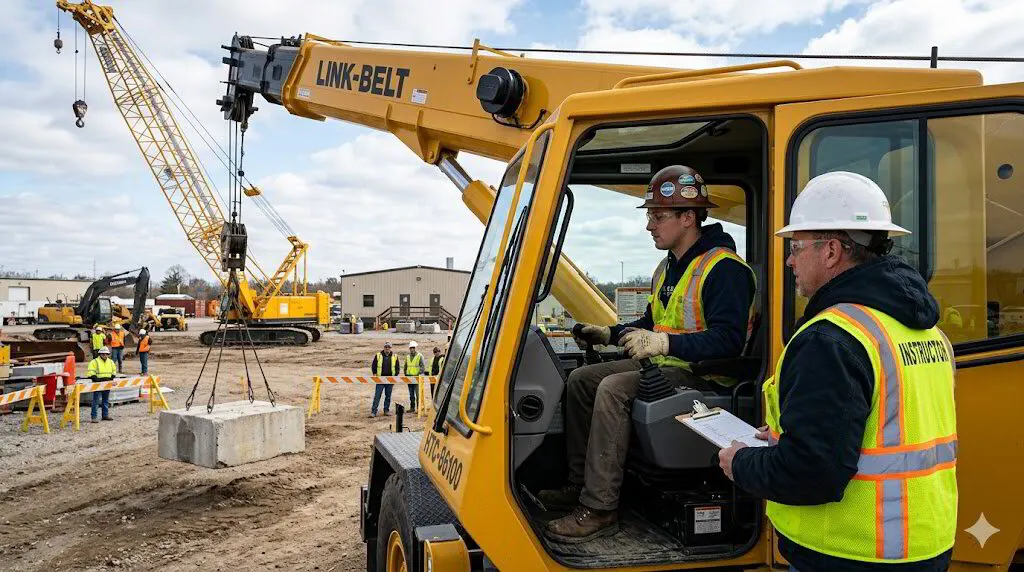
Students at our Seagoville yard train outdoors through Texas weather, within safe limits, so they learn how a crane feels on a cold start or a hot afternoon. Classroom lessons cover reading load chart notes, ground bearing and the regulations behind these decisions. The Mobile Crane Operations Fixed/Swing Cab 120 Hours course gives the most time to build this judgment. Ground crew members learn tag line use and stop signals in Rigger/Signal Person Certification Level I 28 Hours.
Questions we hear
Who decides when it's too windy to lift?
The crane manufacturer sets the wind limits, and the operator and the site's competent person apply them. Any operator can stop a lift that looks unsafe.
Why measure wind at the boom tip instead of the ground?
Wind speed usually increases with height, so ground readings can understate what the boom and load are actually experiencing.
What should I check before lifting after heavy rain?
Re-check outriggers, mats and blocking for settling, confirm the crane is still level, and look for washouts or soft spots near the set-up.