
Contractors ask for NCCCO cards because of a federal rule. Knowing what that rule says, and what it doesn't, helps operators and employers make better training decisions.
Where the rule comes from
Crane work on construction sites is governed by OSHA's Cranes and Derricks in Construction standard, 29 CFR 1926 Subpart CC. Published in 2010, it replaced much older rules and covers set-up, ground conditions, power line safety, inspections, signals and operator qualification.
The operator certification requirement was the part that took longest to settle. OSHA pushed its deadline back more than once and in 2018 issued a final rule that clarified how certification and employer evaluation fit together. The evaluation and documentation parts of that rule took effect in early 2019.
Who needs to be certified
The standard applies to power-operated equipment that can hoist, lower and horizontally move a suspended load, when it's used in construction. That includes the telescopic mobile cranes, lattice crawlers and tower cranes most people picture. Some equipment and uses are excluded, and very small equipment rated at 2,000 pounds or less follows its own section. Cranes used outside construction, in a plant's routine maintenance for example, fall under OSHA's general industry rules instead.
If you're not sure whether a job counts as construction, ask the controlling contractor's safety staff. For most people running cranes on building, civil or industrial construction sites, the answer is yes.
The four ways to meet the requirement
Section 1926.1427 lists the options:
- Certification by an accredited testing organization. NCCCO is the most widely recognized. This certification is portable from employer to employer.
- An audited employer program. A company can qualify its own operators through an audited program, but that qualification only counts while the operator works for that employer.
- U.S. military qualification, which applies to military employees.
- State or local licensing, where a state or city has its own operator license that meets the federal minimums.
For a civilian operator who wants to work for different contractors, option one is the practical choice. That is why NCCCO cards are what most job postings ask for.
Certification plus evaluation
The 2018 rule made a point that is still misunderstood: certification alone is not enough. Employers must also evaluate each operator's ability to safely run the equipment they'll be assigned, considering the crane's size and configuration and the work involved, and keep a written record of that evaluation. The rule names what the record must include, such as the operator's name, the evaluator's name and signature, the date and the equipment.
The same section says the employer pays for the certification its operators are required to hold. Before their certification is complete, operators-in-training may run cranes only under the conditions the rule sets, including continuous monitoring by a qualified trainer.
Certification by type, and Texas specifics
Certification is issued by crane type. NCCCO may also note capacity, but OSHA's current rule doesn't require certification by capacity. Practically, you need a card for the type of crane you run: telescopic, lattice or tower, with the right cab configuration.
Texas does not have a separate statewide crane operator license, so in most of the state the federal requirement is the one that applies. Local rules, project owners and large contractors can add requirements on top, so read the job's specifications.
Getting certified through our courses
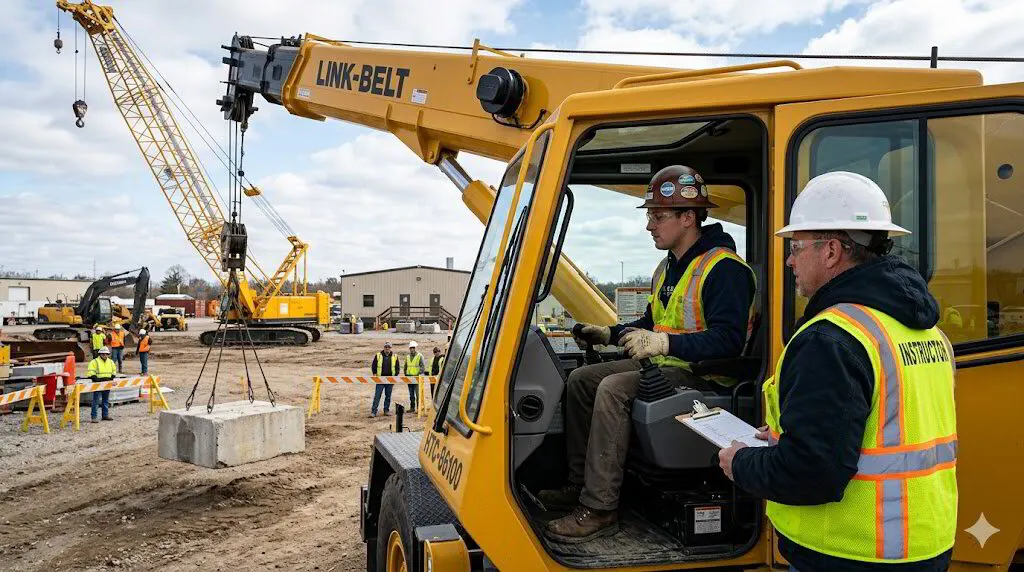
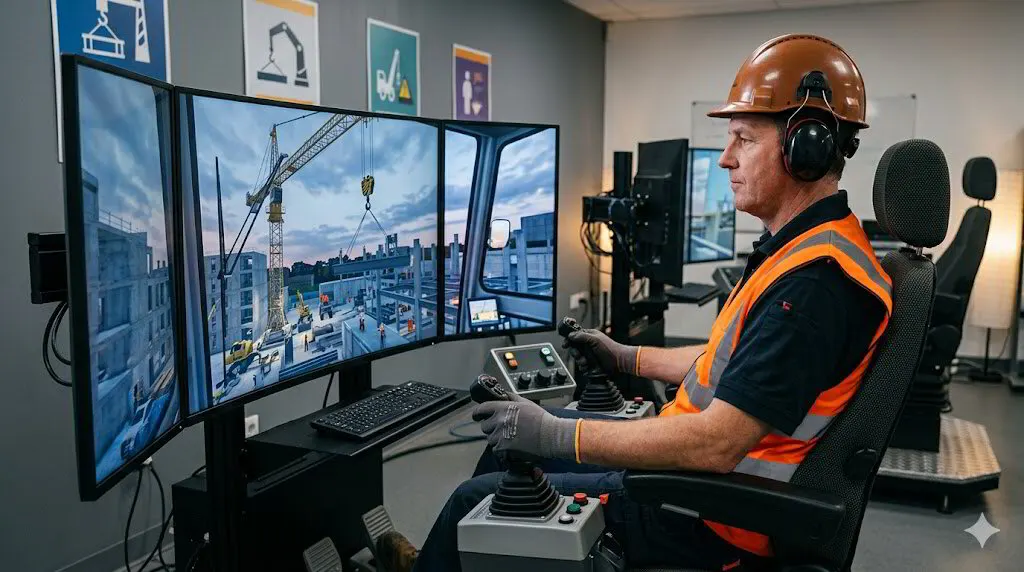
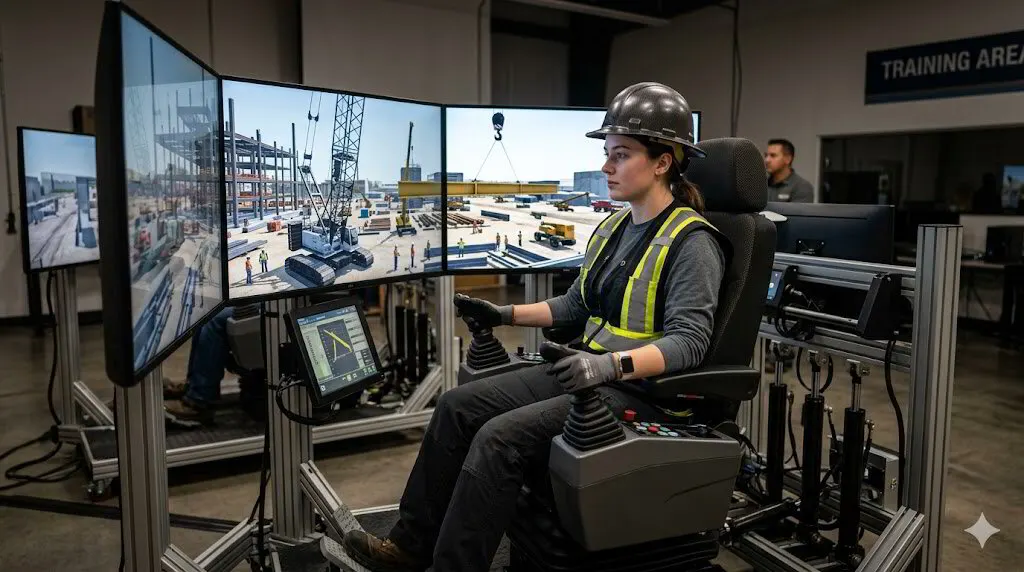
We prepare students for NCCCO certification, the accredited route most contractors expect. Written exam preparation happens in our classroom, and the practical exam is given in our Seagoville yard. New operators usually start with Mobile Crane Operations Fixed/Swing Cab 120 Hours. For tower crane work, see Tower Crane Operations 40 Hours. Ground crews can meet the signal person and rigger expectations with Rigger/Signal Person Certification Level I 28 Hours.
Questions we hear
Does Texas require a state crane operator license?
Texas does not have a statewide crane operator license. Operators on construction sites follow the federal OSHA requirement, which most employers meet through NCCCO certification.
Does an employer-issued crane qualification follow me to a new job?
No. Qualification through an audited employer program only counts while you work for that employer. Accredited certification such as NCCCO is portable.
Do OSHA's rules require certification by crane capacity?
No. Under the current rule, certification by type is required. Capacity may be noted on a certification but is not required by OSHA.