If you are thinking about crane work, it helps to know what the job is like before you sign up for anything. Here is an honest picture: what the work involves, the different kinds of crane jobs, how people usually get started, and what tends to come next.
What the work involves
An operator's day starts well before the first lift. There is the shift inspection, the walk around the site, a look at the lift plan, and set-up: positioning the crane, extending outriggers on pads or mats, checking that the crane is level and entering the configuration into the load moment indicator. Then the lifting itself, which is a mix of routine picks and the occasional one that needs real planning.
Much of the job is communication. Operators work with riggers, signal persons, superintendents and other trades all day. It is also outdoor work in all seasons, with early starts, and on some jobs long days when a pour or a steel delivery cannot wait.
Different cranes, different careers
"Crane operator" covers several quite different jobs:
Telescopic mobile cranes
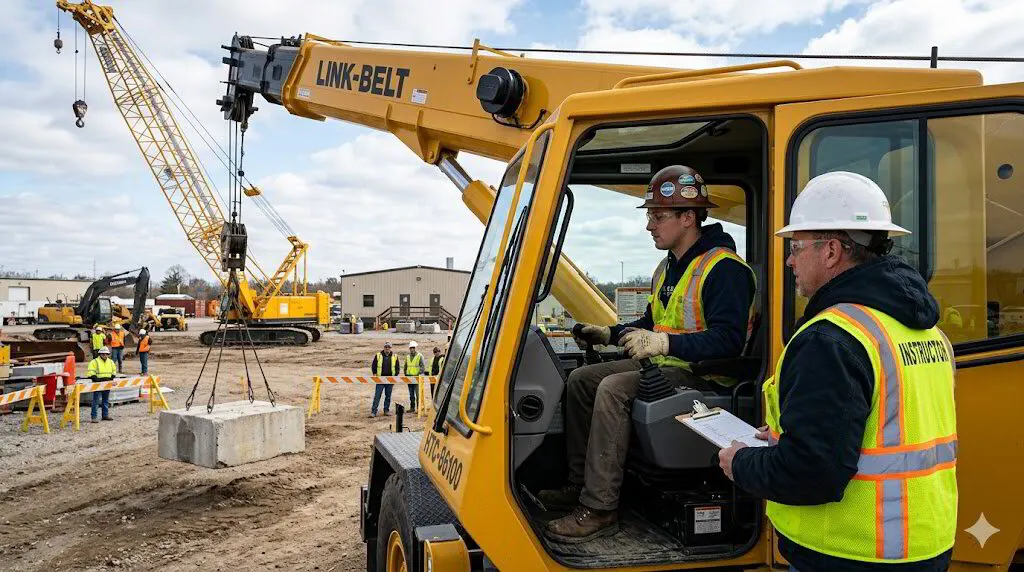
Rough-terrain and all-terrain hydraulic cranes do a huge range of work: setting steel, HVAC units, precast, tanks and equipment. Operators often move from site to site, sometimes several in a week, especially if they work for a crane rental company.
Lattice boom crawlers
These bigger machines stay on one project for longer and are common on bridges, plants, energy work and heavy civil jobs. Assembly and disassembly are a big part of the work.
Tower cranes
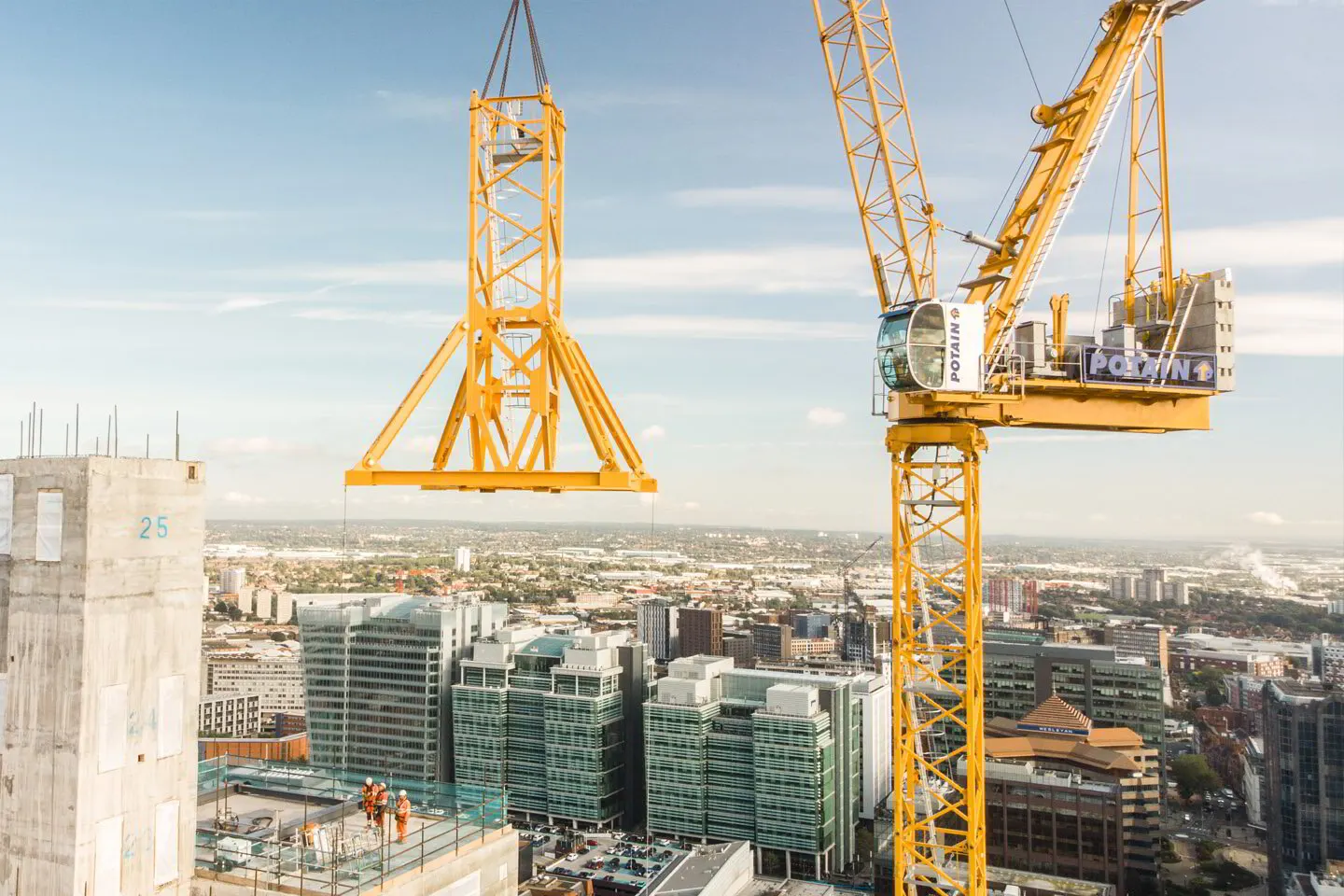
Tower crane operators work high above a building site, often on the same project for many months, climbing to the cab at the start of the shift and coordinating closely with the ground by radio.
Common ways in
There is no single entry route. People commonly start in one of these ways:
- Through a training course and certification. Someone with no crane background takes a long course, earns NCCCO certification and then looks for a first operator or operator-in-training role.
- From the ground crew. Riggers, signal persons and oilers learn the job from beside the crane, then train and test to move into the seat.
- From related trades. Heavy equipment operators, ironworkers and veterans with equipment experience often bring useful skills with them.
Whatever the route, employers will evaluate you on their cranes before you run them unsupervised, as OSHA requires.
What it takes
The traits that matter most are not physical strength. They are patience, steady hands, attention to detail and the willingness to say "stop" when something looks wrong. You need basic math for load charts, good depth perception, and the ability to stay focused through a long day. NCCCO also expects candidates to meet the physical requirements in ASME B30.5, such as adequate vision and hearing. Comfort with heights matters for tower cranes and for climbing on larger mobile cranes.
Where careers go from there
Many operators add certifications over time, moving from smaller telescopic cranes to larger ones, adding lattice or tower, or picking up rigging and signal certifications. With experience, some become lift directors who plan and run complex picks, crane supervisors, or trainers. Others prefer to stay in the seat for their whole career. Each added credential opens more of these options, but each also takes training, testing and hours on the right equipment.
Taking the first step with us
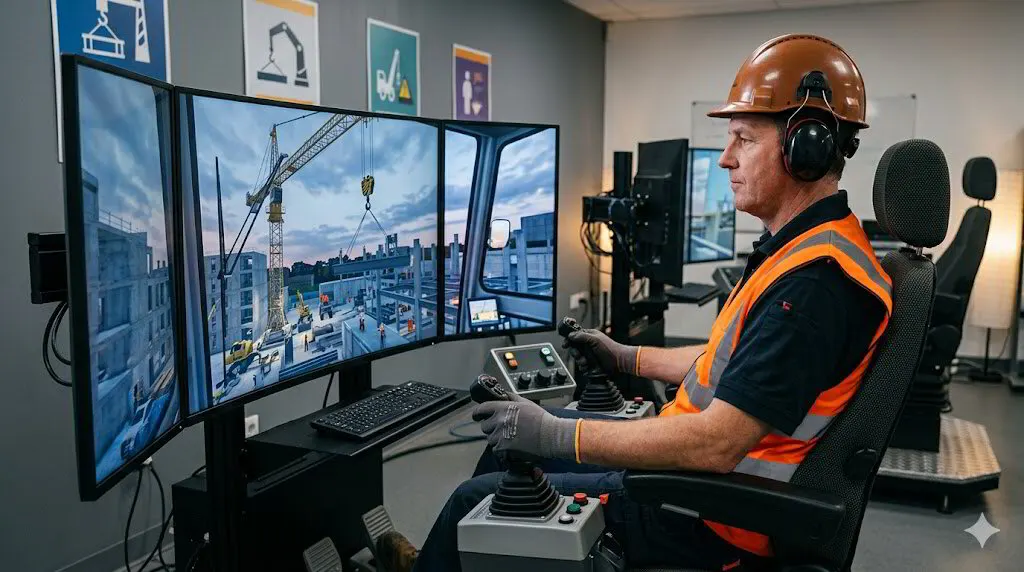
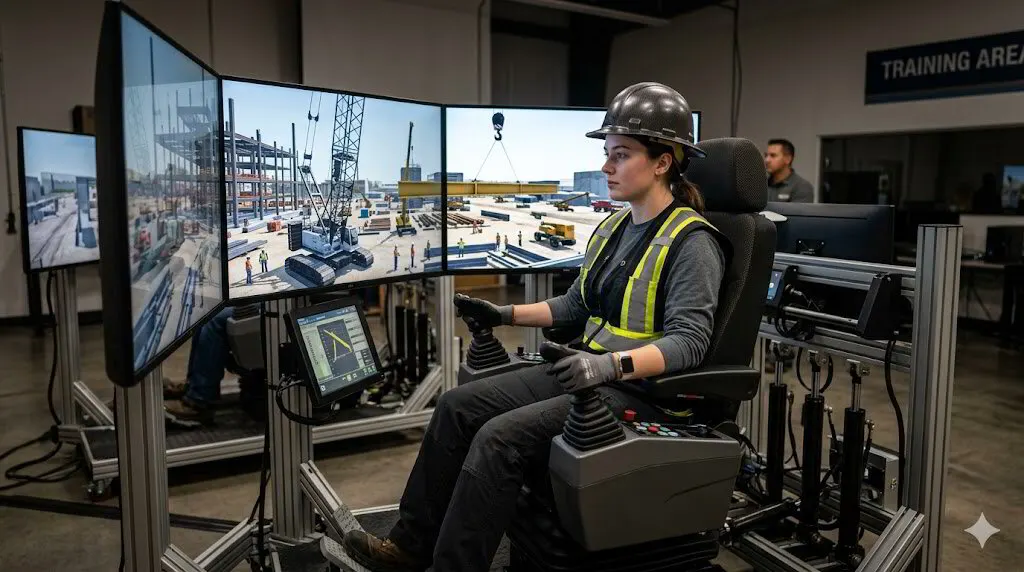
Miller Crane Works trains operators, riggers and signal persons at one facility in Seagoville, Texas, with a classroom, simulator and a yard holding telescopic, lattice and tower cranes. Newcomers usually begin with Mobile Crane Operations Fixed/Swing Cab 120 Hours. If you are drawn to bigger projects, ask about Mobile Crane Operations Lattice 40 Hours, and if you want to start on the ground side, Rigger/Signal Person Certification Level I 28 Hours. The admissions page covers how to enroll.
Questions about crane careers
Do I need construction experience to become a crane operator?
No, but it helps. People with no background can start through a full-length course, though they should expect to learn the job site as well as the crane.
Is crane operating seasonal work in Texas?
Construction in Texas runs year-round, though weather affects individual days. How steady the work is depends more on the employer and the type of projects than on the season.
Which crane type should I learn first?
Most people start on telescopic mobile cranes because they are used on so many kinds of jobs. Lattice and tower certifications are often added later.