
The construction industry in Texas continues to experience unprecedented growth, with towering skyscrapers, expansive infrastructure projects, and industrial developments reshaping the state's landscape. At the heart of these ambitious projects are skilled crane operators who safely maneuver massive loads and navigate complex lifting operations. However, operating heavy lifting equipment requires more than just experience it demands comprehensive training, proper certification, and unwavering commitment to safety protocols.
Understanding crane operator training requirements in Texas is crucial for aspiring operators, construction professionals, and companies seeking to maintain compliant workforces. The National Commission for the Certification of Crane Operators (NCCCO) sets the industry standard for crane operator certification, establishing rigorous testing and training protocols that ensure operators possess the knowledge and skills necessary for safe equipment operation.
Professional crane operation extends far beyond simply moving materials from point A to point B. Today's crane operators must understand load dynamics, weather considerations, equipment limitations, and complex safety regulations that govern Texas lifting operations. Proper training programs address these multifaceted requirements while preparing candidates for both written examinations and practical assessments. Whether you're pursuing initial certification or seeking to expand your credentials across multiple crane types, understanding Texas-specific training requirements forms the foundation for a successful career in heavy equipment operation.
Understanding Texas Crane Operator Training Requirements
Texas crane operator training requirements align with federal OSHA standards and NCCCO certification protocols, creating a comprehensive framework for safe equipment operation. The state mandates that crane operators working on construction sites must hold valid NCCCO certification or equivalent credentials, with specific requirements varying based on crane type and lifting capacity.
NCCCO certification Texas programs encompass both written and practical examinations designed to evaluate operator competency across multiple domains. Written examinations test candidates' understanding of load charts, rigging principles, safety regulations, and equipment- specific operational procedures. These comprehensive assessments cover topics ranging from basic physics principles affecting lifting operations to complex scenarios involving multiple crane coordination and specialized rigging techniques.
Practical examinations require candidates to demonstrate hands-on proficiency in actual crane operation, including pre-operational inspections, load handling procedures, and emergency response protocols. Texas lifting operations demand operators who can adapt to diverse environmental conditions, from coastal humidity affecting equipment performance to extreme heat impacting operational safety margins.
Training program components typically include classroom instruction covering regulatory compliance, equipment theory, and safety protocols. Candidates must complete minimum hour requirements that vary by crane type, with mobile crane certification requiring different preparation than tower or lattice crane credentials. Many programs integrate computer-based learning modules with traditional instruction methods, allowing flexible scheduling for working professionals.
Construction worker training standards in Texas emphasize continuous education and skill development. Operators must stay current with evolving regulations, technological advances, and industry best practices. Training providers must maintain accreditation through recognized organizations and demonstrate compliance with state and federal educational standards. This ensures that crane training programs deliver consistent, high-quality instruction that prepares operators for real-world challenges they'll encounter on Texas construction sites.
Types of Crane Operator Certifications
The crane operation industry encompasses diverse equipment types, each requiring specialized knowledge and certification credentials. Understanding available certification pathways helps aspiring operators choose appropriate training programs aligned with their career objectives and local market demands.
Mobile crane certification represents the most versatile credential, covering swing-cab and fixed-cab mobile cranes commonly used across Texas construction projects. These certifications qualify operators for telescopic boom cranes, truck-mounted units, and rough-terrain cranes frequently deployed in commercial construction, infrastructure development, and industrial
maintenance operations.
Tower crane certification focuses on stationary cranes used in high-rise construction and urban development projects. Tower crane operators must understand complex load path planning, coordination with multiple trades, and specialized safety protocols unique to vertical construction environments. Texas cities experiencing rapid urban growth create strong demand for qualified tower crane operators.
Lattice crane certification covers crawler cranes and conventional truck cranes featuring lattice boom construction. These powerful machines handle the heaviest lifting operations in industrial construction, power plant development, and infrastructure projects. Lattice crane operators require advanced rigging knowledge and sophisticated understanding of load dynamics affecting long-boom configurations.
Rigger and signal person certification complements crane operator credentials by ensuring proper communication and load preparation procedures. Rigger certification Texas programs teach candidates to select appropriate rigging hardware, calculate load weights and center of gravity, and establish safe lifting configurations. Signal person certification ensures clear communication between crane operators and ground personnel during lifting operations.
Heavy equipment certification pathways often include multiple crane types, allowing operators to maximize employment opportunities across diverse project types. Many professionals pursue combined certifications that qualify them for various crane configurations, increasing their value to employers and expanding potential career advancement opportunities.
Practical Training Sessions and Equipment Practice Time
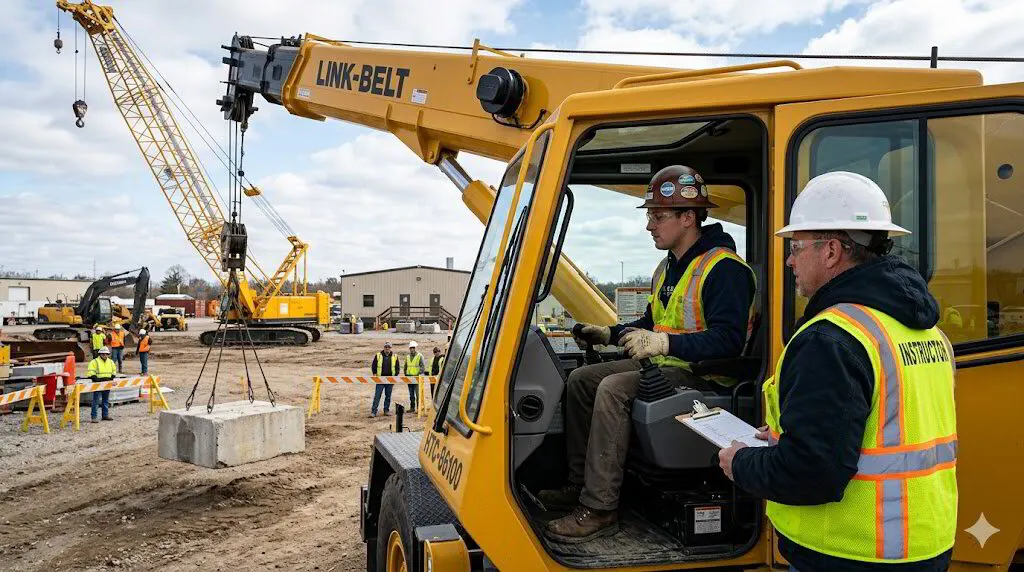
Hands-on training forms the cornerstone of effective crane operator education, bridging the gap between theoretical knowledge and real-world application. Practical training sessions provide candidates with essential experience operating actual equipment under controlled conditions, allowing them to develop muscle memory and confidence necessary for safe crane operation.
Miller Crane Works offers comprehensive practical training sessions utilizing diverse equipment types representative of machines operators encounter on Texas job sites. Training programs include extensive equipment practice time on mobile cranes, tower cranes, and lattice boom configurations, ensuring candidates gain exposure to various operational scenarios and equipment characteristics.
Practical training components cover pre-operational inspection procedures, teaching candidates to identify potential mechanical issues, hydraulic leaks, and structural concerns that could compromise operational safety. Students learn systematic inspection protocols that comply with manufacturer recommendations and regulatory requirements, developing habits that prevent equipment failures and workplace accidents.
Load handling exercises progress from basic lifting operations to complex multi-crane coordination scenarios. Students practice calculating load weights, determining appropriate rigging configurations, and executing precise load placement procedures. Training scenarios simulate real-world challenges including confined spaces, overhead obstacles, and weather considerations that affect lifting operations.
Equipment practice sessions emphasize emergency response procedures, teaching operators to safely respond to mechanical failures, adverse weather conditions, and unexpected load behavior. Students learn proper shutdown procedures, emergency communication protocols, and coordination with emergency response personnel. This comprehensive approach ensures operators can maintain safety standards even when facing challenging operational conditions.
Advanced practical training includes specialized techniques such as tandem lifting operations, precision load placement, and coordination with other heavy equipment. These skills prove essential for complex construction projects requiring sophisticated lifting solutions and multi-trade coordination throughout Texas construction markets.
Recertification Training for Crane Operators
Maintaining current certification credentials requires ongoing commitment to professional development and regulatory compliance. Recertification training ensures operators stay current with evolving safety standards, technological advances, and industry best practices that affect safe crane operation.
NCCCO certification requires recertification every five years, with specific requirements varying based on certification type and operator activity levels. Active operators must demonstrate continued competency through written examinations or approved continuing education programs.
This systematic approach ensures that certified operators maintain the knowledge and skills necessary for safe equipment operation throughout their careers.
Recertification training programs address regulatory updates, technological advances, and lessons learned from industry incidents. Operators review changes to OSHA standards, manufacturer recommendations, and industry best practices that have evolved since their initial certification. This ongoing education helps prevent complacency and ensures operators remain aware of current safety protocols.
Texas crane operators benefit from recertification programs that address state-specific considerations such as extreme weather operations, seismic activity concerns, and local regulatory requirements. Training providers incorporate regional case studies and operational scenarios that reflect actual conditions operators encounter on Texas construction sites.
Recertification benefits extend beyond regulatory compliance, offering opportunities for skill enhancement and career advancement. Many operators use recertification periods to add new crane type certifications, expand their rigging credentials, or pursue specialized certifications such as signal person qualifications. This continuous learning approach increases employment opportunities and demonstrates professional commitment to safety and excellence.
Companies investing in employee recertification training demonstrate commitment to workplace safety and regulatory compliance. Regular training updates help prevent accidents, reduce insurance costs, and maintain positive relationships with clients who prioritize safety performance on their construction projects.
Choosing the Right Crane Operator Training Provider
Selecting an appropriate training provider significantly impacts your certification success and long-term career development. Several critical factors distinguish high-quality training programs from basic certification mills that provide minimal preparation for actual crane operation challenges.
Accreditation and industry recognition serve as primary indicators of training program quality.
Reputable providers maintain NCCCO accreditation and demonstrate compliance with industry educational standards. They employ experienced instructors with extensive crane operation backgrounds and current industry knowledge that enhances classroom instruction with practical insights.
Equipment availability and variety directly affect training quality, as students need exposure to diverse crane types and configurations. Quality training providers offer hands-on experience with modern equipment representative of machines operators encounter on professional job sites.
This practical exposure proves invaluable during certification examinations and subsequent employment opportunities.
Miller Crane Works distinguishes itself through comprehensive training programs that combine theoretical instruction with extensive practical experience. Our experienced instructors bring decades of crane operation expertise to classroom and field training sessions, ensuring students receive current industry knowledge and proven operational techniques.
Success rates and industry reputation provide valuable insights into training program effectiveness. Our graduates consistently demonstrate superior safety awareness, technical competency, and professional attitudes that employers value throughout Texas construction markets.
Flexible scheduling options accommodate working professionals seeking certification while maintaining current employment. Miller Crane Works offers various training schedules designed to meet diverse student needs, ensuring that career advancement opportunities remain accessible regardless of current work commitments.
Conclusion and Next Steps
Understanding crane operator training requirements in Texas provides the foundation for successful careers in heavy equipment operation. From initial NCCCO certification through ongoing recertification requirements, professional crane operators must commit to continuous learning and skill development that ensures safe, efficient equipment operation throughout their careers.
The diverse certification pathways available through mobile crane, tower crane, lattice crane, and rigging programs offer multiple opportunities for career specialization and advancement.
Practical training sessions and equipment practice time prove essential for developing the hands-on skills necessary for professional success, while recertification training ensures operators maintain current knowledge throughout their careers.
Choosing the right training provider significantly impacts both certification success and long-term career development. Quality programs combine comprehensive theoretical instruction with extensive practical experience, preparing operators for the real-world challenges they'll encounter on Texas construction sites.
Miller Crane Works stands ready to support your crane operator training journey with comprehensive programs designed to exceed industry standards. Our experienced instructors, modern equipment, and proven training methods provide the foundation for successful certification and long-term career advancement in crane operation.
Ready to begin your crane operator training journey? Visit Miller Crane Works at https://millercraneworks.com/ to explore our comprehensive certification programs and discover how our expert instruction can prepare you for success in Texas crane operations. Contact us today to learn about upcoming training sessions and take the first step toward your certified crane operator career.
-
 The Ultimate Guide to Crane Operator Field Training Programs: Certification & Career SuccessIn the ever-evolving construction industry, the need for certified crane operators is paramount, making effective…
-
 How Crane Simulators Enhance Operator Skills for Safer Construction PracticesAs the construction industry increasingly embraces technology, crane operator training has evolved significantly,…
-
 Unlocking Efficiency: The Benefits of Crane Simulator Training for Aspiring OperatorsCrane simulator training is revolutionizing the skill development of aspiring crane operators, offering a safe and…