
Message boards, social media groups and video comment threads are full of operators trading tips on rigging, set-up and tricky lifts. Some of it is gold. Some of it describes habits that would fail an inspection. Here's how to tell the difference.
What peer discussion is good for
The best online discussions fill gaps that formal training can't. Operators describe how a specific model behaves at long radius, which cab ergonomics wear you out, how they plan around a tight urban laydown area, or what a recertification practical felt like. That's lived experience, and it's useful.
Forums also help you find the right question. A thread about a dropped load might send you back to the hook latch section of your inspection checklist, or to the chart notes you skimmed. Used that way, discussion is a prompt to study, not a substitute for it.
The most valuable posts tend to be honest write-ups of near misses: what the operator saw, what they assumed, and what they would do differently. Read those closely. They show how small decisions stack up long before anything fails.
Where online advice goes wrong
Advice gets stripped of context when it's posted. Watch for these patterns:
- Machine-specific tips presented as universal. A setting or technique that works on one manufacturer's crane may be prohibited on another.
- Rules from another place. Operators post from different states and countries. California, New York City and some other jurisdictions have their own requirements; outside the US the rules are entirely different.
- "We always do it this way." Long habit is not the same as compliance. Shortcuts around operational aids, or loads estimated by eye, show up regularly.
- Outdated information. OSHA's crane rule was amended in 2018 and NCCCO has changed how it delivers written exams. Older threads may describe a process that no longer exists.
A simple test for any tip
Before you use something you read online, check it against the sources that actually govern your lift, in this order:
- The manufacturer's operator manual and load chart for your exact crane and configuration.
- The regulations: OSHA 29 CFR 1926 Subpart CC for construction work.
- Consensus standards such as ASME B30.5 for mobile cranes.
- Your employer's procedures and the site's lift plan.
If a tip conflicts with any of these, the tip loses. If none of them address it, ask your supervisor or a qualified person before trying it on a live lift.
How to ask a good question
You'll get better answers if you give people what they need. Name the crane type and model, the configuration, the load and radius, and what you've already checked. Never post information your employer would consider confidential, such as client names or site photos without permission.
Be careful with exam questions too. NCCCO exam content is confidential, and sharing or asking for actual test questions can put your certification at risk. Asking how to study for chart problems is fine; asking what was on someone's exam is not.
Instructors are a forum too
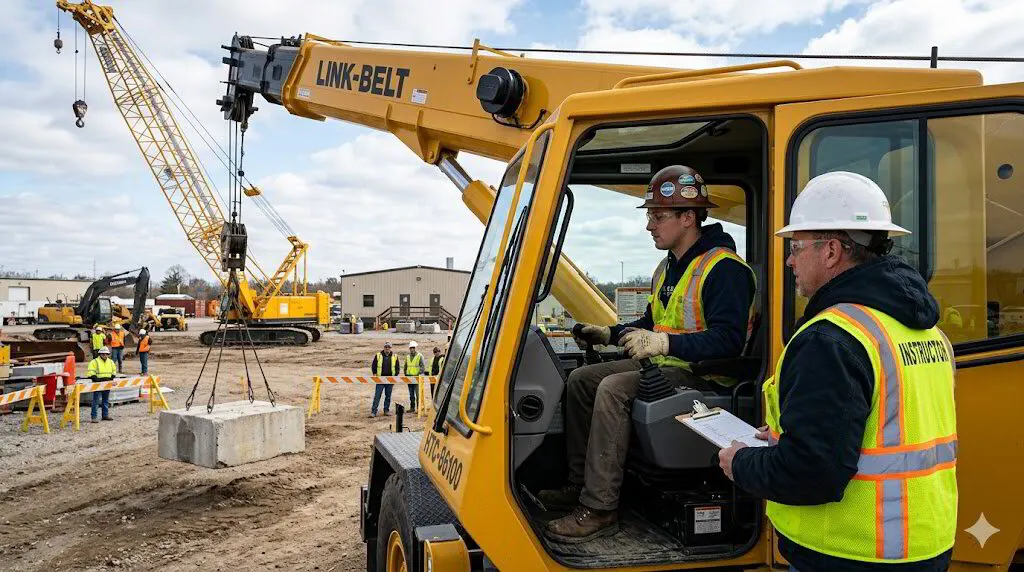
One advantage of formal training is a room full of people working the same problems, with an instructor who can explain why a tip is right or wrong for the crane in front of you. Students at our Seagoville facility bring questions they've seen online all the time, and talking them through on a real crane makes the answer stick.
Experienced operators who want structured exam preparation often take a shorter course, such as Mobile Crane Operations Fixed/Swing Cab 40 Hours or Tower Crane Operations 20 Hours. New operators who want a solid base before joining the conversation should look at Mobile Crane Operations Fixed/Swing Cab 120 Hours.
Questions about learning online
Is it okay to discuss NCCCO exam questions online?
No. NCCCO exam content is confidential. Discussing study methods is fine, but sharing actual exam questions can violate NCCCO's candidate policies.
What should I trust when online advice conflicts with my load chart?
The load chart and the manufacturer's manual for your exact crane and configuration. Then OSHA Subpart CC, ASME B30.5 and your employer's procedures.
Are video tutorials enough to learn crane operation?
No. Videos can explain concepts, but operating skill comes from supervised seat time, and certification requires passing NCCCO written and practical exams.