You may never sit in the cab, but as a superintendent or project manager you decide who does, when the crane works and when it stops. This article covers the parts of tower crane operation that land on a manager's desk.
Your obligations under Subpart CC
OSHA's crane standard for construction, 29 CFR 1926 Subpart CC, puts many duties on the employer rather than the operator. A few that site managers handle directly:
- Operator certification and evaluation. Under 1926.1427, operators must be certified for the type of crane they run, and the employer must evaluate each operator's ability to run the specific equipment safely and document that evaluation.
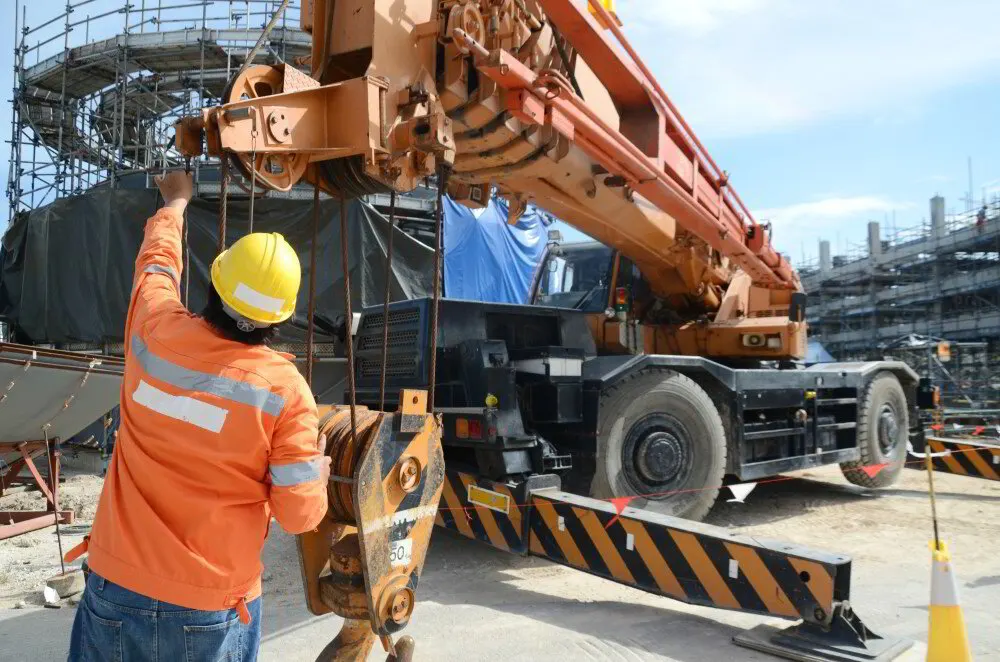
- Qualified riggers and signal persons. Rigging during assembly and disassembly, and hooking loads when workers are within the fall zone, must be done by qualified riggers. Signal persons must meet the qualification requirements in 1926.1428.
- Assembly and disassembly. Erection, climbing and dismantling must be directed by a competent and qualified person, with the extra tower crane requirements in 1926.1435.
- Inspections. Shift, monthly and annual inspections under 1926.1412, with records where the rule requires them.
A manager doesn't need to memorize the standard, but you do need to know who on your site covers each duty, by name.
Planning the crane into the schedule
A tower crane becomes the busiest machine on a vertical job, and most crane problems start as schedule problems. Pressure to fly one more bundle before lunch is how loads go up poorly rigged. A few habits help:
- Hold a short daily pick meeting with the operator, the signal person and the trades who need hook time.
- Write the heaviest and most awkward picks into a lift plan ahead of time, with weights confirmed, rigging chosen and landing areas cleared.
- Keep a clear fall zone. Routing foot traffic away from the loads saves arguments and injuries.
- Build float into the week for weather days. Wind holds will happen.
Who decides when the crane stops
The crane manufacturer sets the in-service wind limit, and the operator has authority to stop operating when conditions are unsafe. Make that authority real. If an operator stops for gusts, the right response from a manager is to check the forecast, plan the next window and let the decision stand.
Watch for lifts that catch extra wind, like formwork panels, curtain wall units and large sheets of material. Those can be unsafe well below the general limit. A site anemometer and a shared, written wind policy remove guesswork for everyone.
Building a crew you can trust
Certification tells you an operator passed NCCCO written and practical exams for that crane type. It doesn't tell you how they handle your site, your congestion and your schedule. That's what your own evaluation is for. Ask new operators to walk you through the load chart for your crane configuration, watch a few picks before the critical ones, and get feedback from the signal persons they work with.
Look at the ground crew too. Many tower crane problems trace back to rigging and signaling, not the cab. Training your laborers and carpenters as riggers and signal persons gives the operator better information on every lift.
Getting your people trained in Seagoville
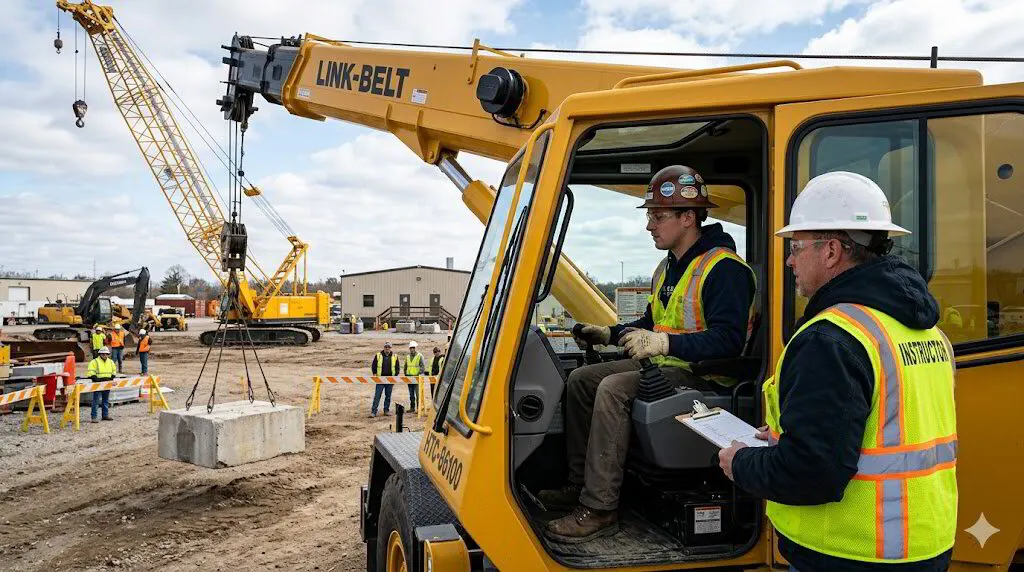
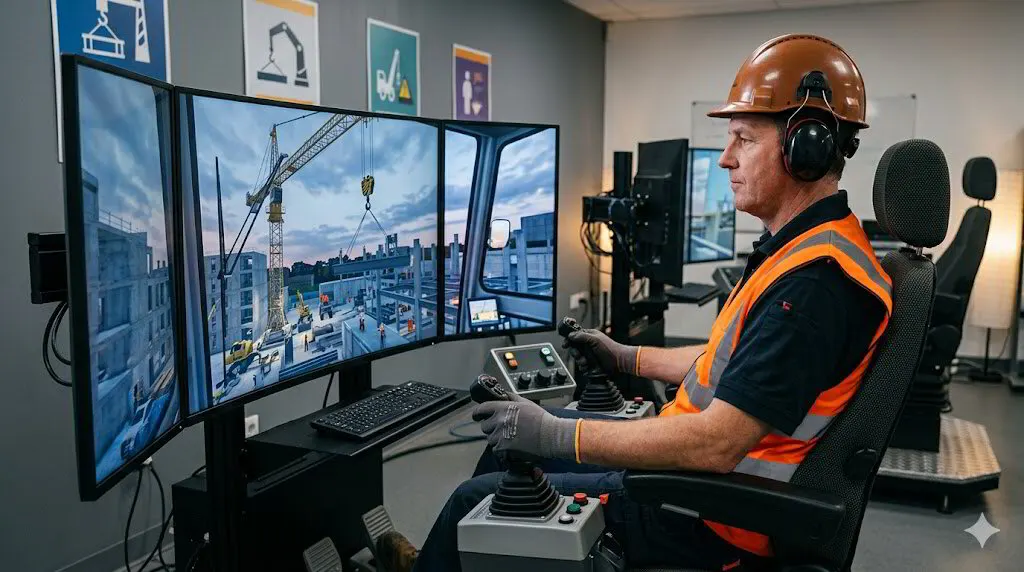
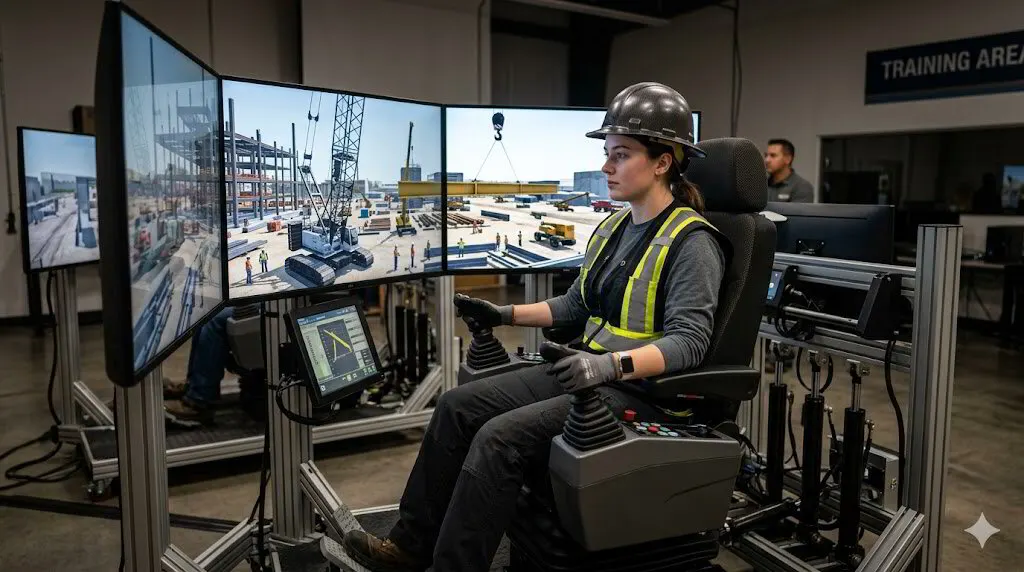
Companies send employees to our facility in Seagoville, southeast of Dallas, where we have a tower crane in the training yard and an NCCCO practical exam site on the same property. We don't train at customer job sites, so plan on your people coming to us. If you need to schedule several workers at once, see company classes.
For someone moving into the cab, Tower Crane Operations 40 Hours is the usual course. An experienced hand who only needs exam preparation may fit Tower Crane Operations 20 Hours. For the ground crew, Rigger/Signal Person Certification Level I 28 Hours prepares them for NCCCO Rigger Level I and Signalperson exams.
Questions from superintendents and PMs
Is an NCCCO card enough to put an operator in my tower crane?
No. OSHA 1926.1427 also requires the employer to evaluate the operator on the equipment they will run and to document that evaluation. Certification is one part of being cleared to operate.
Can you hold a tower crane class at our job site?
No. All of our training and NCCCO practical exams take place at our Seagoville facility. Your employees travel to us.
Should site managers take a crane course themselves?
It's not required. Some managers take rigging and signal person training to understand lift planning better, but operator courses are aimed at the people who will run the crane.