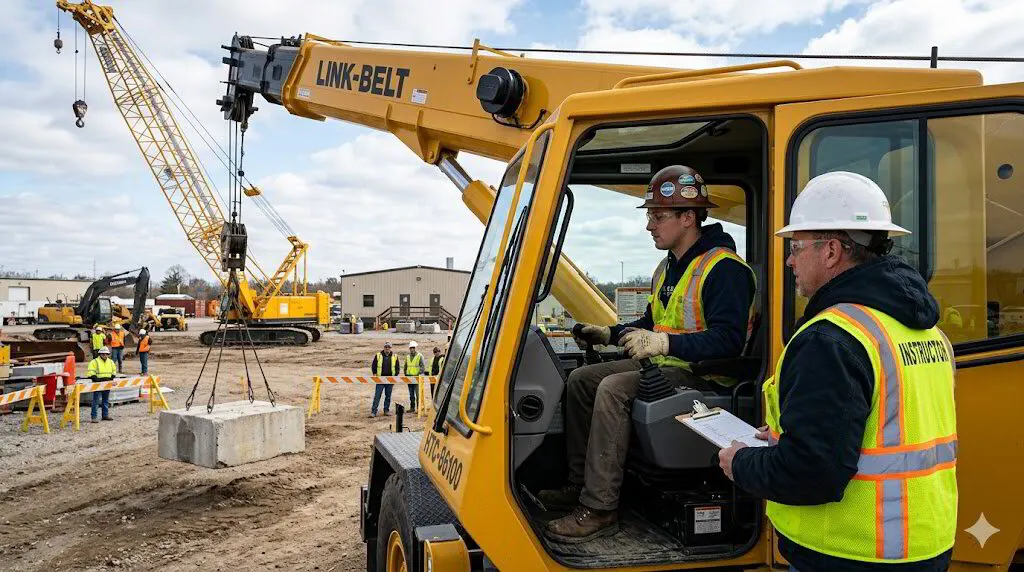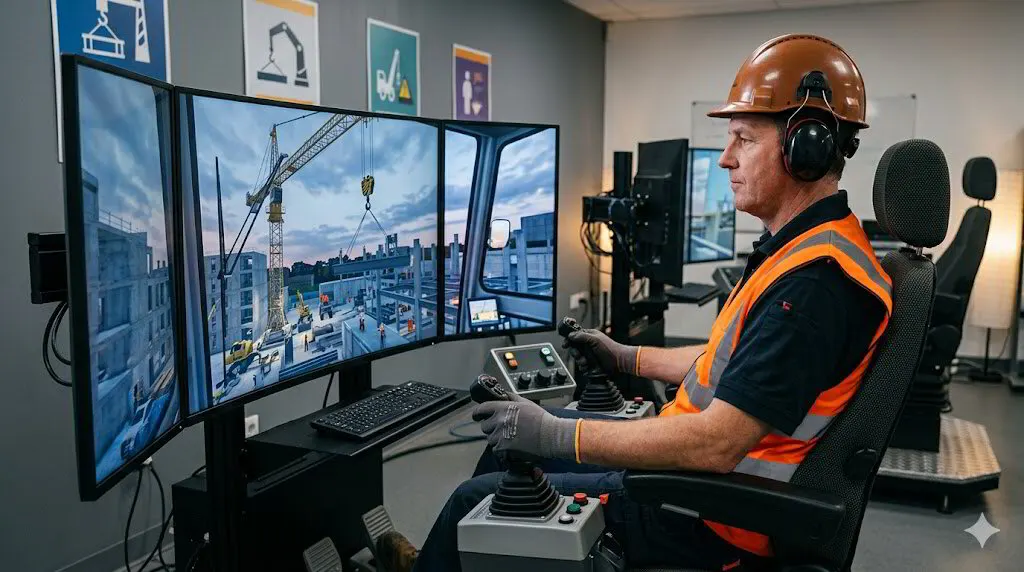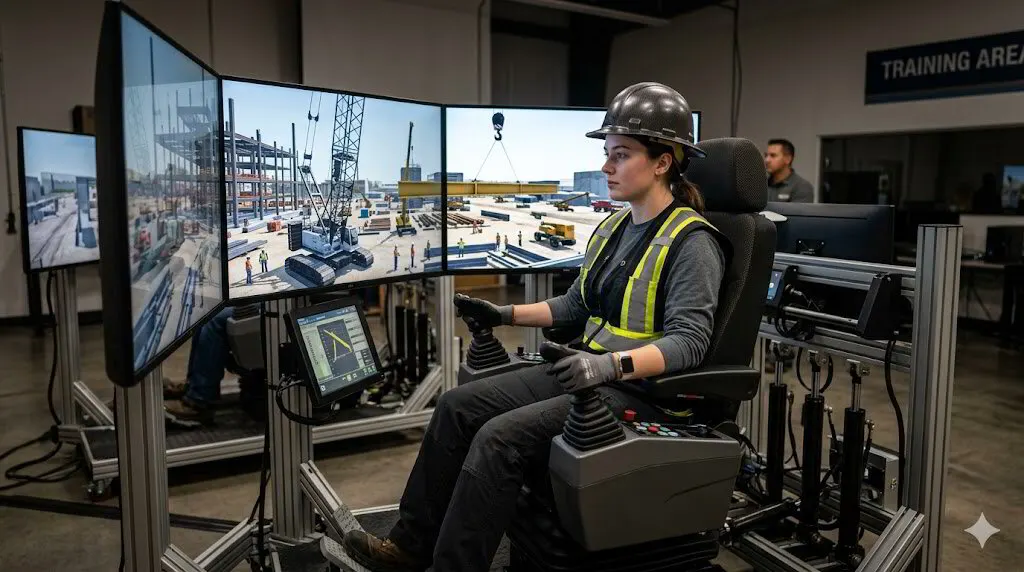
Getting certified in Texas is mostly a matter of planning: knowing which rules apply here, lining up money before you enroll, and picking a course that matches what you already know. This is the order we suggest to people who call us from around the state.
What the law in Texas requires
Texas does not issue its own crane operator license, unlike a handful of states and cities that do. Private employers here fall under federal OSHA, so the rule that matters is 29 CFR 1926.1427: construction crane operators must be certified by an accredited testing organization for the type of crane they run, and then evaluated by their employer. NCCCO is the certifier most Texas contractors name in job postings.
Public agencies and some plant owners set their own extra requirements. If you already know where you want to work, ask what they expect before you choose a course.
Match the course to your starting point
The biggest decision is how much training you need, and that depends on where you are coming from:
- No crane experience. You need classroom basics plus a lot of seat time. Plan on a long course.
- Ground crew or oiler. You know the job site and rigging, but need hours at the controls and load chart practice.
- Uncertified operator. You can run a crane; you need to learn the exam format, the chart problems and the practical course.
- Certified, adding a crane type. A shorter course on the new crane type, plus that specialty's written and practical exams.
One practical tip: if you are deciding between two crane types, think about the region you will work in. Petrochemical and port work along the coast, wind and energy projects in West Texas, and commercial building across the big metro areas each lean on different machines. Ask a couple of local employers which certification they would want from a new hire.
Line up the money before the start date
Texas students usually pay one of four ways, and two of them take paperwork that should start weeks before class:
- Workforce funding. Your local Workforce Solutions board decides whether WIOA funds can cover training. Each board has its own process, intake appointments and approved training list, so contact them early.
- GI Bill benefits. Request your Certificate of Eligibility from VA before enrolling. We are approved for Post-9/11 GI Bill (Chapter 33) and Veteran Readiness and Employment (Chapter 31); details are on our VA page.
- Employer sponsorship. Ask your supervisor; many contractors pay for operator training.
- Self-pay. Tuition is listed on the funding page.
Plan the trip to Seagoville
Texas is big, and all of our training happens in one place: 304 Tunnell St in Seagoville, southeast of Dallas off US-175. Students from the Dallas-Fort Worth area usually drive in daily. From Houston, San Antonio, the Valley or West Texas, most people either drive in for the week or fly into Dallas Love Field or DFW and rent a car. Premium courses offer optional room and board, which keeps a multi-week course from turning into a long hotel bill.
Time your exams
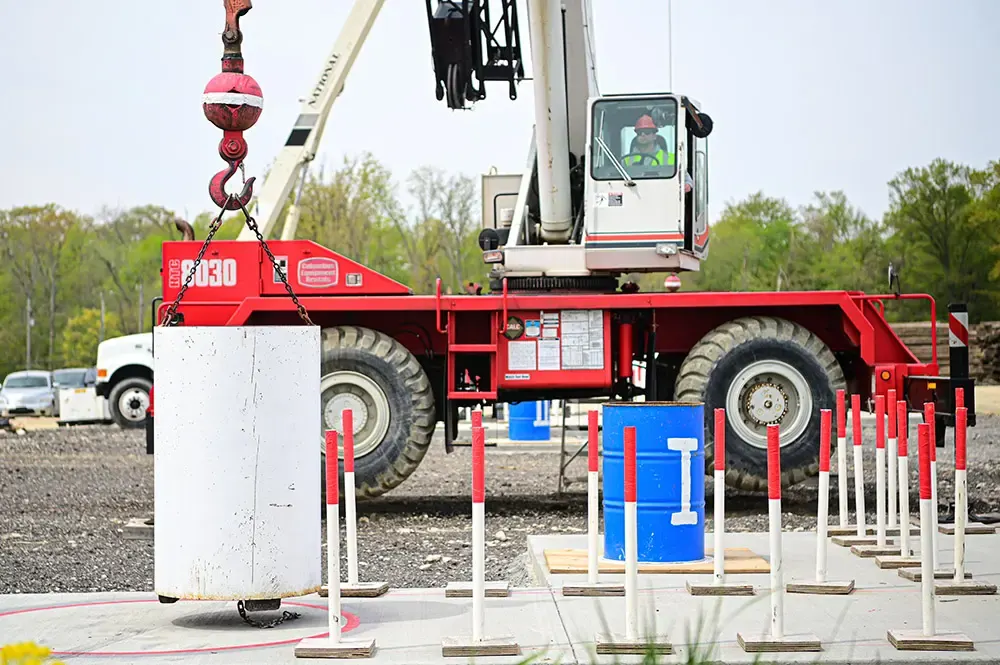
The written exams and the practical are separate events, and NCCCO gives you 12 months after the written to pass the practical. In practice, the best time to test is while the material is fresh: written exams near the end of classroom work, practical after your yard hours. Our yard is an NCCCO practical exam site, so you test on the course where you trained. NCCCO grades the exams and issues the certification.
Courses Texas students start with
People with no crane background usually choose Mobile Crane Operations Fixed/Swing Cab 120 Hours, or the Premium Mobile Crane Operations Fixed/Swing Cab Course if they are coming from far enough away to need a place to stay. Operators who only need exam preparation often take Mobile Crane Operations Fixed/Swing Cab 40 Hours. The training schedule shows upcoming start dates.
Texas certification questions
Is NCCCO certification recognized everywhere in Texas?
NCCCO is an accredited certification that satisfies OSHA's operator certification rule, and it is the one most Texas contractors ask for. Some owners and agencies add their own site requirements on top of it.
Can I use Texas workforce funding if I live outside Dallas County?
Possibly. WIOA funds are handled by the Workforce Solutions board where you live, not where the school is. Ask your local board whether crane training qualifies.
How long does the whole process take?
It depends on the course you choose and how quickly funding is approved. Paperwork for workforce or VA funding can take longer than the course itself, so start it early.