Spend time in any operator forum or crane class and the same handful of topics come up: two-crane picks, lifts the operator cannot see, moving with a load on the hook, power lines and lifting people. Each one has specific rules and planning steps. Here is a practical summary of each.
Multi-crane (tandem) lifts
When one crane cannot handle a load alone, or a long piece needs to be tailed or turned, two cranes may share it. That changes everything about the planning. As one crane booms or swings, the share of weight on each hook can shift, and one crane can end up carrying far more than its planned portion.
OSHA's rule for multiple-crane lifts (1926.1432) requires a plan developed by a qualified person, reviewed with everyone involved before the lift, and directed by a single lift director. Good plans spell out each crane's share of the load, the maximum allowed percentage of each crane's chart, who signals whom, and the exact sequence of moves.
Blind lifts
A blind lift is any pick where the operator cannot see the load, the landing area or the path between them. Setting equipment on a roof from the street side, or lowering into a pit, are common examples. A signal person is required here, and the setup needs more thought than usual:
- Agree on whether hand, voice or radio signals will be used and test radios before the load leaves the ground.
- If the signal person also loses sight of part of the path, use a relay with clearly assigned roles.
- Slow everything down. Without a visual, the operator relies entirely on the signals.
Pick-and-carry
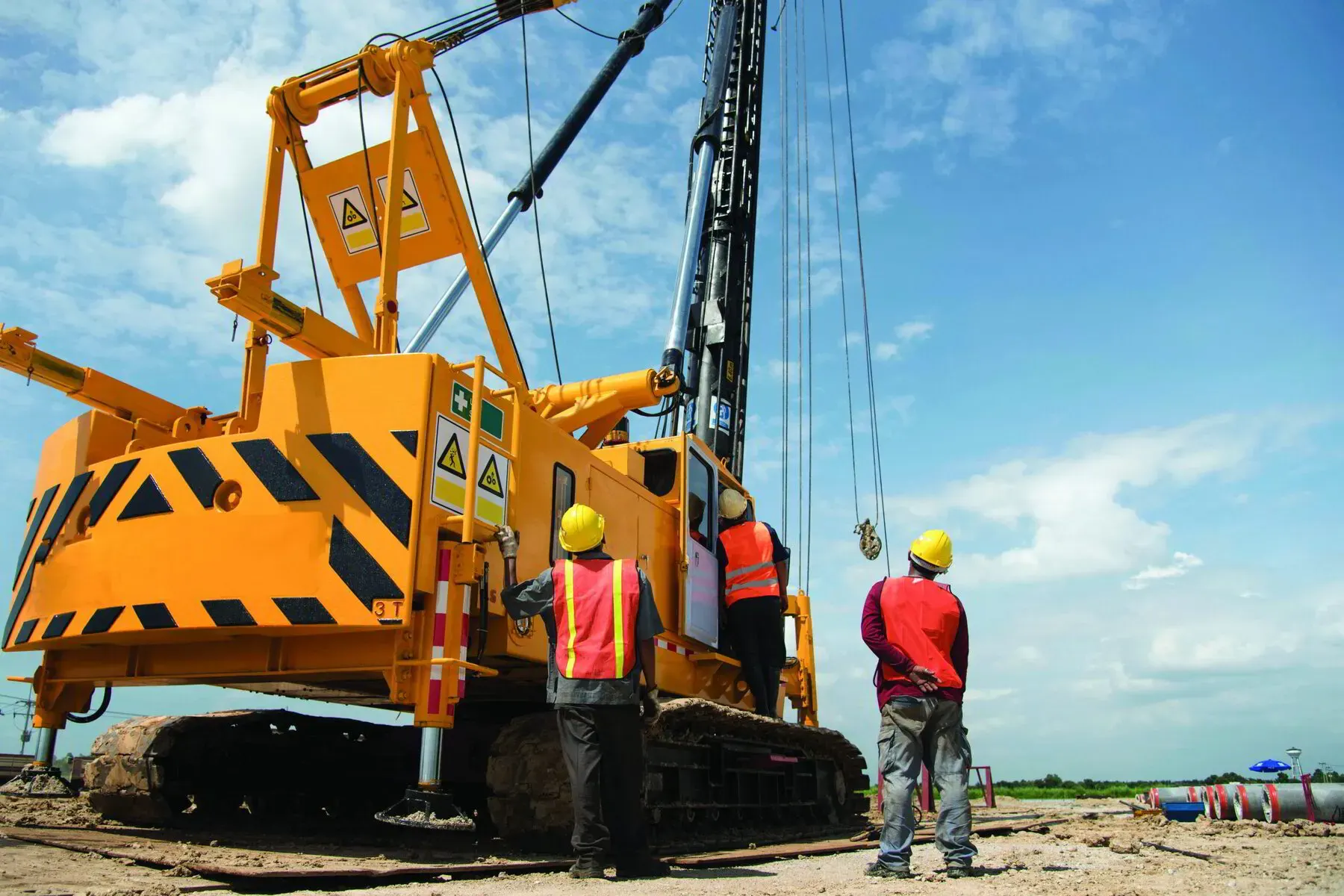
Some cranes are rated to travel with a load suspended, most often rough-terrain and crawler cranes. Travel loads are usually rated on a separate chart with much lower capacities than stationary lifts, and conditions such as a short, centered boom, specific tire pressure, a firm level path and slow speed often apply. The load should be kept low and controlled with tag lines. Any slope or soft spot along the route changes the picture, so walk the path first.
Working near power lines
Contact with an energized line can kill anyone touching the crane, the load or the rigging. Under 1926.1408, the employer must identify the work zone and determine whether any part of the crane, load or load line could get closer than 20 feet to a line rated up to 350 kV. For higher voltages, the minimum distances are larger and listed in the rule's Table A. When work will happen inside that range, measures such as a planning meeting, a dedicated spotter, warning lines or a range limiting device are required.
The safest option is always the simplest: have the utility de-energize and ground the line, or plan the lift so the crane never comes close.
Lifting personnel
Hoisting workers in a personnel platform is allowed only when conventional means of reaching the work area would be more hazardous or are not possible. 1926.1431 sets the conditions: an engineered or approved platform, a trial lift, proof testing, a pre-lift meeting and reduced capacity limits for the crane. Because the rule is detailed and the consequences are severe, these lifts are usually planned by experienced supervisors and done only by operators the employer has specifically evaluated for them.
Building the foundation for specialized work
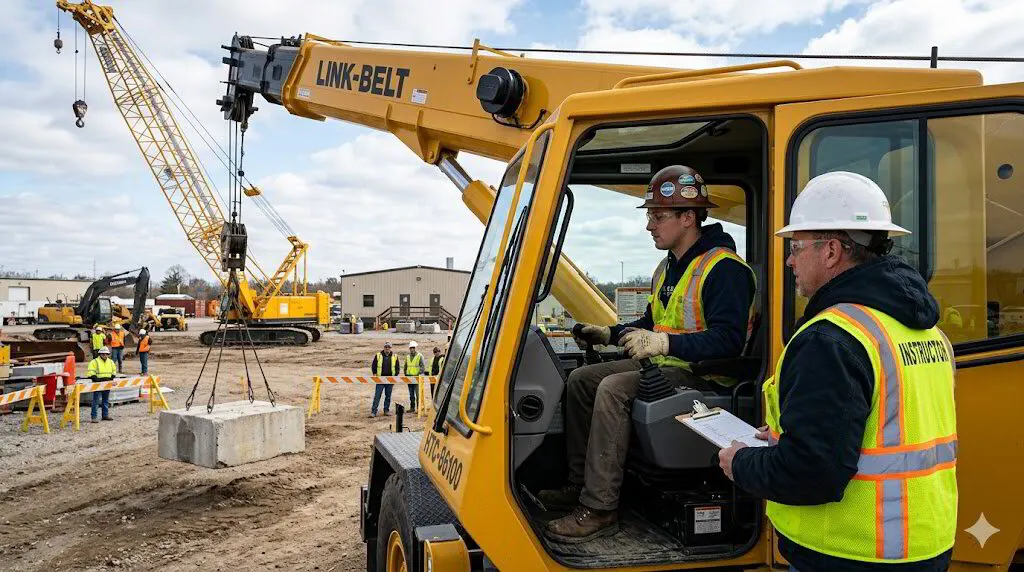
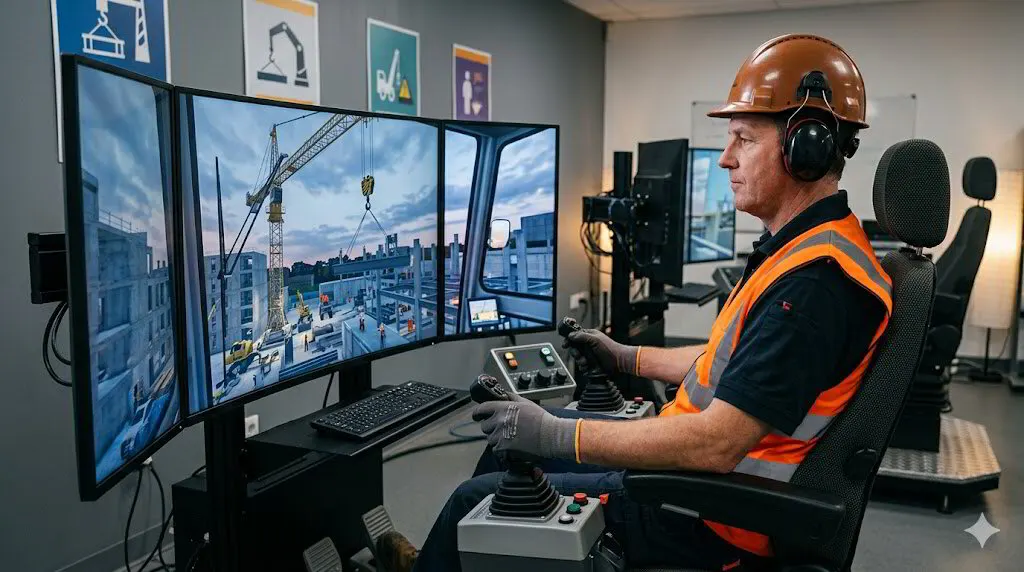
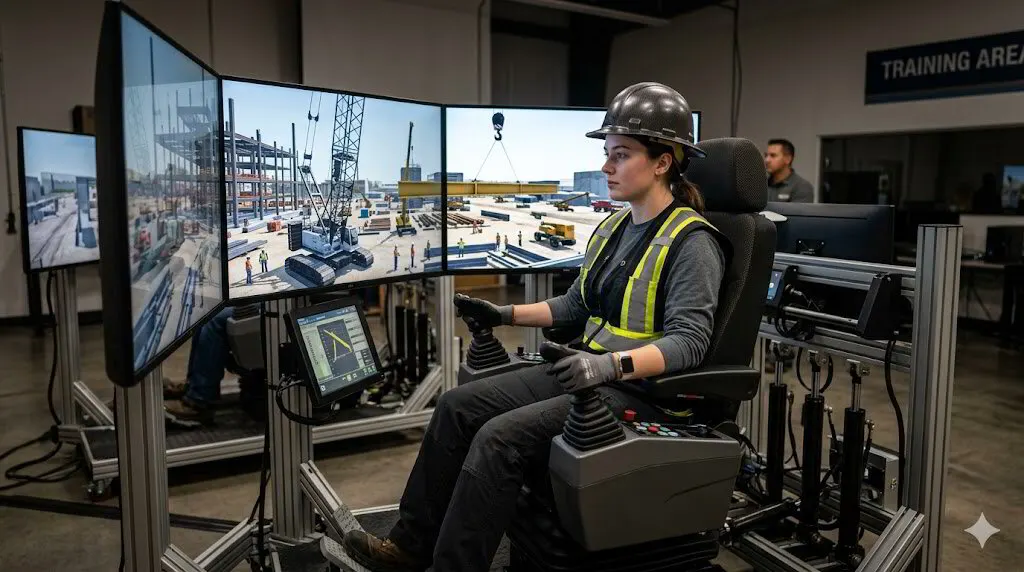
Nobody starts their career doing tandem picks or personnel lifts. These tasks come after the basics are second nature: reading the chart, controlling the load and communicating with the crew. Our courses build that foundation at our Seagoville yard. The Mobile Crane Operations Lattice 40 Hours course trains on the crawler cranes often used for heavy and complex picks, and Mobile Crane Operations Fixed/Swing Cab 40 Hours suits operators with some time in the seat who want NCCCO exam preparation. Signal persons for blind lifts can train in Rigger/Signal Person Certification Level I 28 Hours.
Questions about specialized lifts
Does a multi-crane lift always need a written plan?
OSHA requires a plan developed by a qualified person and reviewed with all workers involved before a multiple-crane lift begins. Most companies put that plan in writing.
Can any mobile crane pick and carry?
No. Only cranes with travel ratings from the manufacturer should move with a suspended load, and only under the conditions in that chart.
What is the minimum distance from a power line?
For lines rated up to 350 kV, OSHA's rule uses 20 feet as the starting point for planning. Higher voltages require greater distances, listed in Table A of 1926.1408.