Experienced operators make lifts look slow and easy, and that is the point. The skill is in what you do not see: no swinging load, no bounce, no surprises. These are the control techniques that get you there, and the physics behind each one.
Feathering: start slow, stop slow
Every motion should begin and end gradually. Moving a lever from neutral to full in one motion jerks the load, adds dynamic force to the boom and rope, and starts a swing you will spend the next minute chasing. Feathering means easing into the control, building speed only once the load is moving smoothly, and easing off well before the stop.
The same applies to the hoist. Snatching a load off the ground, or stopping a lowering load abruptly, can put a shock load on the crane well above the load's weight. Load charts assume smooth operation; jerky control eats into the margin.
Controlling load swing
A suspended load acts like a pendulum. When you swing the crane, the load lags behind; when you stop, it keeps going. Experienced operators handle this in a few ways:
- Accelerate gently so the load leaves with the boom instead of trailing it.
- Slow down early and let the load catch up before the final stop.
- Check the swing by moving the boom tip slightly in the direction the load is swinging, which brings the hook back under the tip.
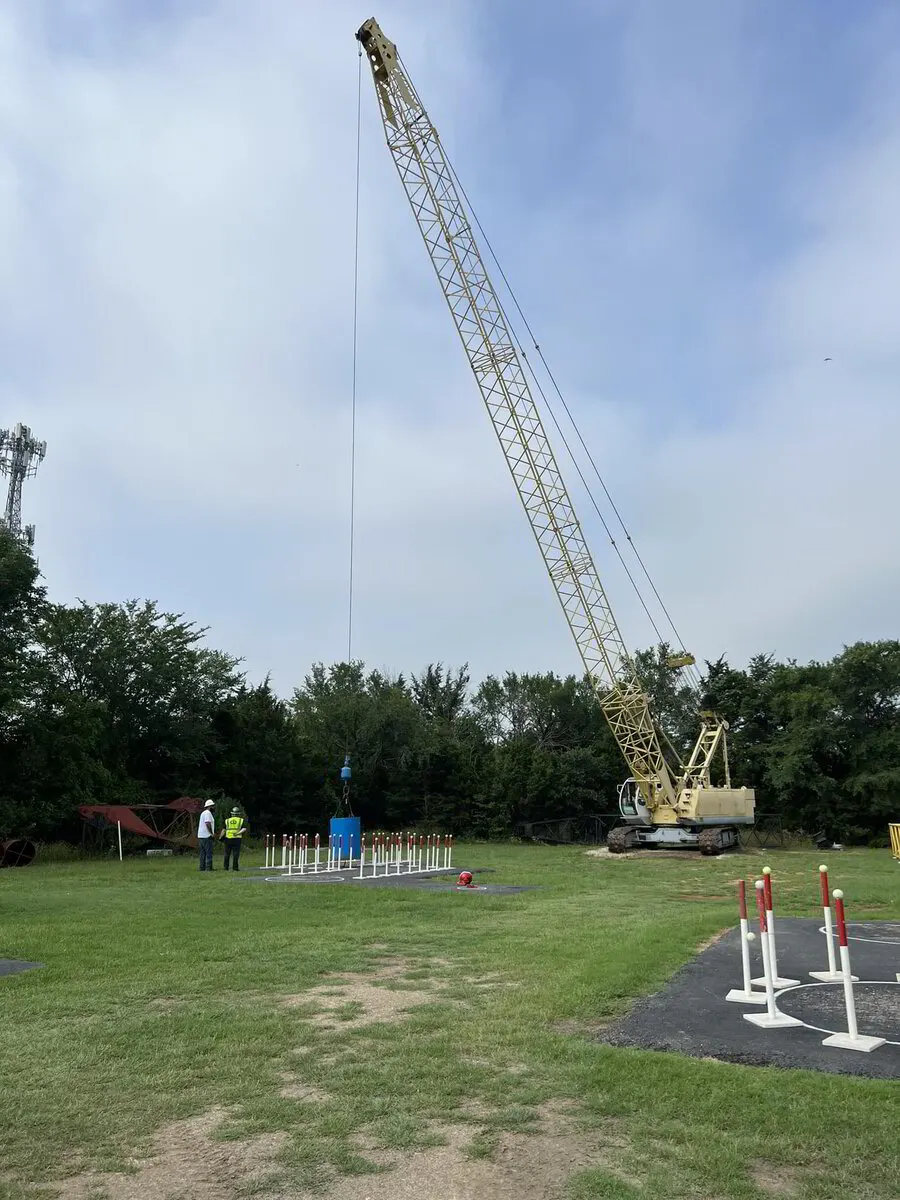
This is one of the hardest skills for new operators and one of the most visible on the NCCCO practical exam, where the test weight has to travel through narrow zones without touching the poles.
Multi-function moves
Running two functions at once, such as hoisting while swinging or booming while telescoping, saves time and gives smoother paths. It also multiplies what can go wrong. Booming down while swinging increases radius and can reduce capacity mid-move, and the load moment indicator may only catch it once you are already close to the limit.
Build up gradually. Master each function alone, then combine two at low speed, and only add a third when the first two are automatic. Watch the indicator as part of your normal scan, not as an alarm you wait for.
Boom deflection and radius growth
A telescopic boom bends under load. When the load comes off the ground, the boom tip moves outward and down, the radius grows, and the load can drift away from where you set it. Long booms and heavy loads near the chart limits show this most clearly.
Plan for it: estimate the radius with the load suspended, not with the hook empty. When landing a heavy load, expect the boom to come back up a little as weight comes off it, and be ready to correct so the load does not shift on its supports.
Avoiding side loading and two-blocking
Booms are built to carry load straight down from the tip. Dragging a load sideways, swinging too fast, or letting the hook pull at an angle puts side load on the boom, which it is not designed for. Always position the boom tip directly over the load before you lift.
Two-blocking, when the hook block or ball contacts the boom tip, can part the load line and drop the load. Anti-two-block devices are required on most cranes under OSHA's rule, but they are a backup. Watch the hook when hoisting up or telescoping out, since extending the boom also draws the block toward the tip.
Building these skills in training
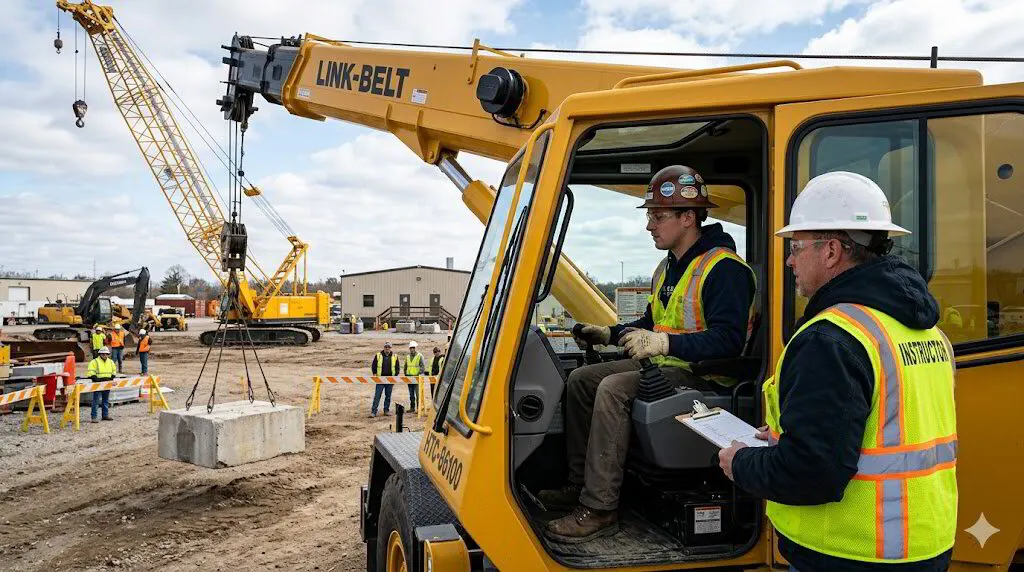
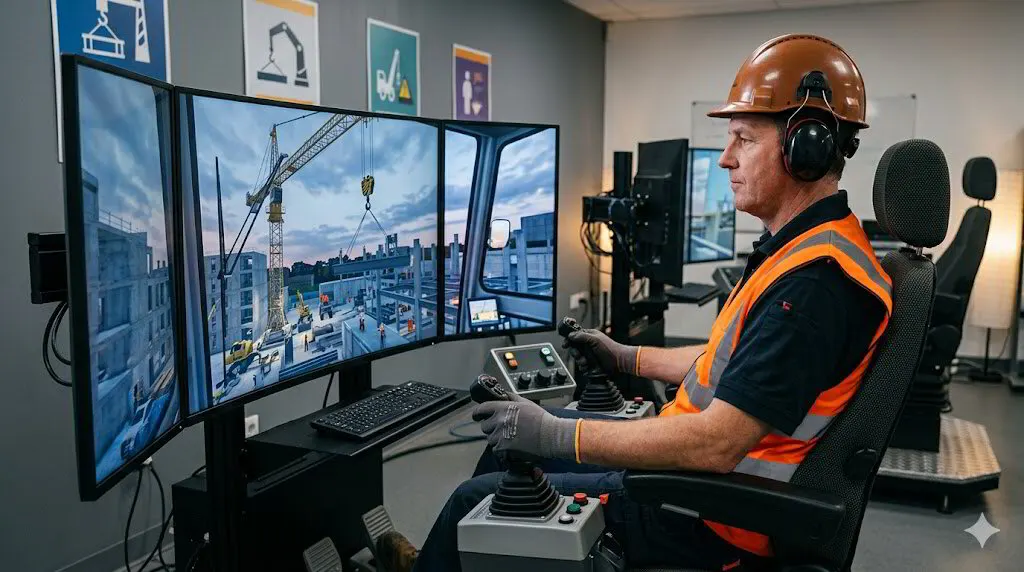
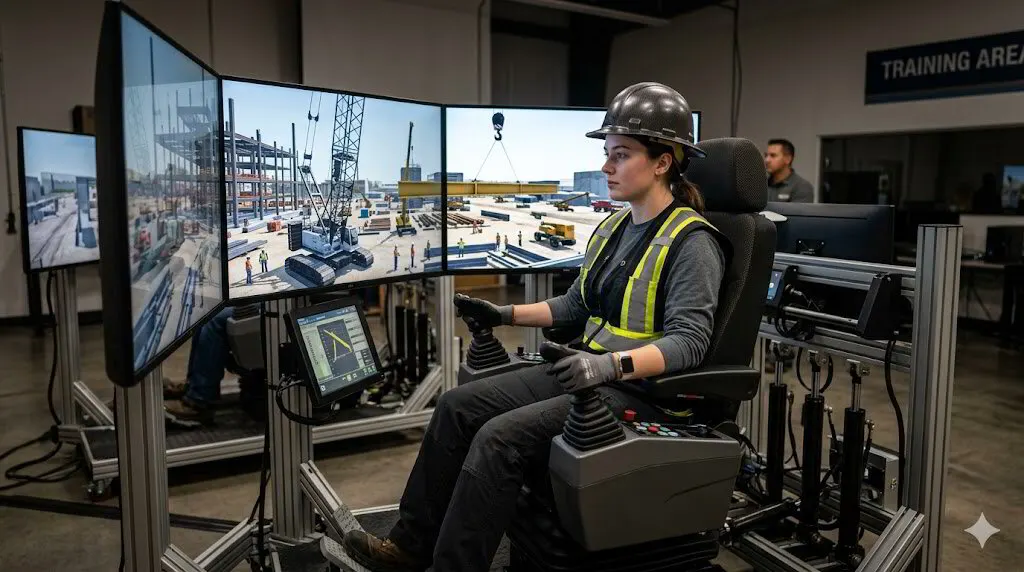
These techniques take hours in the seat with someone watching and correcting. In our Seagoville yard, students work on the crane simulator first, then practice the same moves on telescopic, lattice and tower cranes, including the patterns used on the NCCCO practical exam course. New operators build the most control in Mobile Crane Operations Fixed/Swing Cab 120 Hours. For lattice crawlers, look at Mobile Crane Operations Lattice 20 Hours if you already have experience, or the 40-hour course if you are newer. Tower crane control is covered in Tower Crane Operations 40 Hours.
Operating technique questions
Why does telescoping out bring the hook block closer to the boom tip?
Extending the boom lengthens the distance the load line must cover, so unless the hoist pays out line at the same time, the block rises toward the tip. That is why operators watch the hook while telescoping.
What is shock loading?
It is the extra force created when a load is started or stopped suddenly. It can briefly put far more force on the crane and rigging than the load's actual weight.
Is a lattice crane harder to control than a telescopic one?
They feel different. Lattice booms are lighter for their length and respond differently to swing and wind, so operators adding a lattice certification need time on that crane type.