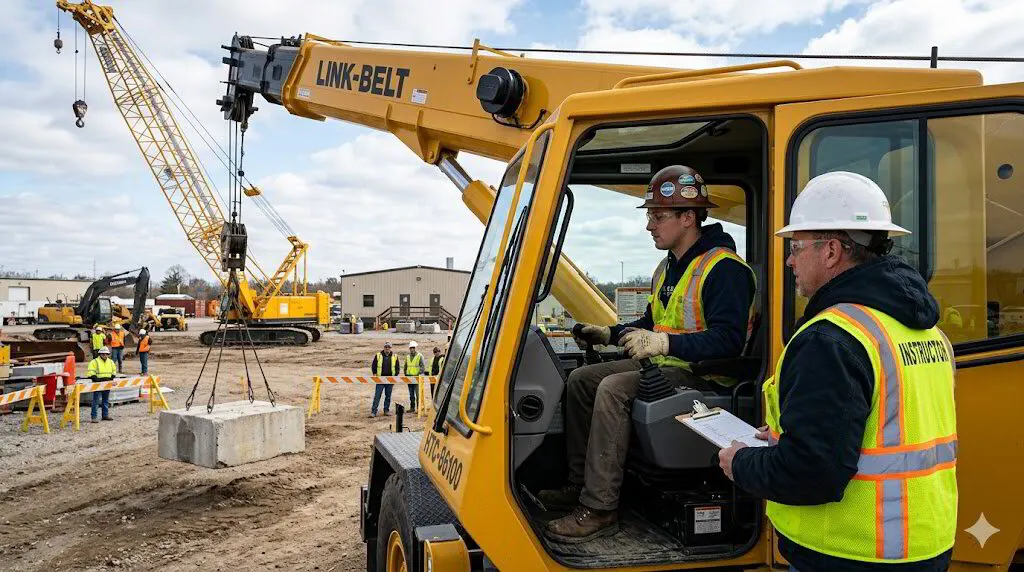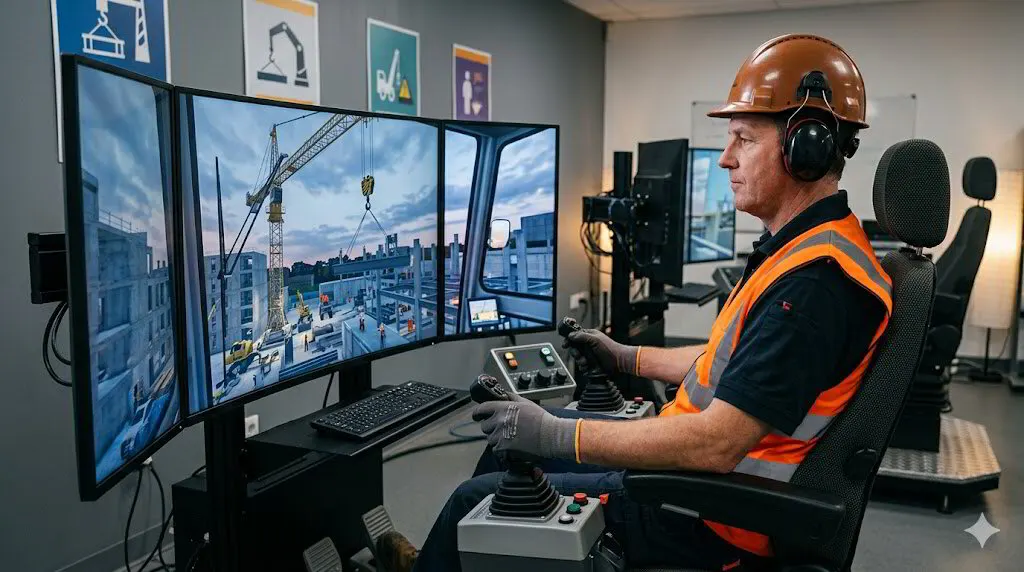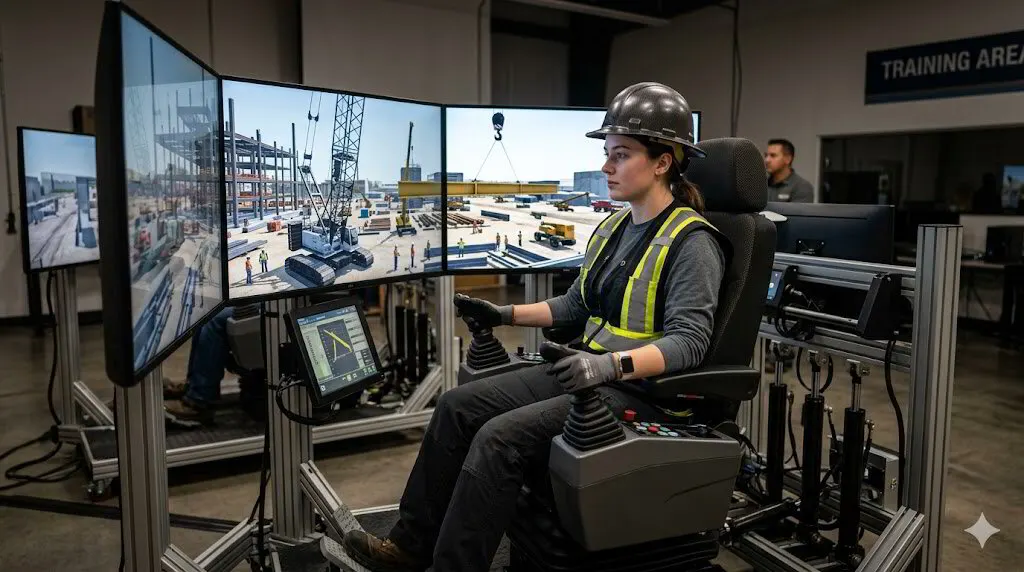
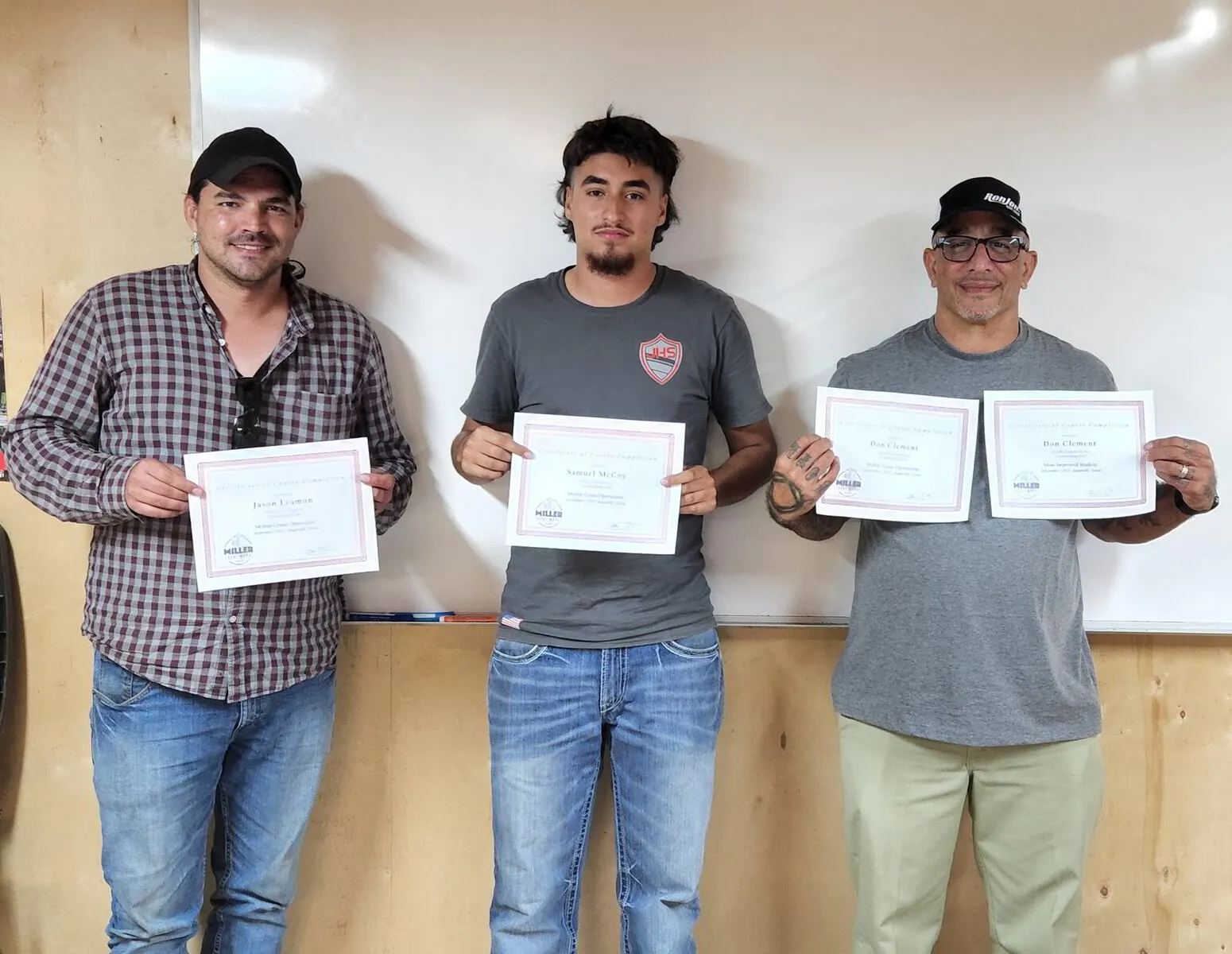
People picture one person in the cab when they think of crane work. On a real Texas job site, a single pick usually involves four or five people, and several of them hold their own NCCCO credential. Here is who they are and what each one is responsible for.
One lift, several credentials
Watch a precast panel go up on a warehouse in Grand Prairie or a pump skid get set at a Gulf Coast plant and you will see a small crew working to one plan. The operator runs the machine. A rigger decides how the load is attached. A signal person relays instructions when the operator cannot see the load. On bigger or more complex picks, a lift director owns the plan and has the final word.
The National Commission for the Certification of Crane Operators (NCCCO) offers separate certifications for most of these roles. Knowing which one goes with which job helps you pick the right first step and tells you what the people around you are trained to do.
The operator
Federal rule 29 CFR 1926.1427 requires construction crane operators to be certified for the type of crane they run, and Texas follows the federal OSHA rules for private employers. For mobile cranes, NCCCO splits certification by crane type:
- Telescopic boom, swing cab (TLL): the rough-terrain and all-terrain cranes you see on most commercial sites.
- Telescopic boom, fixed cab (TSS): smaller cranes where the operator sits in a cab that does not rotate with the boom.
- Lattice boom: crawler and truck-mounted lattice cranes used on bridges, plants and heavy civil jobs.
- Tower crane: its own certification, common on mid-rise and high-rise buildings.
Certification is only part of it. The same rule requires the employer to evaluate the operator on the specific equipment before turning them loose on it.
The rigger
The rigger chooses slings and hardware, works out where the center of gravity sits, sets the hitch and checks sling angles so the load comes up level and stays in the rigging. OSHA uses the term "qualified rigger" and requires one in specific situations, such as when workers are in the fall zone while hooking or unhooking a load (1926.1425) and during assembly and disassembly (1926.1404).
NCCCO offers Rigger Level I and Level II. Level I covers the core tasks: inspecting rigging, recognizing hazards and using common hitches for routine lifts. Level II adds load weight and center of gravity estimates and rigging selection for less routine picks.
The signal person
When the operator cannot see the load or the landing zone, the signal person becomes the operator's eyes. Rule 1926.1428 requires that person to be qualified: they must know the standard hand and voice signals, understand basic crane operation and its limits, and pass an oral or written test plus a practical demonstration. NCCCO's Signalperson certification is one widely accepted way to show that.
On Texas sites, many riggers carry both cards. It makes sense: the person who rigged the load is often the best one to guide it in.
Lift directors and the rest of the crew
Critical lifts, multi-crane picks and work near power lines usually have a designated lift director. That person reviews the lift plan, confirms crane configuration and ground conditions, assigns the crew and stops the job if something changes. NCCCO has a Lift Director certification, though most people step into the role after years as an operator or rigger.
You will also meet oilers or crane assistants, who help with set-up, counterweight and maintenance, and competent persons who perform the shift inspections OSHA requires under 1926.1412. Many operators started in one of these spots.
Where you can start
If you want to run cranes, the usual first credential in Texas is a telescopic certification, and our Mobile Crane Operations Fixed/Swing Cab 120 Hours course is built for people starting from zero. If you want to work on the ground crew first, the Rigger/Signal Person Certification Level I 28 Hours course prepares you for both NCCCO Rigger Level I and Signalperson. Tower work has its own path through Tower Crane Operations 40 Hours.
All training and NCCCO practical exams take place at our yard in Seagoville, southeast of Dallas.
Questions about crane crew roles
Does Texas issue its own crane operator license?
Texas does not have a separate state crane operator license. Private employers in Texas fall under federal OSHA, which requires certification under 29 CFR 1926.1427, and most contractors ask for NCCCO.
Can one person be both the rigger and the signal person?
Yes, and on many crews that is normal. Each role has its own qualification or certification, so the person needs to meet both.
Do I need rigging experience before training as an operator?
No. Operator courses teach the rigging and signal knowledge an operator needs. Some people still start on the ground crew because it lets them work around cranes while they decide on a crane type.