Both machines lift loads with a hook, but the daily work of a mobile crane operator and a tower crane operator has surprisingly little in common. If you're deciding which way to go, these are the differences that matter.
Set-up, and where the operator sits
How the crane gets to work
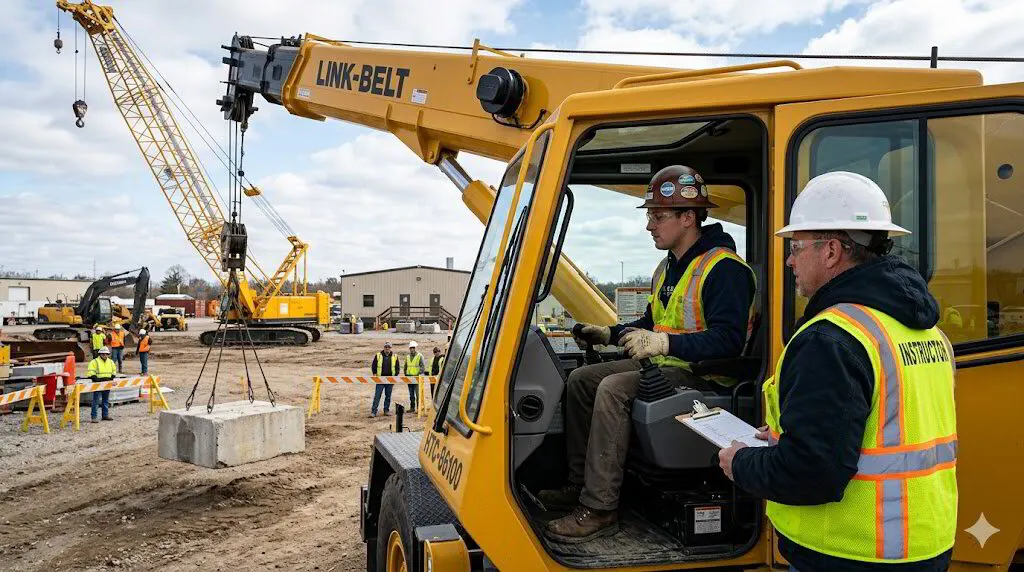
A mobile crane drives onto the site or arrives on trucks, sets up, makes its lifts and often leaves the same day or week. Setting up is part of the operator's job: choosing the spot, checking ground, extending outriggers, placing mats and leveling. A mobile operator may work at several sites in a week.
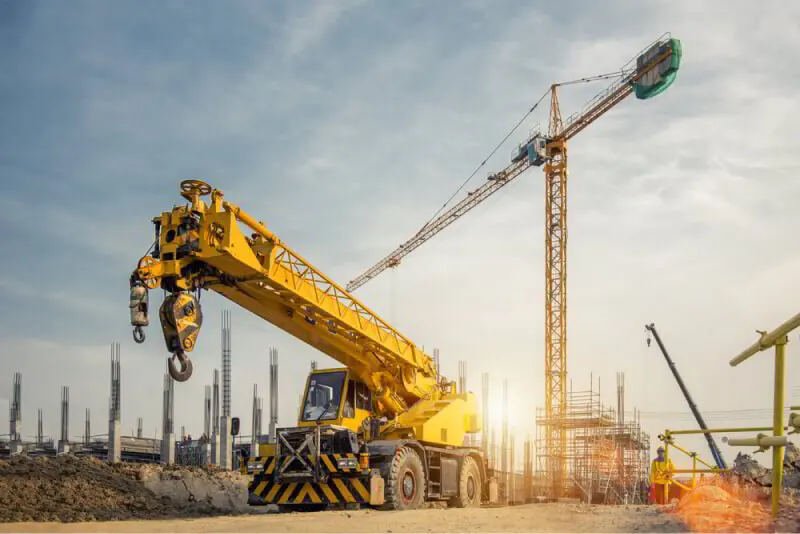
A tower crane is erected on a foundation by a separate crew, usually with help from a mobile crane, and stays for the life of the project, which can mean many months. The operator doesn't set it up each morning. On many projects it is raised as the building goes up, which is a planned operation with its own crew and procedures.
Where you sit
A mobile crane operator sits in a cab near the ground, close to the rigging crew and usually able to see much of the work. A tower crane operator climbs to a cab high above the site, often by ladder, and generally stays up there for long stretches. People who dislike heights or confined spaces should be honest with themselves about that before choosing tower work.
Seeing the load, or not
From the top of a tower crane you can see a lot of the site, but loads are often picked or landed out of your direct view: behind the building core, inside a floor, or below a slab edge. Blind lifts are routine, so tower work leans heavily on radio communication with a signal person. Mobile crane work also involves blind picks, but the operator more often has a direct line of sight and uses hand signals.
Load charts and crane motions
Reading the load chart
A mobile crane's capacity changes with almost everything: outrigger extension, counterweight, boom length, radius, whether you're working over the side or the rear, whether a jib is erected. Selecting the correct chart for the configuration is half the skill.
A tower crane's configuration is fixed once it's erected, so its chart is simpler to look up: capacity along the jib by radius, with the maximum load available close in and less toward the tip. The discipline is in knowing exactly where along the jib the load will travel and never assuming.
Controls and movement
A telescopic mobile crane booms up and down, telescopes and swings. A hammerhead tower crane keeps its jib horizontal and moves the load in and out with a trolley, while the whole top slews. Different machines, different motions, different muscle memory. Tower crane cabs commonly use joystick controls; mobile cranes vary by make and age.
Wind and end-of-day procedures
Both machines have wind limits from the manufacturer. A tower crane has an extra procedure: when it's out of service, it is typically left free to slew so the jib can turn with the wind like a weathervane instead of resisting it. Leaving the slewing brake on overnight can be dangerous. Mobile operators, by contrast, usually secure the crane by lowering or retracting the boom per the manual.
Separate certifications, one training yard
Certification
The credentials are separate. NCCCO certifies mobile crane operators by type (telescopic swing cab, telescopic fixed cab, lattice boom) and certifies tower crane operators under a distinct program with its own written and practical exams. Holding one doesn't qualify you for the other.
Training for either path in Seagoville
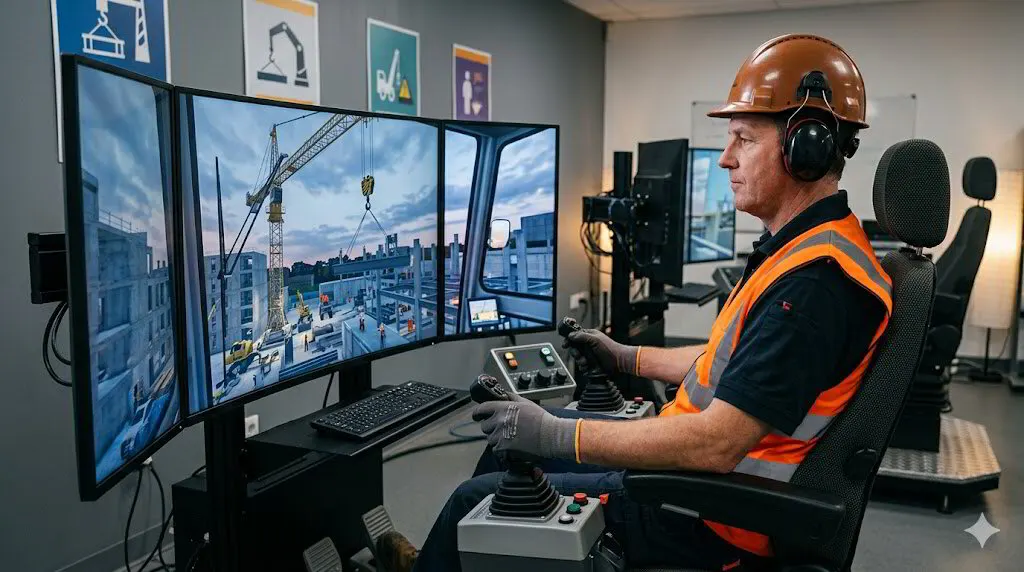
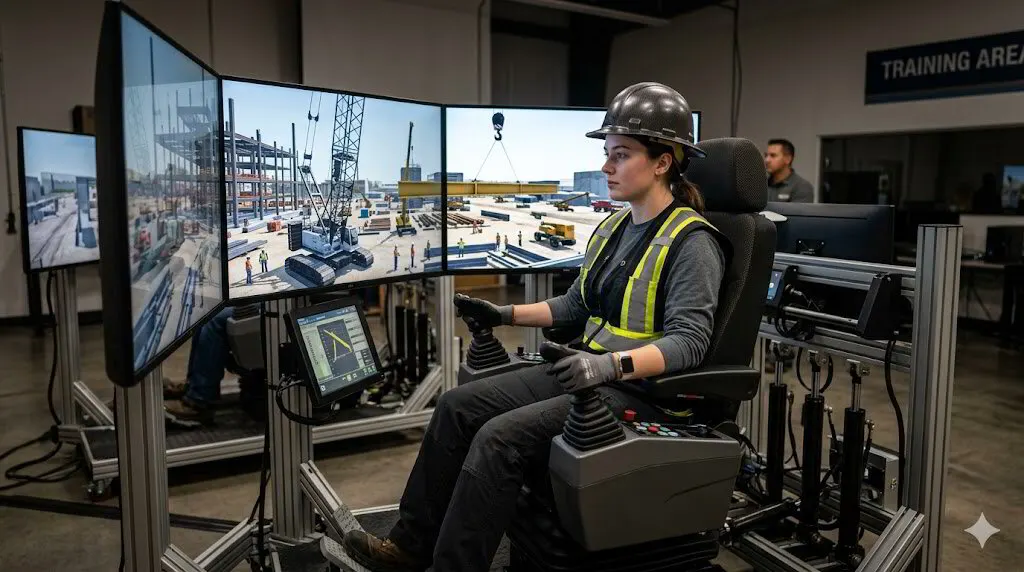
Our yard has both telescopic mobile cranes and a tower crane, and it hosts NCCCO practical exams for each. New operators choosing the mobile route usually take Mobile Crane Operations Fixed/Swing Cab 120 Hours. For tower crane work, Tower Crane Operations 40 Hours covers the written material and practice on the tower crane course. Read about the tower crane practical test before you decide.
Questions we hear
Is tower crane or mobile crane work better for a beginner?
It depends on the work near you and your comfort with heights. Mobile cranes are on more general construction sites, while tower cranes are concentrated on large building projects.
Does my mobile crane certification let me run a tower crane?
No. NCCCO tower crane certification is a separate program with its own written and practical exams.
Why are tower cranes left free to turn at night?
So the jib can swing with the wind instead of resisting it. Follow the manufacturer's out-of-service procedure for the specific crane.