Most people picture the first day of crane school as climbing straight into a cab. In practice, the hours before you touch a lever matter more than the first lift. Here is the order things usually happen in, and why.
Before the cab: the walk-around
Every shift on a crane starts on the ground. OSHA's shift inspection (29 CFR 1926.1412) asks a competent person to look over the machine before work begins, and new students learn that routine early. A walk-around covers things like:
- Wire rope on the drum and through the sheaves: broken wires, kinks, crushing or birdcaging.
- The hook and latch, and the hook block for damage.
- Hydraulic hoses and fittings for leaks.
- Tires or tracks, outrigger beams, pads and pins.
- Operational aids such as the anti-two-block device and the load moment indicator.
It feels slow the first time. By the end of a course it becomes the habit you don't skip, which is the point.
Setting up the machine
A telescopic crane's chart assumes it is set up a certain way. Students learn to check ground conditions, place cribbing or mats under outrigger pads, extend the beams to the position the chart calls for and level the crane. A crane that is a degree or two out of level can lose capacity and side-load the boom, so leveling gets checked with the bubble, not by eye.
Set-up is also where you first read the load chart for real: which chart applies for full outriggers, what the counterweight configuration is, and what deductions come off the gross capacity before you know what you can actually lift.
Learning the controls on the simulator
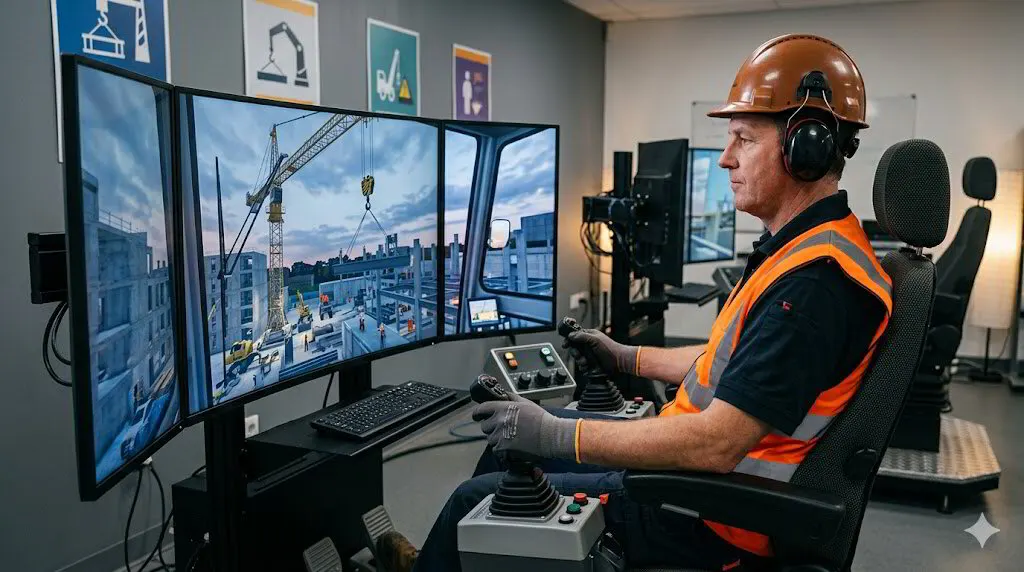
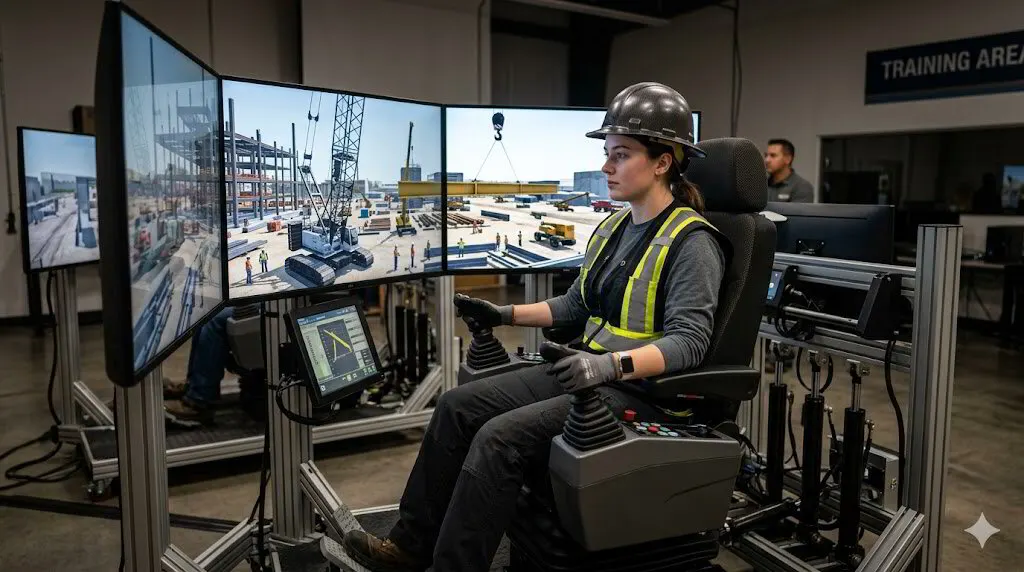
Cab controls on a hydraulic crane handle swing, boom up and down, telescope, and the main and auxiliary hoists. Foot pedals and hand levers vary by manufacturer, and new operators tend to overcorrect. Our classroom has a crane simulator, so students spend their nervous early minutes there instead of in the yard. On the simulator you can practice feathering a lever to start and stop a swing smoothly, and you can make mistakes that cost nothing.
Simulator time doesn't replace seat time on a real crane. It gets you to the yard with your hands already knowing where things are.
Your first supervised lifts
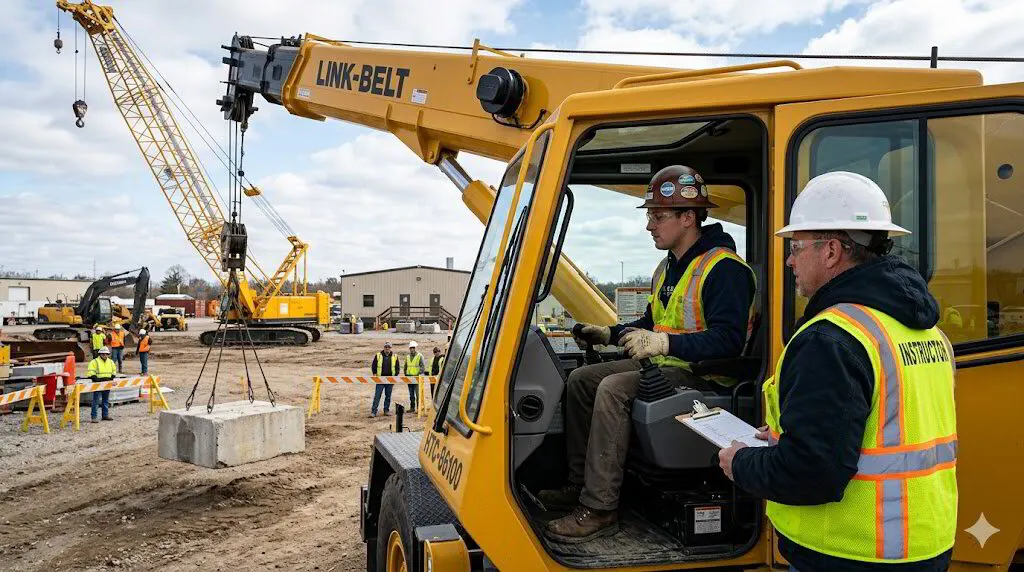
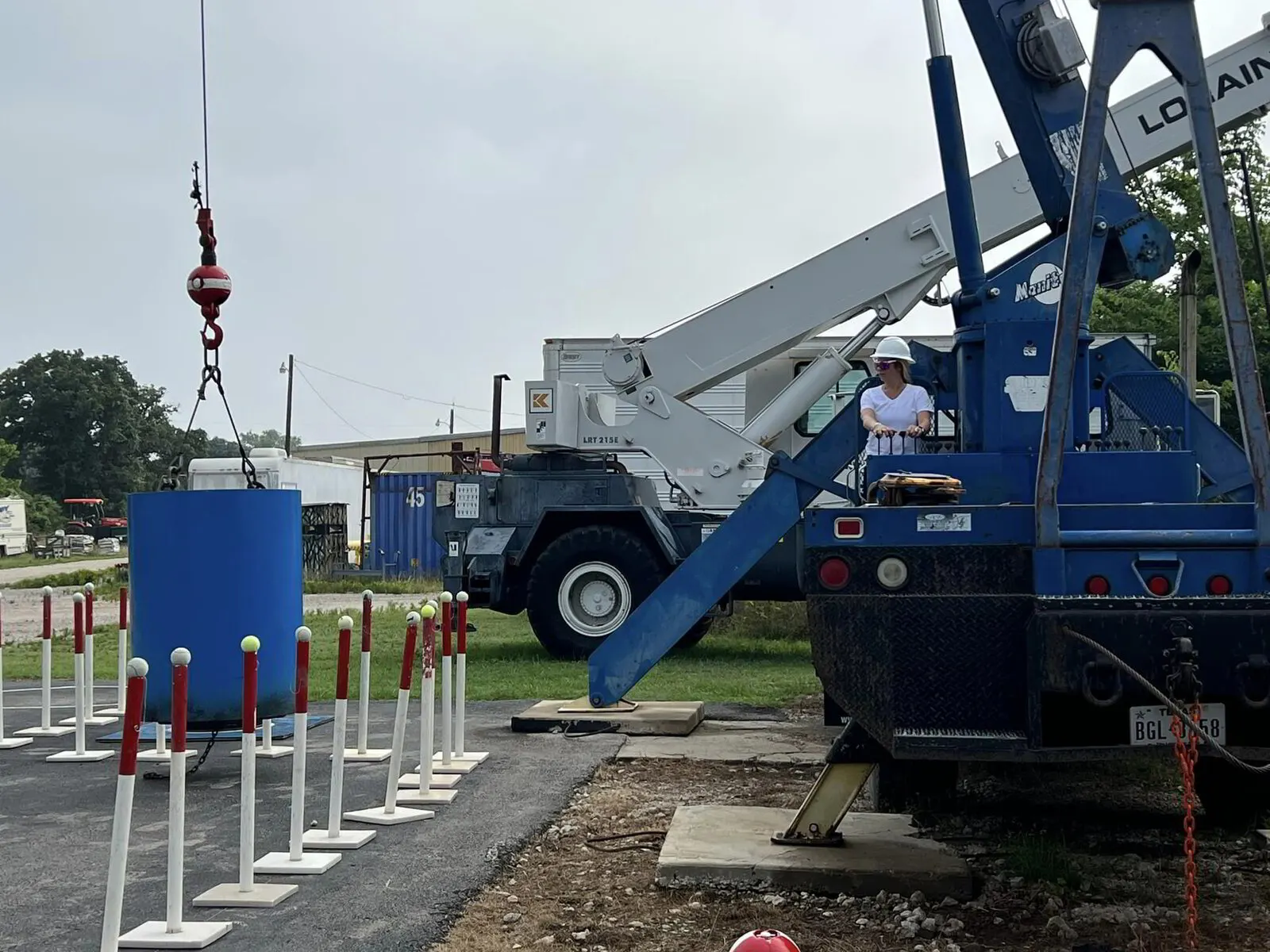
When students move to the yard, the instructor stays close and the tasks start simple: boom up, swing slowly, stop without letting the load drift, lower to a marked spot. Then the moves combine. You will hoist and swing at the same time, keep the load steady through a turn and set it down gently in a target.
The NCCCO mobile crane practical exam for fixed and swing cab cranes is given on a course in our own yard. That means many of your practice runs happen on the layout you will see on exam day, under time pressure that grows as your control improves.
Signals, radios and the person on the ground
New operators are surprised how much of the job is listening. You will learn standard hand signals, practice taking voice direction and learn when to stop: any unclear signal, any loss of sight or radio contact, any stop signal from anyone. Working with a signal person in training makes those first real-site days much less confusing.
Which course to start with
If you've never operated a crane, Mobile Crane Operations Fixed/Swing Cab 120 Hours gives the most time on inspection, set-up, charts and seat time before your NCCCO exams. If you're coming from out of town, the Premium Plus Mobile Crane Operations Fixed/Swing Cab Course adds optional room and board in Seagoville. Read what to expect for what to bring on day one.
First-week questions
Will I operate a real crane in the first week?
Usually yes, after classroom work on inspection, set-up and load charts and some simulator practice. The instructor decides when each student is ready for yard time.
What should I wear for yard days?
Work boots and clothes suited to outdoor work. The what to expect page lists everything to bring.
Do I need to know load charts before I start?
No. Load charts are taught from the beginning, including the deductions that come off gross capacity.