
On a big job you might see three or four kinds of crane at once, each picked for a reason. Here is how to tell them apart, what each does well, and which certification an operator needs for it.
Telescopic mobile cranes
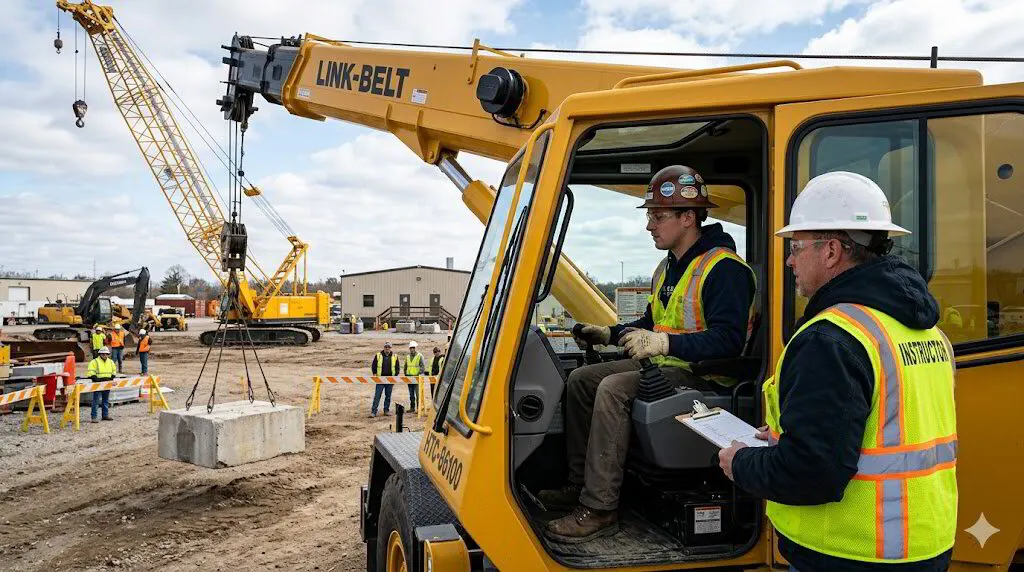
These are hydraulic cranes whose boom slides out in nested sections. They're the most common cranes on general construction sites because they arrive ready to work and set up quickly.
Rough-terrain cranes
Built on a short carrier with large tires and a single cab used for both driving and lifting. They travel well on unpaved sites but aren't meant for highway driving, so they're trucked in. You'll see them on commercial building sites, plant work and anywhere the ground is rough.
All-terrain cranes
Multi-axle cranes that can drive on highways at road speed and still handle job site terrain. Larger models carry big capacity and long booms, often with counterweight delivered on separate trucks.
Truck-mounted cranes
A telescopic boom on a truck carrier, with a separate driving cab. Useful for jobs where the crane moves between sites often.
For NCCCO, the main question is the cab: swing cab (the operator's cab rotates with the boom) or fixed cab (the operator station stays on the carrier while the boom rotates). Each has its own specialty exam.
Lattice boom crawler cranes
Lattice booms are built from steel sections joined by a web of bracing. They're lighter than a solid telescopic boom of the same length, which lets lattice cranes reach farther and lift more at long radius. Crawler versions ride on tracks, spread their weight over a large area and can travel short distances while carrying a load if the manufacturer allows.
The tradeoff is set-up. A crawler is trucked in as pieces and assembled on site by a crew under an assembly/disassembly director. That makes crawlers a fit for longer jobs: bridges, power and plant construction, heavy steel and wind energy work. Truck-mounted lattice cranes also exist, putting the same kind of boom on a wheeled carrier.
Tower cranes
Tower cranes are anchored to a foundation and stay in place for months, serving a whole building site. Three types are common:
- Hammerhead (flat-top or saddle jib): a horizontal jib with a trolley that moves the load in and out. The standard choice for open sites.
- Luffing jib: the jib raises and lowers like a mobile crane's boom, so it can work in tight downtown spaces without swinging over neighboring property.
- Self-erecting: smaller tower cranes that unfold themselves on site, used on mid-size projects.
Many tower cranes grow with the building, adding mast sections as floors go up. NCCCO certifies tower crane operators through a separate program from mobile cranes.
Choosing between them on a job
Contractors pick a crane by asking a few questions:
| Question | Usually points to |
|---|---|
| Short job, a few days of lifts? | Telescopic mobile crane |
| Very heavy loads at long reach, months on site? | Lattice crawler |
| Many lifts a day across a building footprint for the life of the project? | Tower crane |
| Soft or uneven ground? | Rough-terrain or crawler, with proper matting |
| Crane moving between sites daily? | All-terrain or truck-mounted crane |
Many large projects use more than one type: a tower crane for daily material handling, plus mobile cranes brought in for erection of the tower itself or for heavy picks the tower can't reach.
Other lifting equipment you'll hear about
Factories, warehouses and utilities use plenty of other lifting machines, and some fall under different OSHA rules than construction cranes. If a job description mentions equipment you don't recognize, ask which certification or qualification the employer expects before assuming your crane card covers it. Certification is issued by crane type, and your card lists exactly what you're certified to run.
Training on all three major types
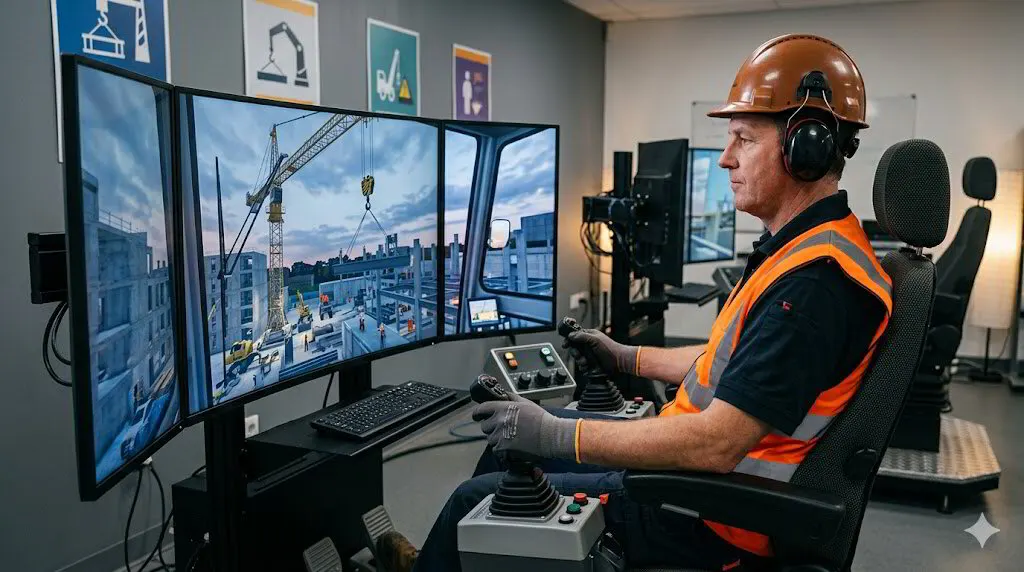
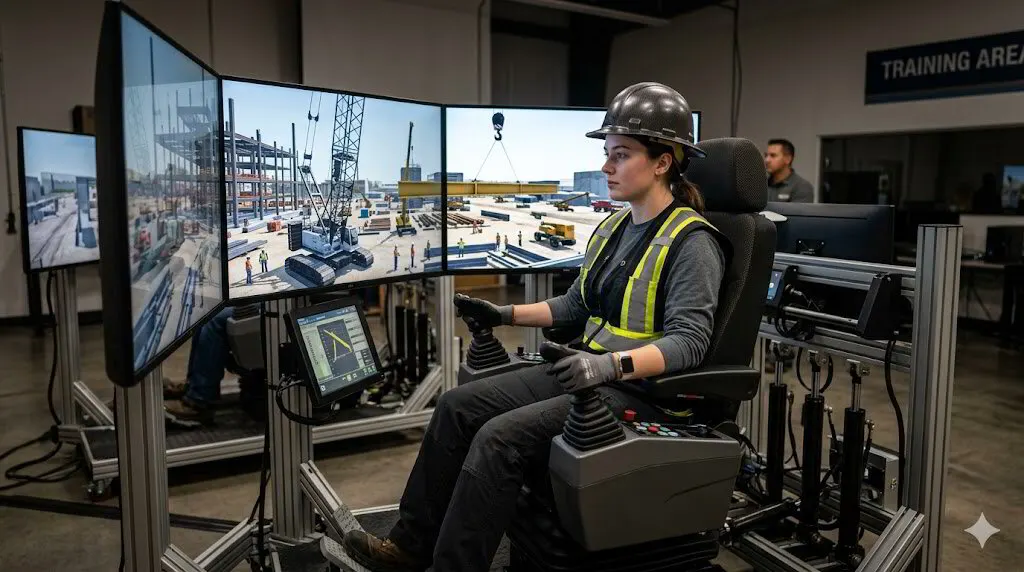
Our Seagoville yard has telescopic fixed and swing cab cranes, a lattice boom crawler and a tower crane, so students learn on the machine they'll be certified for. New operators heading for telescopic work start with Mobile Crane Operations Fixed/Swing Cab 120 Hours. Crawler work is covered by Mobile Crane Operations Lattice 40 Hours, and tower crane work by Tower Crane Operations 40 Hours. Browse all programs on the courses page.
Questions we hear
What's the difference between a fixed cab and a swing cab crane?
On a swing cab crane, the operator's cab rotates with the boom. On a fixed cab crane, the operator station stays on the carrier while the boom rotates. NCCCO has a separate specialty exam for each.
Why use a crawler crane instead of a large all-terrain crane?
Crawlers can carry heavy loads at long reach, spread their weight on tracks and stay on site for long jobs. All-terrain cranes set up faster and move between jobs more easily.
Which crane type should a beginner train on first?
Usually a telescopic mobile crane, since those are the most common on general construction sites. Choose based on the work you want, though.