
Introduction to Field Training for Crane Operators
In the construction and heavy lifting industry, crane operators serve as the backbone of countless projects, from towering skyscrapers to complex infrastructure developments. The precision, safety, and efficiency these professionals demonstrate directly impact project timelines, budgets, and most importantly, worker safety. This reality underscores the critical importance of implementing comprehensive field training programs that go beyond basic theoretical knowledge to provide real-world, hands-on experience.
Field training represents the bridge between classroom learning and professional competency. While theoretical knowledge provides the foundation, it's the practical application in real-world conditions that transforms aspiring operators into skilled professionals. The National Commission for the Certification of Crane Operators (NCCCO) recognizes this distinction, requiring both written examinations and practical assessments for crane operator certification. This dual approach ensures that certified operators possess not only technical knowledge but also the practical skills necessary to operate equipment safely and efficiently.
Effective training programs deliver measurable benefits that extend far beyond individual operator competency. Organizations investing in comprehensive field training experience reduced accident rates, improved operational efficiency, decreased equipment downtime, and enhanced regulatory compliance. These programs also contribute to higher employee retention rates, as workers appreciate employers who invest in their professional development. Furthermore, properly trained operators demonstrate greater confidence in their abilities, leading to more precise operations and better decision-making under pressure.
The implementation of best practices for field training crane operators creates a foundation for long-term success in an industry where safety and precision are non-negotiable requirements.
Understanding the Role of Crane Operators
Crane operators shoulder immense responsibility in construction and industrial environments, serving as the critical link between ground crews and elevated work areas. Their primary responsibilities encompass pre-operational equipment inspections, load calculations, precise positioning of materials, and continuous monitoring of environmental conditions. These professionals must maintain constant awareness of their surroundings, including weather conditions, ground stability, overhead obstacles, and the positioning of personnel within the crane's operational radius.
The complexity of crane operations extends beyond basic lifting and lowering functions. Operators must interpret load charts, calculate weight distributions, assess rigging configurations, and make real-time adjustments based on changing conditions. They coordinate closely with riggers, signal persons, and other ground personnel to ensure safe and efficient operations. Additionally, operators are responsible for maintaining detailed operational logs, reporting equipment malfunctions, and adhering to strict safety protocols throughout each shift.
Modern construction projects utilize various crane types, each requiring specialized knowledge and skills. Mobile cranes offer versatility and rapid deployment but require expertise in outrigger setup, ground preparation, and load chart interpretation across different configurations. Tower cranes demand understanding of climbing procedures, weather limitations, and coordination with multiple trades in congested urban environments. Lattice boom cranes require knowledge of boom assembly, counterweight configurations, and specialized rigging techniques for heavy lifting applications.
Each crane type presents unique operational challenges and safety considerations. Mobile crane operators must assess ground conditions and establish proper blocking and cribbing. Tower crane operators work at significant heights while managing longer load radii and wind considerations. Lattice crane operators handle the most complex rigging scenarios and heaviest loads, requiring advanced planning and coordination skills.
The importance of safety and compliance cannot be overstated in crane operations. Operators must maintain current NCCCO certification, participate in ongoing construction safety training, and stay informed about evolving industry regulations. They serve as the final checkpoint in the lifting operation, with authority to halt operations when conditions become unsafe. This responsibility requires not only technical competency but also strong decision-making skills and the confidence to prioritize safety over productivity pressures.
Best Practices for Field Training Crane Operators
Developing a structured training program forms the cornerstone of effective crane operator education. The most successful programs begin with comprehensive needs assessments that identify specific skill gaps and operational requirements. This assessment should consider the types of cranes used, typical lifting scenarios, site conditions, and regulatory requirements. Based on these findings, training coordinators can develop customized curricula that address real-world operational challenges while ensuring NCCCO certification requirements are met.
Progressive skill development represents a fundamental principle in effective training programs. Beginning operators start with basic equipment familiarization, safety protocols, and simple lifting exercises before advancing to complex multi-crane operations or specialized lifting scenarios. This progression allows students to build confidence while developing muscle memory for critical safety procedures. Each phase should include specific competency benchmarks that students must achieve before advancing to more challenging operations.
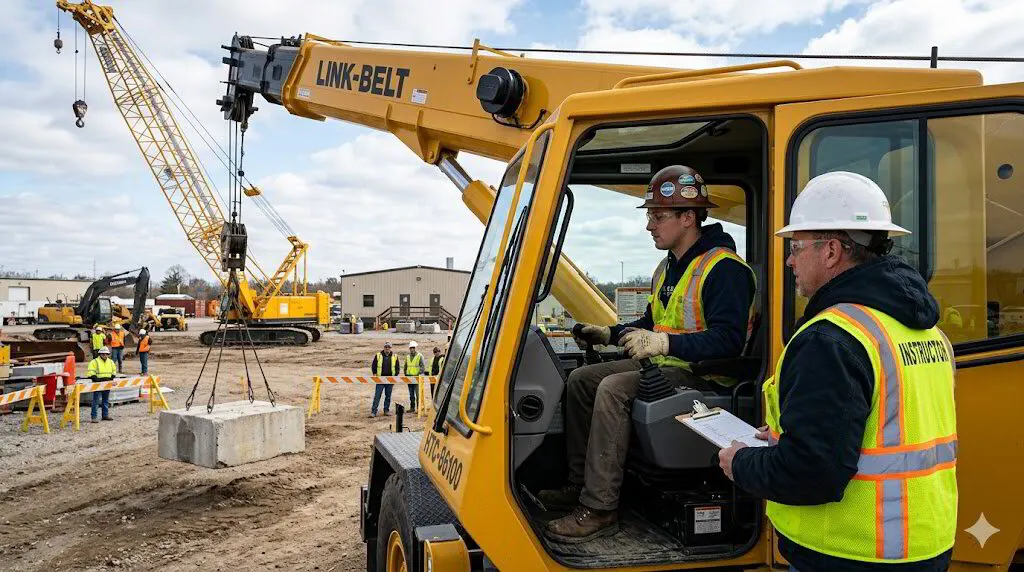
Utilizing experienced instructors proves essential for delivering quality field training. The most effective instructors combine extensive operational experience with formal teaching capabilities. These professionals understand the nuances of crane operations that cannot be captured in textbooks, such as recognizing subtle equipment vibrations that indicate potential problems or interpreting wind conditions at various heights. Experienced instructors also provide valuable mentorship, sharing lessons learned from years of field experience and helping students develop professional judgment.
Instructor qualifications should include current NCCCO certification, several years of operational experience, and formal training in adult education principles. Many successful programs pair seasoned operators with certified training professionals to combine practical expertise with educational methodology. This approach ensures that technical knowledge is delivered effectively while maintaining engagement and comprehension among diverse learning styles.
Incorporating hands-on practical experiences distinguishes effective programs from basic certification mills. Hands-on crane training should simulate actual job site conditions, including realistic lifting scenarios, time pressures, and coordination with other trades. Students should practice with various load types, rigging configurations, and environmental conditions to develop adaptability and problem-solving skills. This practical exposure helps bridge the gap between controlled training environments and the unpredictable nature of actual construction projects.
Practical training sessions should include equipment maintenance procedures, pre-operational inspections, and troubleshooting common mechanical issues. Students learn to identify potential problems before they become safety hazards while developing appreciation for proper equipment care. This comprehensive approach produces operators who understand their equipment thoroughly rather than simply knowing how to move loads from point to point.
Emphasizing safety protocols and regulations throughout training creates a culture of safety consciousness that extends beyond certification requirements. Safety training should be integrated into every aspect of the program rather than treated as a separate module. Students should understand not only what safety procedures to follow but why these procedures exist and how violations can lead to catastrophic consequences. Real-world case studies of crane accidents provide powerful learning opportunities when presented professionally and constructively.
Safety emphasis should include environmental hazard recognition, emergency procedures, and the operator's authority to stop operations when conditions become unsafe. Students learn to identify potential hazards such as overhead power lines, unstable ground conditions, or inadequate rigging before they create dangerous situations. This proactive approach to safety becomes ingrained through repetitive practice and reinforcement throughout the training process.
Using real-world scenarios for training ensures that graduates are prepared for the challenges they will encounter in actual employment. These scenarios should reflect the specific types of projects and conditions common in the local market while exposing students to a variety of challenging situations. Realistic training scenarios might include coordinating with multiple trades, working in confined spaces, or managing complex lifting sequences with tight tolerances.
Scenario-based training also provides opportunities to practice decision-making under pressure and develop communication skills essential for effective crane operations. Students learn to assess situations quickly, communicate clearly with ground personnel, and maintain operational efficiency while prioritizing safety. This comprehensive approach to best practices for field training crane operators produces competent professionals ready to contribute immediately to their employers' success.
Effective Communication in Crane Operations
Clear communication between crane operators and ground crews represents a critical safety component that can mean the difference between successful operations and catastrophic accidents. The elevated position of crane operators often limits their direct visual contact with loads and landing areas, making them dependent on ground personnel for essential information about load positioning, obstacles, and safety conditions. This dependency requires establishing robust communication protocols that function effectively in noisy, dynamic construction environments.
Standard hand signals form the foundation of crane operation communication, providing a universal language that transcends verbal barriers and equipment noise. The NCCCO certification process includes comprehensive signal training, but field applications require extensive practice to develop proficiency. Effective training programs dedicate significant time to signal practice, ensuring that both operators and ground personnel can execute and interpret signals accurately under various conditions. This includes practicing signals at distance, in poor lighting conditions, and while wearing personal protective equipment that may limit visibility or movement.
Radio communication systems provide additional communication channels, particularly valuable for complex operations or when visual contact is limited. However, radio systems require specific protocols to prevent confusion and ensure message clarity. Training should include proper radio etiquette, standardized terminology, and backup procedures when radio systems fail. Operators and ground personnel must understand the hierarchy of communication methods and when to utilize each system for maximum effectiveness.
Implementing standard signals and protocols for rigging and signaling creates consistency across different crews and job sites. Rigger and signal person certification programs ensure that ground personnel understand their responsibilities and can communicate effectively with operators. However, field training must reinforce these concepts through practical application and team exercises that simulate actual working conditions. This coordination training helps prevent miscommunication that can lead to dropped loads, equipment damage, or personnel injuries.
Signal person training should emphasize the authority and responsibility that comes with directing crane operations. Signal persons must understand load dynamics, crane capabilities, and site hazards to provide accurate guidance to operators. They serve as the operator's eyes and ears on the ground, making their competency essential for safe operations. Training programs should include exercises where signal persons practice directing complex lifts while managing multiple variables and potential hazards.
Training for emergency communication addresses scenarios where standard communication methods may be inadequate or unavailable. Emergency situations require immediate, clear communication to prevent injuries and minimize damage. Training should cover emergency signals, evacuation procedures, and coordination with emergency responders. Operators and ground personnel must understand their roles during emergencies and practice these procedures regularly to maintain proficiency.
Emergency communication training should also address equipment failures, medical emergencies, and severe weather events that may require immediate operational changes. Personnel learn to prioritize safety over productivity and understand the chain of command during emergency situations. This preparation ensures that teams can respond effectively when faced with unexpected challenges that threaten personnel safety or equipment integrity.
Evaluating Training Effectiveness
Comprehensive assessment methods for evaluating operator competency must extend beyond basic certification requirements to ensure that students have developed the practical skills necessary for safe, efficient operations. Effective evaluation combines written examinations, practical demonstrations, and ongoing performance monitoring to provide a complete picture of operator capabilities. These assessments should reflect real-world operational challenges while maintaining objective standards that ensure consistency across different students and training cycles.
Practical evaluations should include pre-operational inspections, load calculations, rigging assessments, and actual lifting operations under various conditions. Evaluators observe not only technical proficiency but also decision-making processes, safety consciousness, and communication effectiveness. This comprehensive approach identifies areas where additional training may be needed while confirming that graduates possess the competencies required for independent operation.
Performance-based assessments provide more meaningful evaluation than simple pass-fail examinations. These assessments evaluate students' ability to adapt to changing conditions, solve problems effectively, and maintain safety standards under pressure. Evaluators should use standardized rubrics that clearly define performance expectations while allowing for individual learning styles and approaches to problem-solving.
Feedback mechanisms from students provide valuable insights into training program effectiveness and areas for improvement. Regular feedback collection through surveys, focus groups, and individual interviews helps identify content gaps, instructional weaknesses, and opportunities for enhancement. Student feedback should address both technical content delivery and practical application opportunities, ensuring that programs meet diverse learning needs effectively.
Constructive feedback should be provided to students throughout the training process rather than only at completion. This ongoing communication helps identify learning challenges early while providing opportunities for remedial instruction before problems become entrenched. Effective feedback focuses on specific behaviors and performance indicators rather than general assessments, giving students clear direction for improvement.
Ongoing evaluation and re-training needs assessment ensures that operators maintain current competencies throughout their careers. The construction industry continuously evolves with new equipment, regulations, and techniques requiring periodic skills updates. Employers should establish regular competency reviews that identify areas where additional training may be beneficial while ensuring that operators remain current with industry best practices.
Re-training programs should address both mandatory regulatory updates and voluntary skill enhancement opportunities. This might include training on new equipment types, updated safety regulations, or specialized techniques for specific project requirements. Ongoing education demonstrates commitment to professional development while ensuring that operators remain valuable assets throughout their careers.
Future Trends in Crane Operator Training
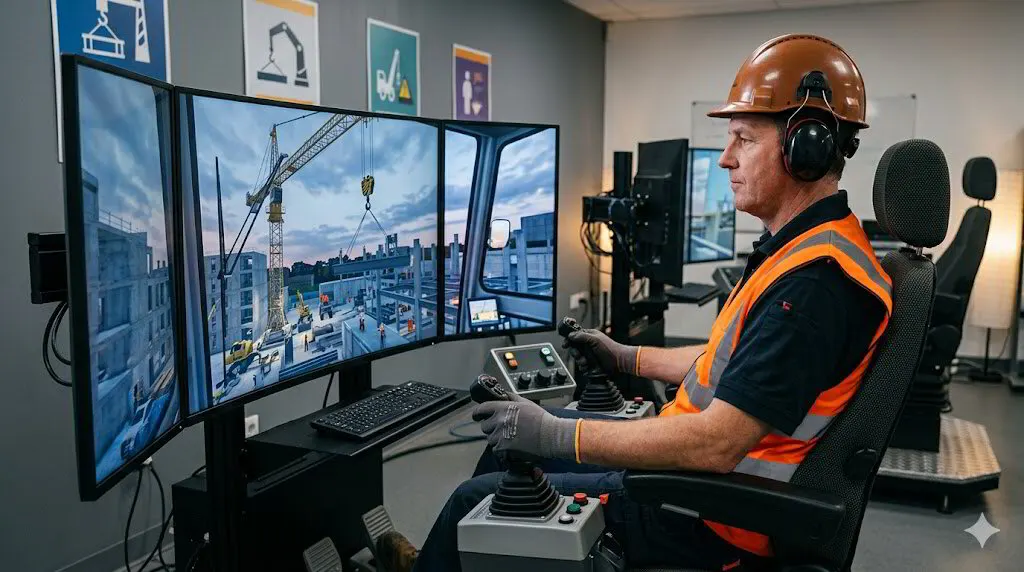
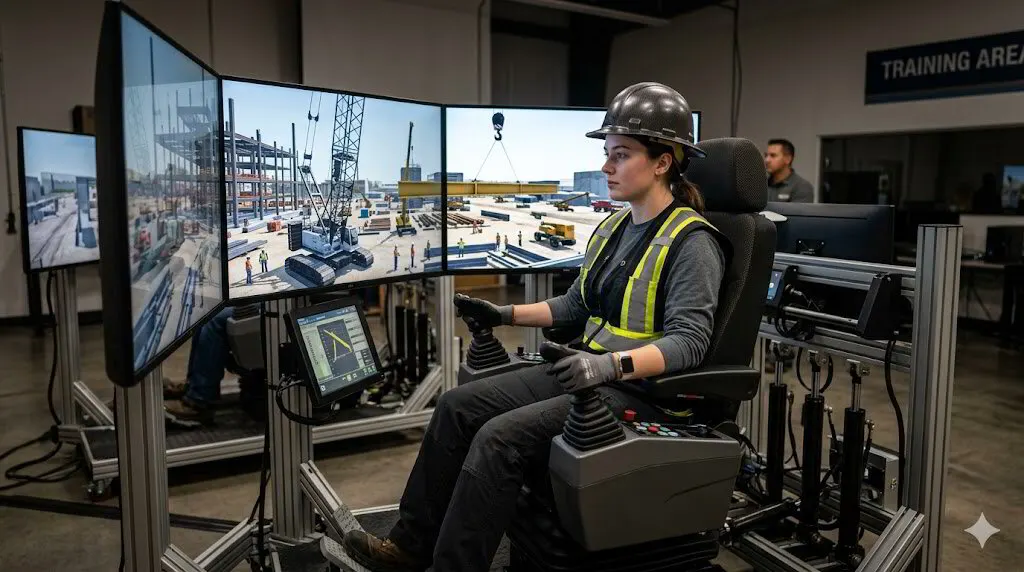
Technological advancements are revolutionizing crane operator training through virtual reality simulations, computer-based training modules, and sophisticated equipment simulators that provide safe, controlled learning environments. Virtual reality systems allow students to experience dangerous scenarios without actual risk, practicing emergency procedures and hazard recognition in realistic but controlled settings. These systems can simulate various weather conditions, equipment failures, and site hazards that would be impossible or dangerous to recreate in traditional training environments.
Simulation technology also provides opportunities for repetitive practice of complex procedures without equipment wear or operational costs. Students can practice load calculations, rigging configurations, and coordination procedures multiple times until proficiency is achieved. Advanced simulators incorporate haptic feedback that replicates the physical sensations of crane operation, providing more realistic training experiences that better prepare operators for actual equipment operation.
Computer-based training modules supplement hands-on instruction by providing interactive learning opportunities that accommodate different learning styles and schedules. These modules can include video demonstrations, interactive diagrams, and scenario-based learning exercises that reinforce classroom instruction. Mobile-compatible training platforms allow students to review material and practice concepts outside formal training sessions, accelerating the learning process and improving retention.
Industry standards and regulations continue evolving in response to technological advances, safety research, and operational experience. Training programs must stay current with these changes to ensure that graduates meet current certification requirements and industry expectations. This includes updates to NCCCO certification standards, OSHA regulations, and industry best practices that affect crane operations and safety requirements.
Regulatory changes often reflect lessons learned from accident investigations and safety research, making it essential for training programs to incorporate these insights promptly. Training coordinators should maintain active involvement in industry organizations and regulatory bodies to stay informed about pending changes and their implications for training content and delivery methods.
The importance of continual learning and adaptation cannot be overstated in an industry experiencing rapid technological and regulatory evolution. Successful crane operators must embrace lifelong learning principles, seeking opportunities to expand their skills and stay current with industry developments. This mindset begins during initial training and continues throughout professional careers, supported by employers who recognize the value of investing in ongoing education and skill development.
Professional development opportunities should include specialized training for new equipment types, advanced rigging techniques, and leadership skills for experienced operators who may supervise other personnel. Industry conferences, manufacturer training programs, and advanced certification courses provide valuable opportunities for skill enhancement and professional networking that benefit both individuals and their employers.
Conclusion
The implementation of comprehensive best practices for field training crane operators represents a critical investment in safety, efficiency, and long-term operational success. Throughout this guide, we have explored the essential components of effective training programs, from structured curriculum development and experienced instruction to hands-on practical experiences and ongoing competency evaluation. These elements work together to create training programs that produce skilled, safety-conscious operators capable of meeting the demanding requirements of modern construction and industrial environments.
The future of crane operator training will continue evolving with technological advances and regulatory changes, but the fundamental principles of thorough preparation, safety emphasis, and practical application will remain constant. Organizations that prioritize comprehensive training programs position themselves for success while contributing to industry-wide safety improvements and professional standards advancement.
Miller Crane Works offers comprehensive crane operator certification programs, including mobile crane courses, tower crane training, and rigger certification that incorporate industry best practices and hands-on experience. Our experienced instructors provide the expert guidance needed to develop competent, safety-conscious operators who contribute immediately to your operational success.
Visit https://millercraneworks.com/ to learn more about our training programs and practice time with equipment to take the first step toward building a skilled, certified workforce that meets today's demanding industry standards.
-
 The Ultimate Guide to Crane Operator Field Training Programs: Certification & Career SuccessIn the ever-evolving construction industry, the need for certified crane operators is paramount, making effective…
-
 How Crane Simulators Enhance Operator Skills for Safer Construction PracticesAs the construction industry increasingly embraces technology, crane operator training has evolved significantly,…
-
 Unlocking Efficiency: The Benefits of Crane Simulator Training for Aspiring OperatorsCrane simulator training is revolutionizing the skill development of aspiring crane operators, offering a safe and…