Houston has no shortage of crane training ads. The useful way to compare them is not by slogans but by asking the same direct questions of every school, including us.
Start with who issues the certification
No training school certifies crane operators for NCCCO. The National Commission for the Certification of Crane Operators sets the exams, grades them and issues the card. Schools prepare you and may host exams. If a provider's materials blur that line, ask them to explain exactly what you receive at the end and from whom.
Ten questions worth asking
- Are you a CCO EDU Accredited Training Provider? It is NCCCO's program for recognizing training providers.
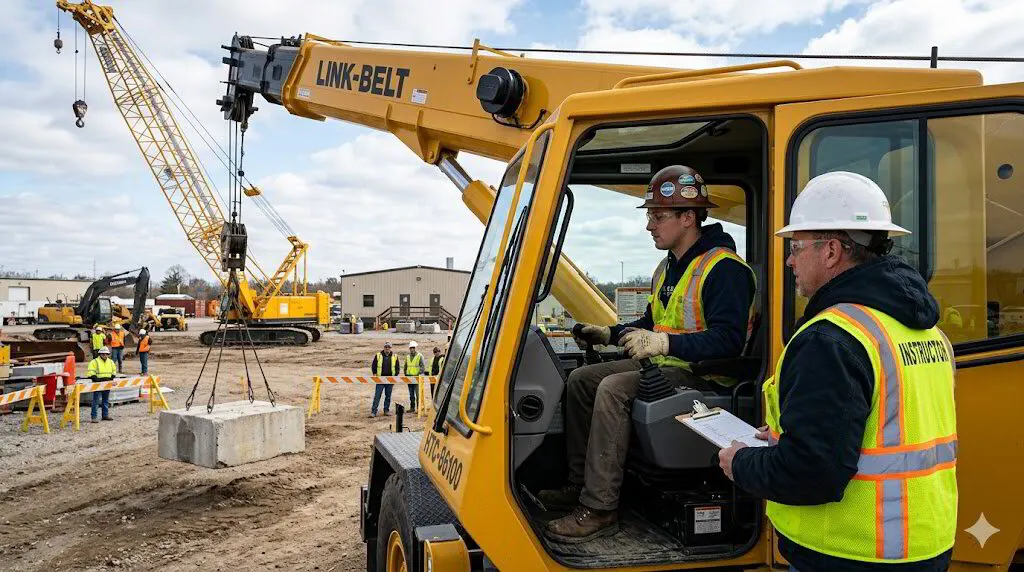
- Which crane types are in your yard? If you want a lattice crawler certification, the school needs a crawler, not just a telescopic crane.
- How many hours will I actually operate? Ask for seat time, not total course hours.
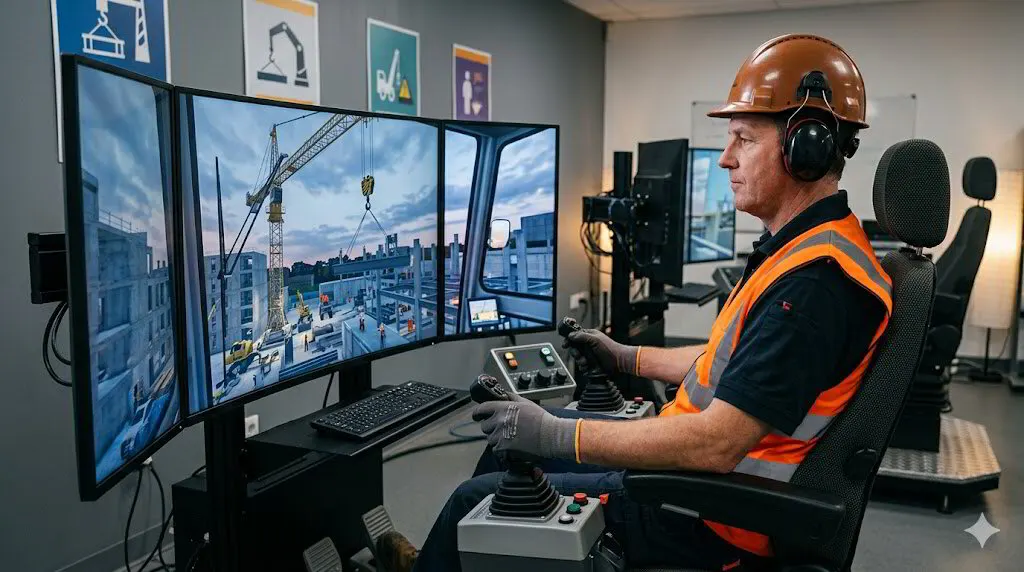
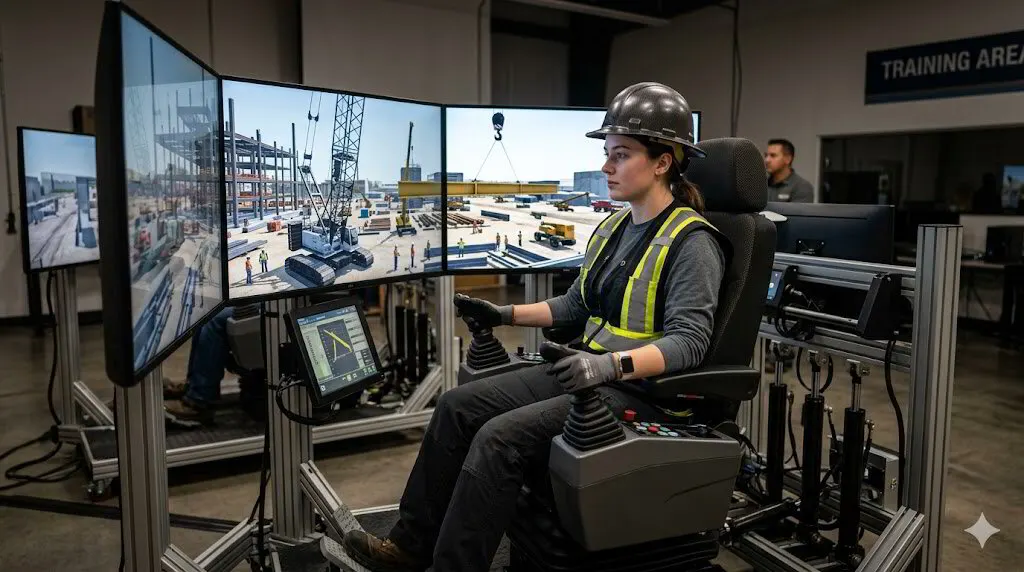
- Is there a simulator, and how is it used? It should support seat time, not replace it.
- Where is the practical exam held? Testing on the same course and crane you trained on removes one source of nerves.
- Where and when are the written exams? Get a realistic timeline from first class to exam day.
- What exactly does tuition include? Ask about NCCCO exam fees, books, retakes and lodging, and get the answer in writing.
- Is the course approved by the Texas Workforce Commission? This matters if you hope to use WIOA funding through Workforce Solutions.
- Are you approved for GI Bill® benefits? Veterans should confirm before enrolling.
- What happens if I don't pass an exam? Learn the retest process and any extra cost.
Red flags
- Promises that you will pass, or that a job is waiting at the end.
- A "certification" that is only a certificate of attendance with no NCCCO exams.
- Online-only courses claiming to meet OSHA operator certification on their own.
- No clear answer about which crane you'll test on.
A reputable school is happy to answer every question above on the phone.
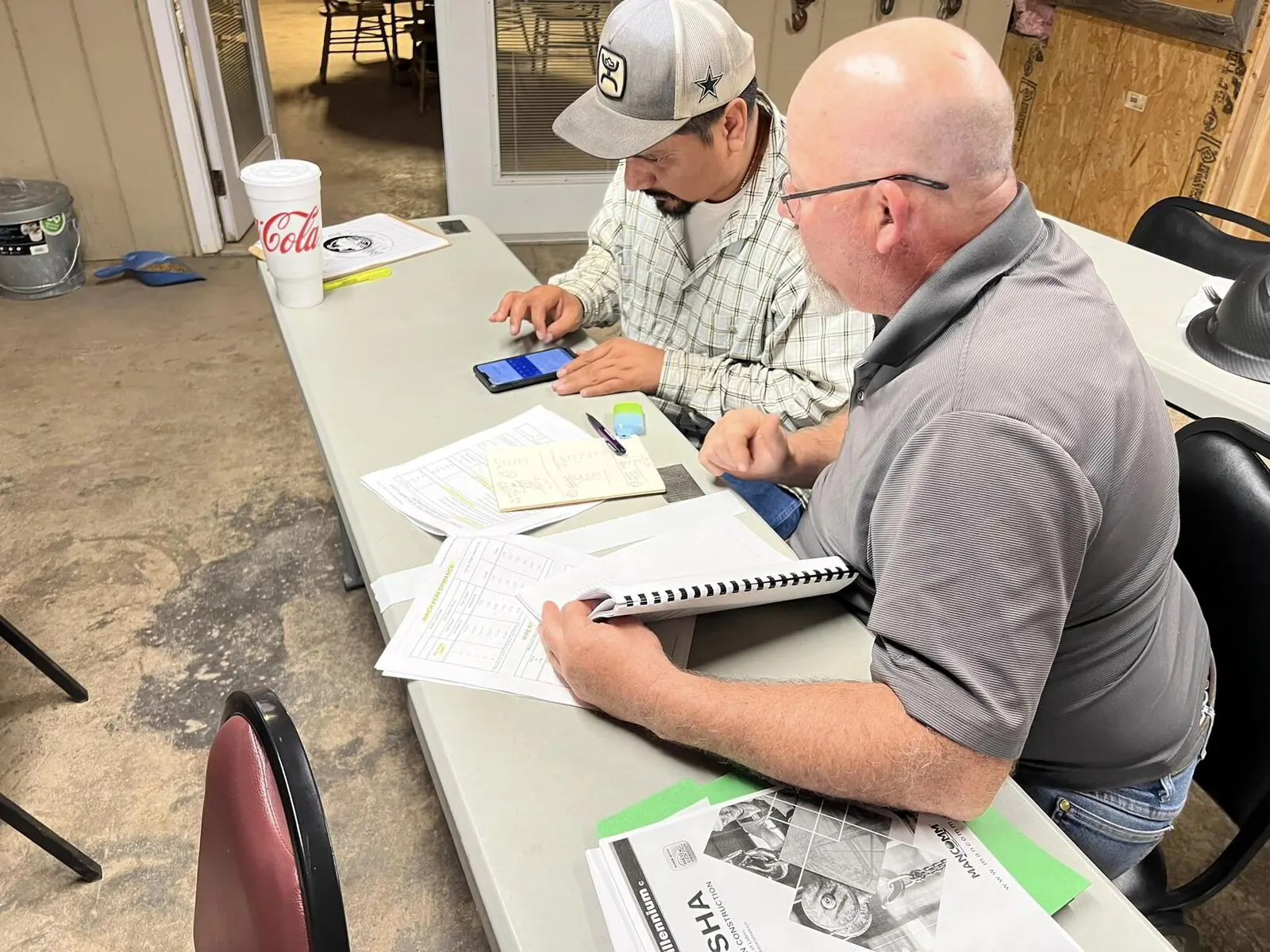
Write the answers down as you call around. Once you have three or four schools on one sheet, differences that sounded small on the phone, such as which crane you'll test on or whether lodging is extra, become easy to compare.
Also ask to visit if you can. Seeing the yard, the cranes and a class in progress tells you more than any brochure, and a school that welcomes a visit is usually confident in what it offers.
Local versus traveling to train
Training close to home is convenient, and if a Houston-area school answers these questions well, it may suit you. Traveling makes sense when another school's yard has the crane type you need, or when its course format fits your experience better. Houston students who train with us drive roughly 240 miles north to Seagoville, or fly into Dallas Love Field or DFW, and stay for the course.
Our answers
We're a CCO EDU Accredited Training Provider with TWC-approved courses and GI Bill® approval. Our Seagoville yard has telescopic fixed and swing cab cranes, a lattice boom crawler and a tower crane, plus a classroom simulator, and NCCCO practical exams are held in the same yard. Tuition for every course is listed on the funding page; ask us what it includes for the course you want.
Houston students who need housing often choose the Premium Plus Mobile Crane Operations Fixed/Swing Cab Course. Experienced operators who only need exam preparation can look at the Mobile Crane Operations Fixed/Swing Cab 40 Hours course. Use the contact page to put your questions to us directly.
Questions about choosing a provider
Does the training school issue my NCCCO card?
No. NCCCO administers the exams and issues certification. The school prepares you and may host the exams.
What is a CCO EDU Accredited Training Provider?
A training provider recognized through NCCCO's CCO EDU program. Ask any school whether it holds that status.
Is seat time more important than total course hours?
For the practical exam, usually yes. Ask how many hours you will personally spend at the controls of a real crane.