Crane schools vary a lot in what you actually get for your tuition. A few direct questions, asked before you enroll, sort out most of the differences. Here they are, with what a good answer looks like.
Start with what you need the training for
Before comparing schools, be clear on your own goal. A beginner who wants a first operator job needs a long course with a lot of seat time. An experienced operator who needs a card for a new contract needs focused exam preparation. A company sending a crew wants consistent dates and scheduling for several people. Riggers and signal persons need different courses entirely.
The crane type matters too. Most commercial and industrial work uses telescopic cranes. High-rise jobs use tower cranes. Heavy civil and plant work often uses lattice boom crawlers. Ask employers in your area which certification they ask for, then find a school that trains on that crane.
Questions to ask any crane school
- Is the program approved by the state? In Texas, career schools are approved by the Texas Workforce Commission. Approval matters for consumer protection and is often required for workforce funding.
- Are you a CCO Accredited Training Provider? CCO EDU accreditation means the school's training program has been reviewed by CCO. It doesn't mean the school certifies you; NCCCO does that.
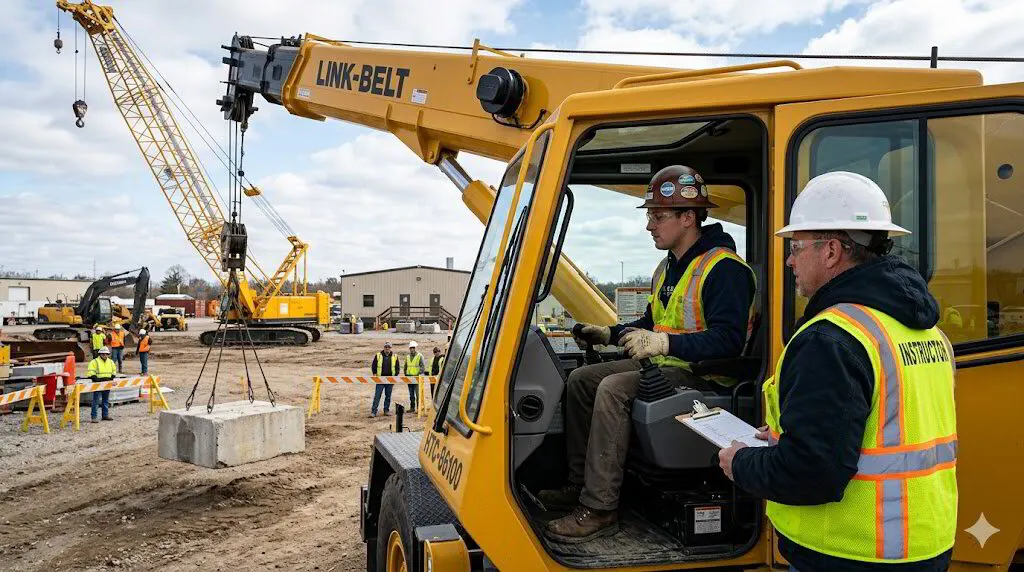
- Which cranes will I operate, and for how many hours? Ask what's in the yard and how seat time is shared between students.
- Where is the practical exam? Testing on the same course and crane you trained on removes a lot of test-day surprises.
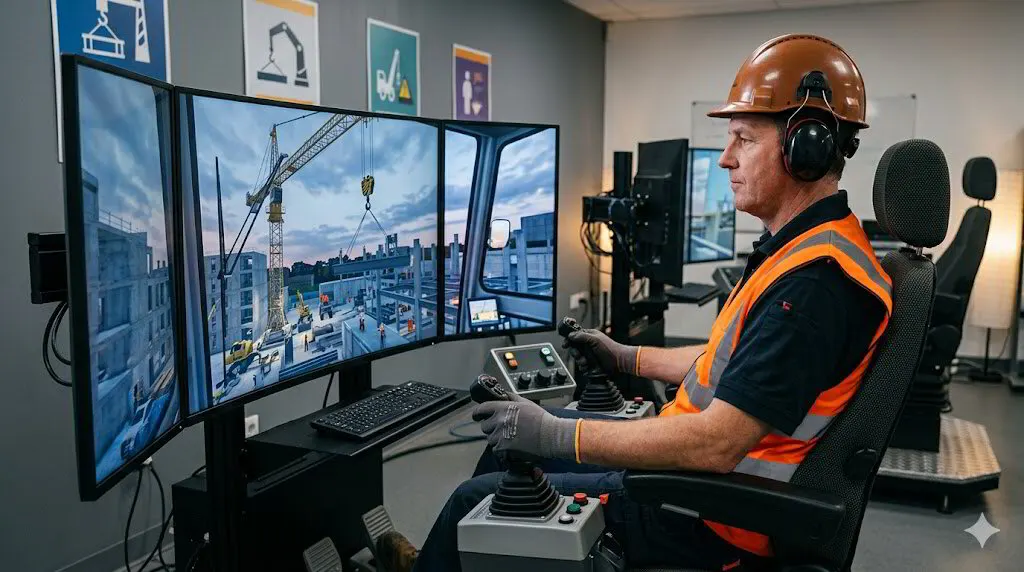
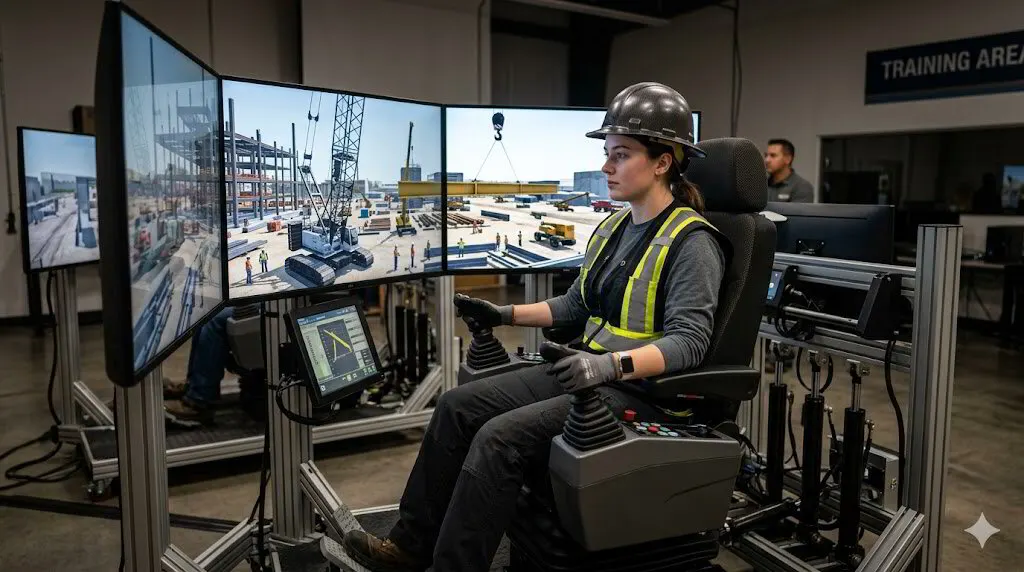
- Is there a simulator? It's not a substitute for seat time, but it helps beginners get comfortable before the yard.
- What does tuition include? Ask what is and isn't covered, including NCCCO exam fees, retests and materials.
- What funding do you accept? GI Bill®, workforce funding through local boards, and employer billing are common.
- Where do I stay if I'm not local? Some schools offer housing; others leave it to you.
Red flags
- Promises about passing or jobs. No honest school can promise you'll pass an NCCCO exam or land a specific job.
- "Certification" issued by the school. A school certificate of completion is not NCCCO certification. Know which one you're paying for.
- Vague answers about seat time. If they can't say which crane you'll run, ask why.
- Pressure to pay before you see the schedule. You should know your dates and what each day involves.
Visit if you can
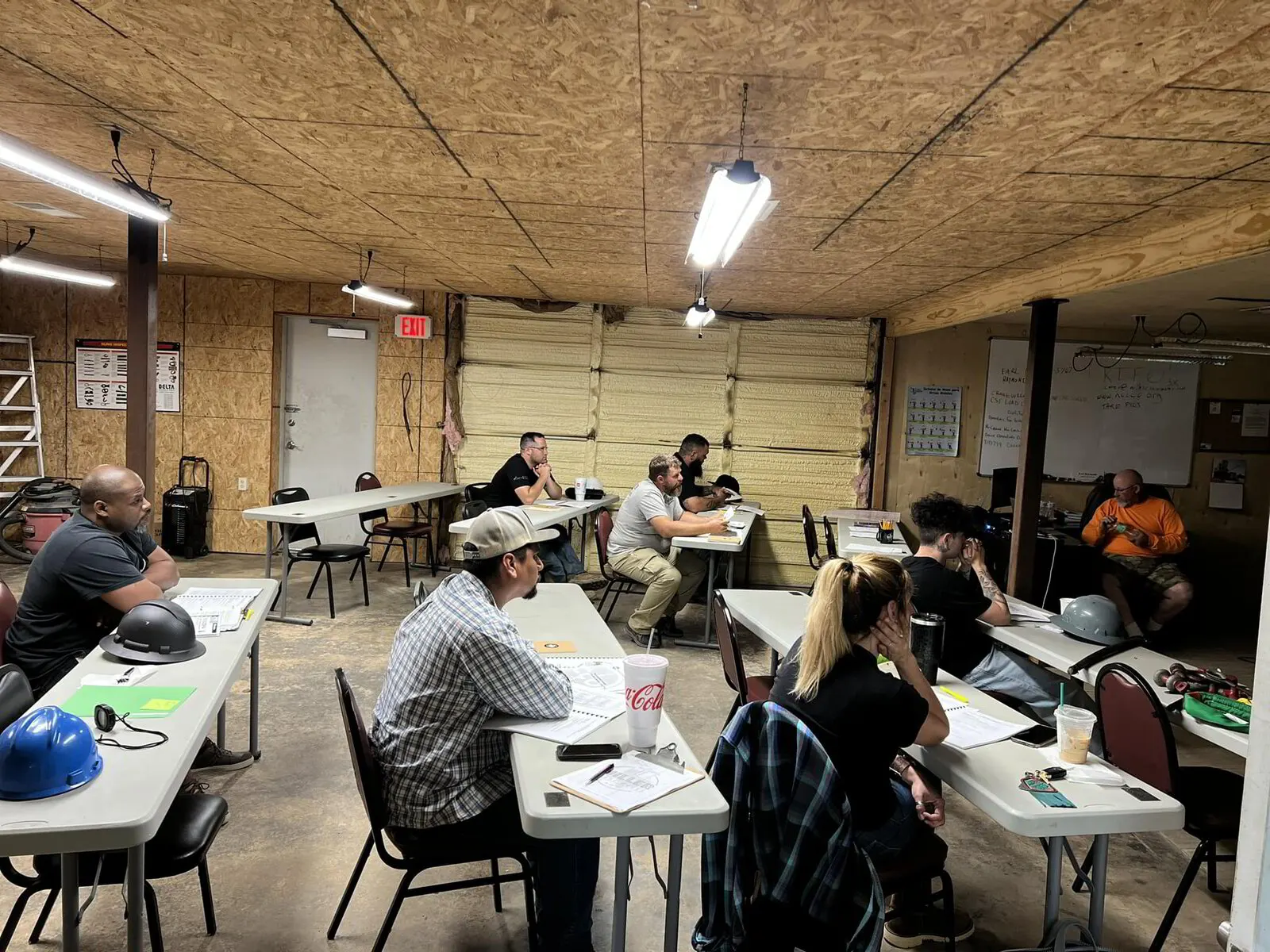
A visit tells you more than a website. Look at the cranes, the classroom and the practical exam course. Ask an instructor to explain how they teach load charts. If you're comparing a school a long drive away, ask whether the course schedule runs on full weekdays and plan your lodging around it.
How Miller Crane Works answers those questions
We're one training site at 304 Tunnell St in Seagoville, southeast of Dallas. Our 12 courses are approved by the Texas Workforce Commission, and we're a CCO EDU Accredited Training Provider. The yard has telescopic fixed and swing cab, lattice boom crawler and tower cranes, plus an NCCCO practical exam site, and our classroom has a crane simulator. We're approved for GI Bill® benefits, work with students funded through Workforce Solutions offices, and accept employer sponsorship. Premium courses offer optional room and board for students traveling in. See admission and location for details.
Most beginners choose Mobile Crane Operations Fixed/Swing Cab 120 Hours. Out-of-town students often pick the Premium Mobile Crane Operations Fixed/Swing Cab Course for optional room and board.
Questions about picking a school
Does a crane school certify me?
No. In the US, operator certification comes from an accredited testing organization such as NCCCO. A school trains you and may host exams, but the certification is issued by the testing body.
Why does Texas Workforce Commission approval matter?
TWC regulates career schools in Texas. Approved programs meet state standards, and approval is often needed for workforce funding.
Should I choose a school close to home?
Not necessarily. A shorter drive helps on long courses, but the right crane type, enough seat time and an on-site practical exam can matter more. Housing options make a distant school workable.