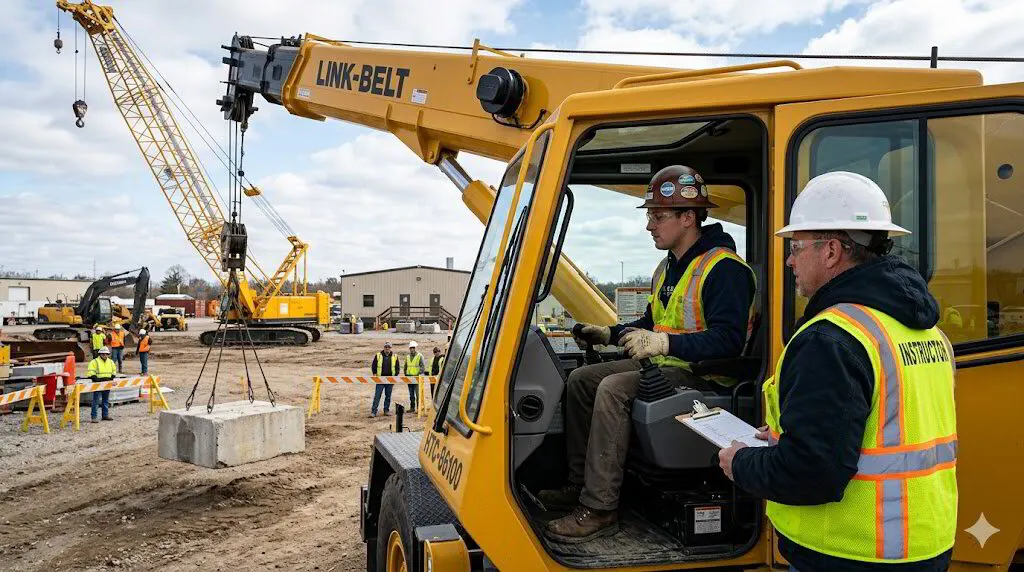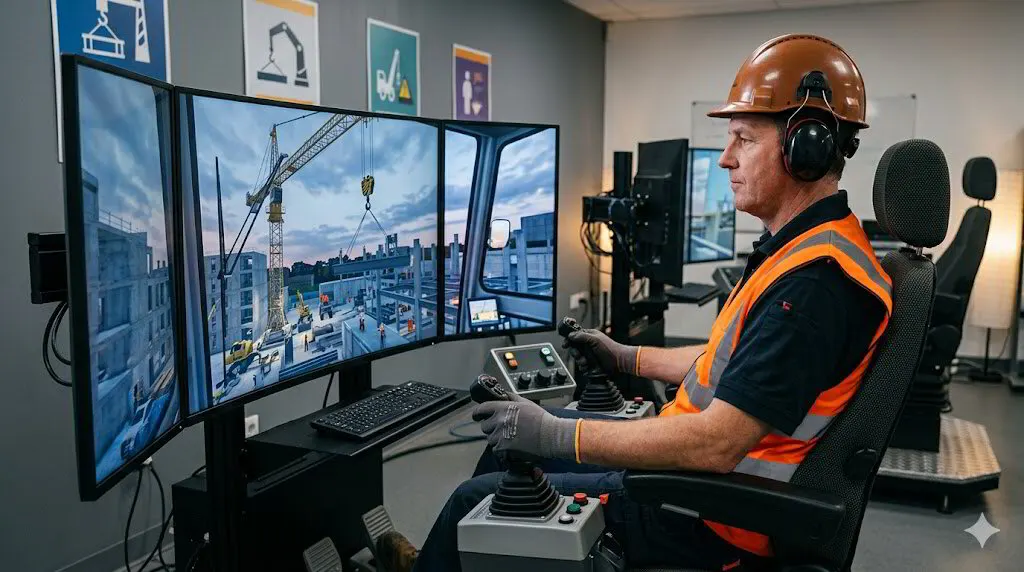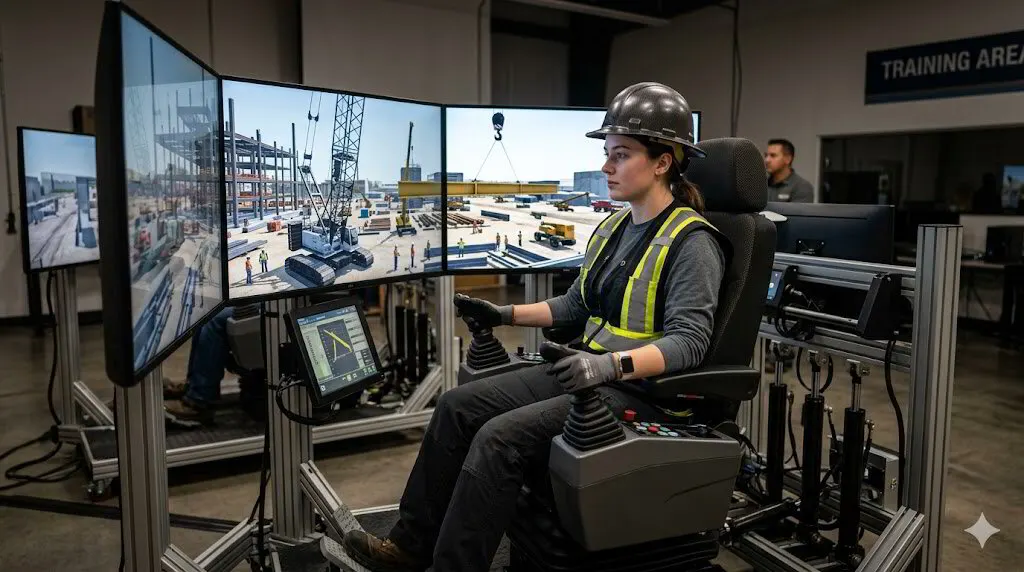

A crane lift takes a team. Each role on that team has its own skills and, often, its own credential. Knowing the roles helps you decide where to start and what to add later.
The people behind one lift
Watch a steel beam go up and you'll see more than an operator. Someone checked the beam's weight and chose the slings. Someone hooked it up and controlled it with a tag line. Someone gave signals while the operator could not see the landing point. On larger lifts, someone planned the whole thing on paper first. Each of those is a job you can build a career in.
Ground roles: rigger and signal person
Riggers select and inspect slings, shackles and hardware, estimate load weight and find the center of gravity, and attach the load so it hangs level and safe. OSHA requires a qualified rigger whenever workers hook or unhook loads in the fall zone (29 CFR 1926.1425).
Signal persons direct the operator with standard hand signals or radio when the operator can't see the load or the path. OSHA 1926.1428 requires them to be qualified through a written or verbal test and a practical test.
NCCCO offers Rigger Level I, Rigger Level II and Signalperson certifications. Many people start here, because these roles put you right next to the crane and teach how lifts really work.
The operator's seat
Operators need certification for the type of crane they run, under OSHA 1926.1427. NCCCO certification is organized by crane type:
| Crane type | Typical work |
|---|---|
| Telescopic, fixed cab or swing cab | Commercial building, industrial maintenance, general construction |
| Lattice boom crawler | Heavy civil, bridges, plant construction, wind and energy work |
| Tower crane | Mid- and high-rise buildings |
Most operators start with one type and add others as their work changes. Each certification is valid for five years, after which you recertify.
Moving beyond the seat
Experienced crane hands can grow into roles that rely on judgment more than stick time:
- Lift director: oversees a lift and the crew performing it. NCCCO offers a Lift Director certification.
- Crane inspector: inspects cranes against OSHA and ASME requirements. NCCCO has a Crane Inspector program.
- Lift planner or crane coordinator: plans critical and multi-crane lifts, often at large contractors or rental companies.
- Trainer or evaluator: teaches and assesses new operators, riggers and signal persons.
These roles usually come after years in the field. Certification shows you know the material, but the experience is what employers look for.
Picking your first step
Ask yourself three questions. Do you want to be in the cab, or on the ground directing the work? Which kind of crane is most common where you want to work? And how much time can you set aside for training right now? Your answers point to a first course, and you can add credentials later rather than trying to do everything at once.
It also helps to talk to people already doing the work. Ask an operator or rigger on a local job what their first year looked like, which credential their employer asked for, and what they wish they had learned sooner. Their answers will be more useful than any job ad.
Finally, keep records from day one: certification cards, the crane types and capacities you have run, and the kinds of lifts you have done. A simple log makes recertification, employer evaluations and future applications much easier.
Where our courses fit
Our TWC-approved courses in Seagoville cover each starting point. Ground crew can begin with the Rigger/Signal Person Certification Level I 28 Hours course, which prepares for NCCCO Rigger Level I and Signalperson. Future operators often start with the Mobile Crane Operations Fixed/Swing Cab 120 Hours course, and those aiming at building work can take the Tower Crane Operations 40 Hours course.
Questions about crane career paths
Should I start as a rigger or go straight to operator training?
Either works. Rigging and signaling teach how lifts work and get you on crane jobs quickly; operator training is the direct route to the seat. Many people do both.
How long does NCCCO certification last?
Five years. You recertify before it expires to keep it active.
Does one operator certification cover every crane?
No. NCCCO certifies by crane type, such as telescopic, lattice boom crawler or tower crane. You test separately for each type you want to operate.