Two students can sit through the same crane course and leave with very different skills. The difference is rarely talent. It is how they use the hours they have. These five tips come from watching what works for students in our classroom and yard.
1. Work one load chart problem every evening
Load chart questions make up most of the NCCCO specialty exam, and speed only comes from repetition. Instead of cramming before the test, do one or two problems each night of the course: pick a radius and boom length, find gross capacity, take off the hook block and rigging, and decide whether the lift is allowed. Bring any you get wrong to the instructor the next morning.
Twenty minutes a night adds up. By the last week, the steps feel automatic and you can spend exam time checking your work instead of hunting through the chart.
2. Use the simulator to make mistakes on purpose
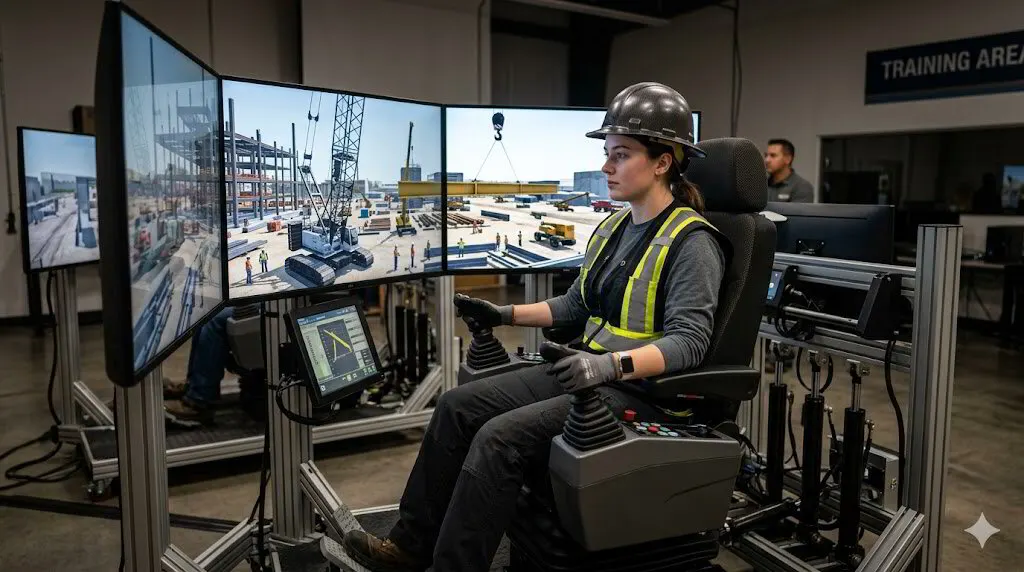
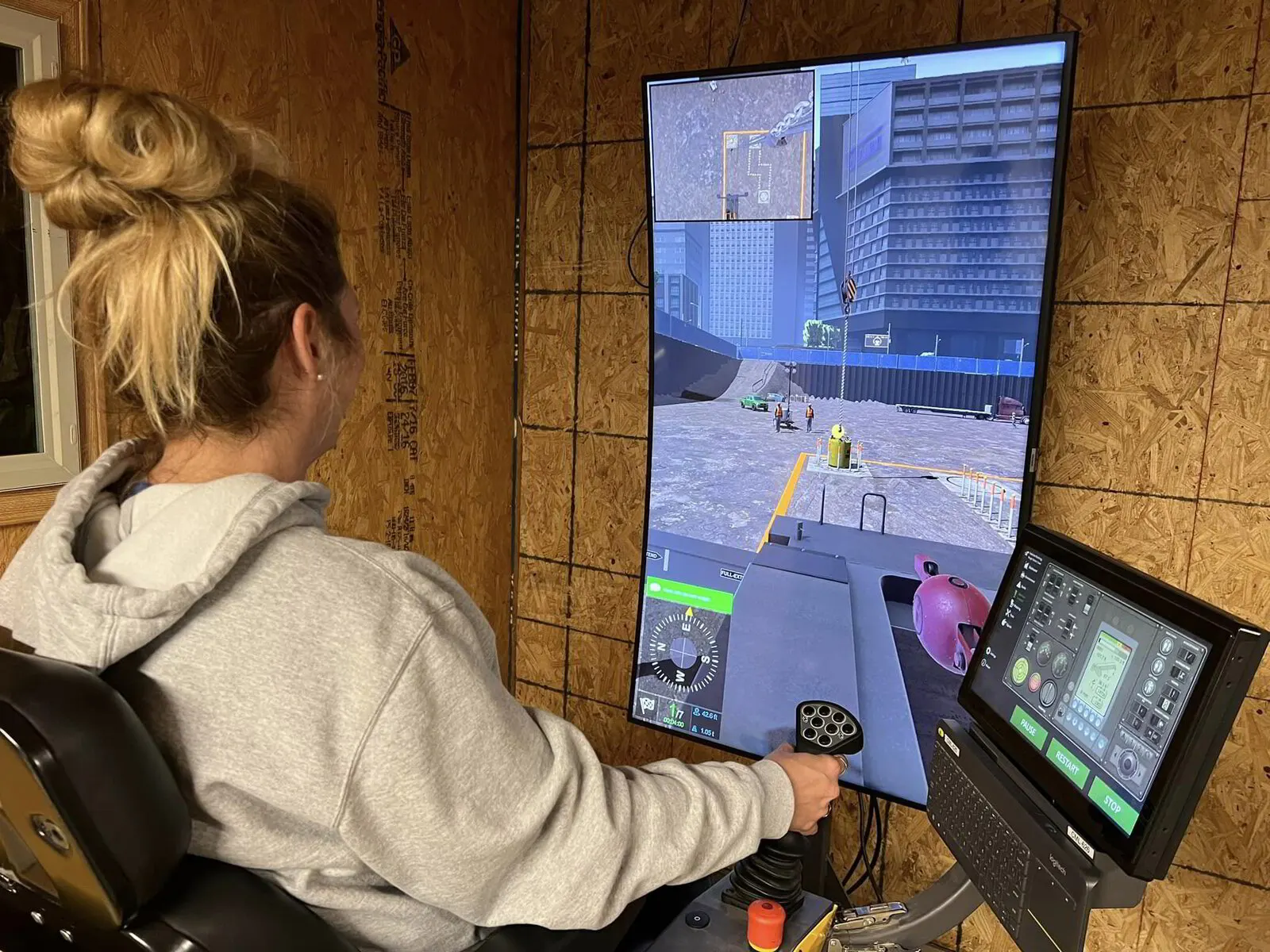
The simulator is the one place where a rough swing or a load in the poles costs nothing. Use it to try things you would not risk on a real crane: feather the controls slower than feels natural, practice stopping a swinging load, run the same pattern until it is smooth. Students who treat simulator time as a game tend to get less out of it than those who treat it as rehearsal.
It also helps with nerves. Your first hours in a real cab go better when your hands already know where the controls are.
3. Ask why, not just how
Memorizing that you must stay a certain distance from a power line will get you through a test question. Understanding why, and what changes with voltage, will keep you safe on a job where the line is not where the drawing said. The same is true for outrigger setup, deductions and wind. When an instructor gives you a rule, ask what goes wrong if you ignore it. The answer is usually the part you will remember.
4. Look after yourself in the yard
Training days are long, and a lot of the year in North Texas is hot. Fatigue and dehydration show up as sloppy control and slow reactions, which is exactly what the practical exam penalizes. Practical habits help:
- Bring a refillable water bottle and drink before you feel thirsty.
- Wear light, breathable work clothes plus your boots, gloves and hard hat.
- Get a full night of sleep, especially before yard days and the exam.
- Eat a real breakfast; a long morning on coffee alone catches up with you.
5. Act like you are already on a job site
Treat class the way a contractor treats a crew: show up on time, do the pre-use inspection without being reminded, keep your phone away during lifts, and communicate clearly with whoever is signaling. These are the habits employers look for, and they are easier to build in training than to fix later. One more habit worth starting now: keep a small notebook of what you ran each day, which crane, which configuration and what you worked on. It takes five minutes, it shows you where you are improving, and it becomes the start of the hours record you will want later when applying for jobs or adding a certification.
Making the most of your course at Miller Crane Works
Our courses combine classroom instruction, simulator practice and yard time on telescopic, lattice and tower cranes, with the NCCCO practical exam course in the same Seagoville yard. Students starting from scratch get the most practice in Mobile Crane Operations Fixed/Swing Cab 120 Hours. If you are traveling in, the Premium Mobile Crane Operations Fixed/Swing Cab Course offers optional room and board so your evenings go to study and rest. Read what to expect before your first day.
Student questions
Do I need to study before the course starts?
It is not required, but learning the standard hand signals and brushing up on basic math makes the first week easier.
How much does simulator time count toward the practical exam?
The simulator builds control habits and confidence, but the practical exam is done in a real crane. Yard time is what prepares you for the test itself.
What should I bring to yard days?
Work boots, gloves, clothes suited to the weather and plenty of water. Ask us about any other gear when you enroll.