Texas has no state crane license, so the federal OSHA crane standard sets the training rules for most private construction sites in the state. Here is what it asks of operators, riggers and signal persons.
Federal rules apply on Texas job sites
Some states run their own OSHA-approved plans for private employers and add crane licensing on top. Texas does not. Private construction employers in Texas fall under federal OSHA, and cranes used in construction are covered by 29 CFR 1926 Subpart CC, "Cranes and Derricks in Construction."
Because there is no Texas crane license, employers and contractors look to the federal requirements and to nationally accredited certification, most often NCCCO, to show an operator meets them.
What operators need
Section 1926.1427 requires operators of covered cranes to be certified by an accredited testing organization for the type of crane they run, or qualified through an audited employer program. Since the 2018 update to the rule, the employer must also evaluate the operator on the specific crane and tasks before letting them work, and document that evaluation.
In other words, certification is the floor, not the finish. A certified operator still needs the employer's evaluation for the equipment on that job.
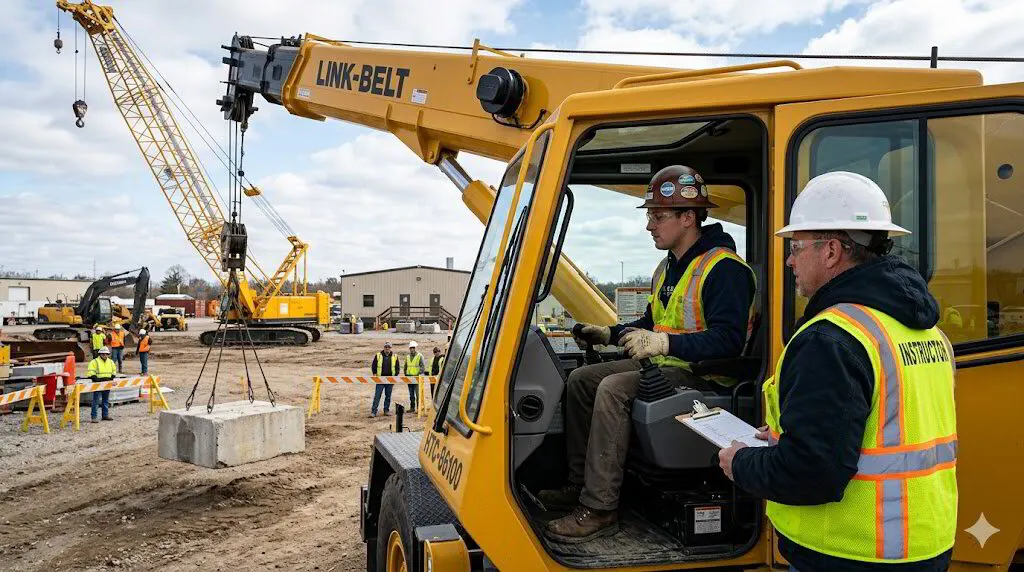
Operators in training may run a crane only under the conditions in 1926.1427, including continuous monitoring by a qualified trainer and limits on the kinds of lifts they make.
Riggers, signal persons and the rest of the crew
- Riggers: under 1926.1425, when workers are hooking or unhooking in the fall zone, the rigging must be done by a qualified rigger. Qualification can be shown by experience and knowledge; a third-party certificate is not strictly required, but it is clear evidence.
- Signal persons: 1926.1428 requires them to know the signals, the crane's basic operations and limitations, and to pass a verbal or written test plus a practical test. That can be done by a third-party qualified evaluator or the employer's own qualified evaluator.
- Everyone near the crane: 1926.1430 requires training on the hazards that apply, such as power line contact, the swing radius of the counterweight and staying out from under loads.
How to tell if a training program is worth it
Not all safety training is equal. Before paying for any course, ask:
- Does it lead to a recognized credential, or only a certificate of attendance?
- How much time will you spend operating a real crane, not just watching?
- Is the course approved by the Texas Workforce Commission? That matters if you want to use workforce funding.
- Are written and practical exams available, and where?
- Who teaches it, and what crane types do they have in the yard?
Also be wary of anything sold as an "OSHA crane card" from a short online module. OSHA does not issue crane operator cards. Online material can support classroom learning, but the certification OSHA recognizes includes a hands-on practical exam on a crane of the type you will operate.
Where Miller Crane Works fits
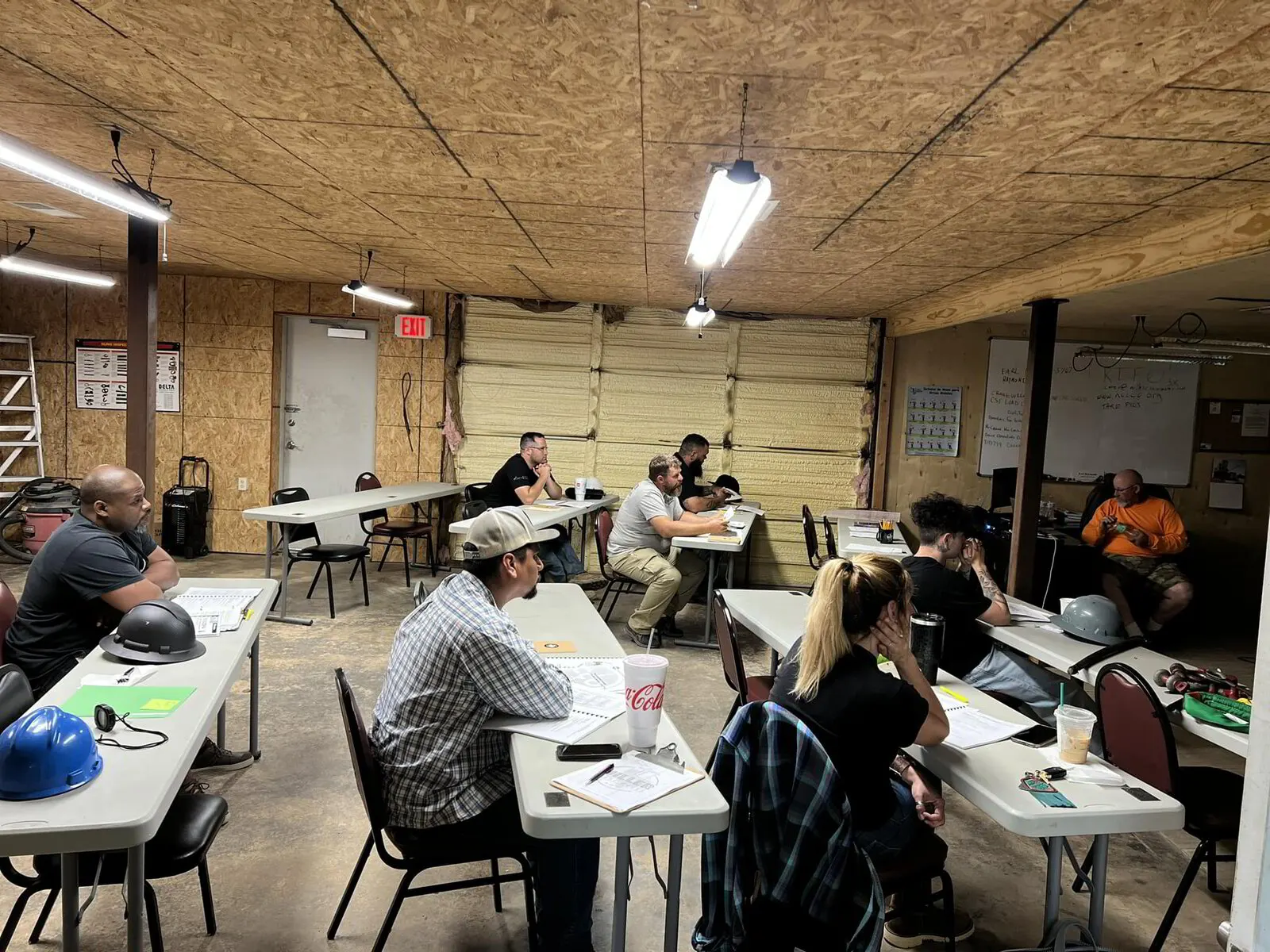
We run TWC-approved courses in Seagoville, southeast of Dallas, and we're a CCO EDU Accredited Training Provider. Classroom lessons cover Subpart CC, ASME B30.5 and load charts; the yard has telescopic, lattice boom and tower cranes plus an NCCCO practical exam site.
Operators new to cranes often start with the Mobile Crane Operations Fixed/Swing Cab 40 Hours course if they already have some time around cranes, or the 120-hour version if they don't. Ground crew can take the Miller Crane Works Level I Rigger/Signal Person 4 Hours course, a Miller Crane Works qualification, or the 28-hour course that prepares for NCCCO Rigger Level I and Signalperson. Employers sending several people can set up company classes at our facility.
Questions about crane safety rules in Texas
Does Texas issue its own crane operator license?
No. Texas has no state crane operator license. Federal OSHA rules apply to private construction employers, and most contractors ask for NCCCO certification.
Is NCCCO certification enough to run any crane on a job?
Not by itself. OSHA 1926.1427 also requires the employer to evaluate the operator on the equipment and tasks before assigning the work.
Do riggers need a certification card?
OSHA requires riggers in the fall zone to be qualified, not necessarily certified. A third-party certification such as NCCCO Rigger Level I is a common way to show it.