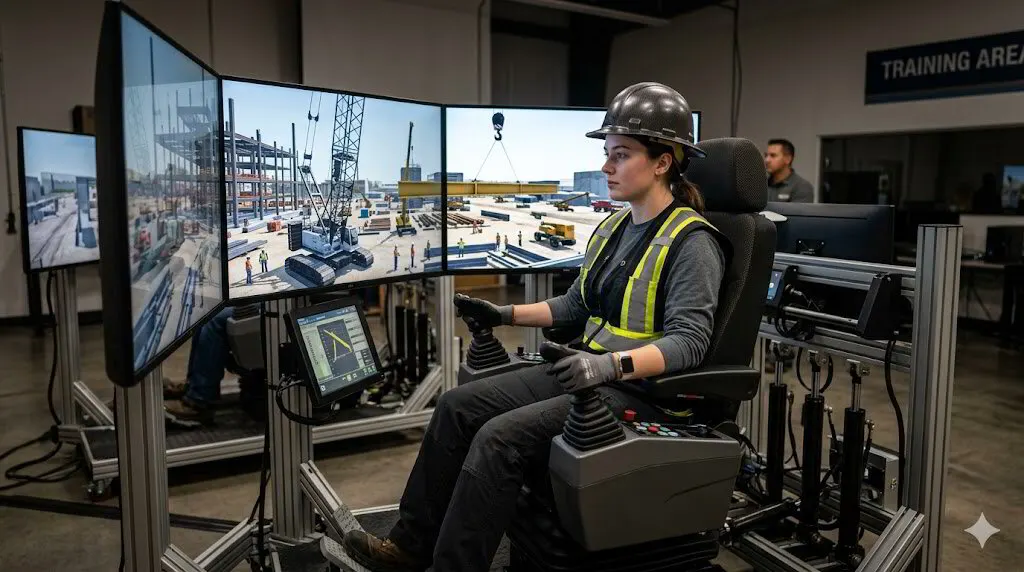
The practical exam is where you show NCCCO you can control a crane, not just describe how. It is short, timed and watched closely. Knowing its shape in advance takes away much of the stress.
What the practical exam is for
The written exams prove you know the theory. The practical proves you can apply it at the controls: smooth, accurate moves with a test weight, inside a marked course, within time limits. NCCCO sets the tasks and scoring, and an NCCCO practical examiner runs and grades the test. Each crane type has its own practical exam, so a telescopic candidate tests on a telescopic crane and a tower crane candidate on a tower crane.
The layout of the course
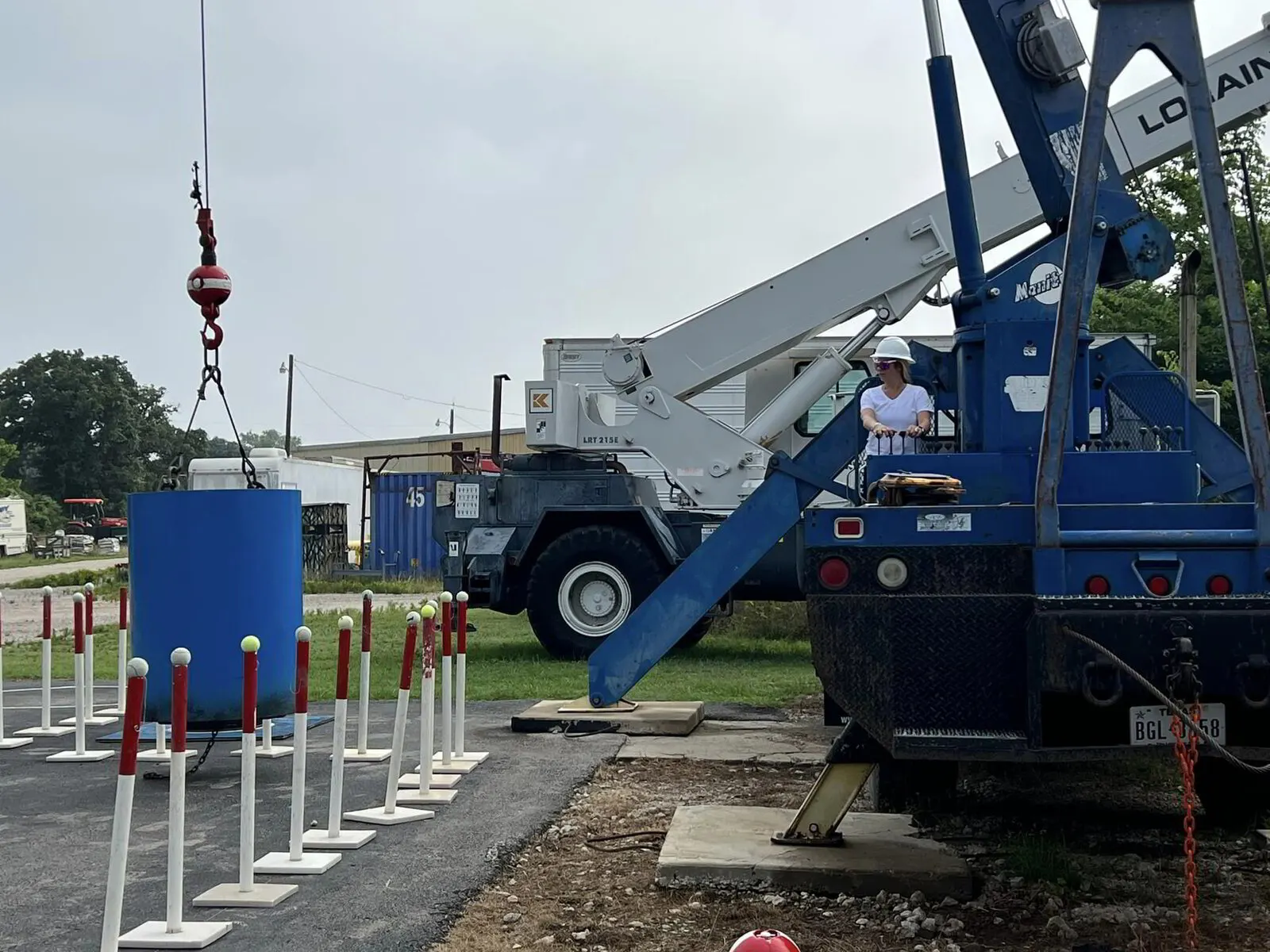
For mobile cranes, the course is laid out on the ground around the crane. You'll typically see:
- Stanchions (upright poles) marking corridors and a zigzag path the test weight must follow without touching them.
- Target circles where the weight must be set down within the line.
- A barrel the weight must be lowered into and lifted out of without hitting the sides.
Specific task lists vary by crane type and change from time to time, so review the current NCCCO practical exam outline for your crane before test day.
How candidates lose points
Each task has a time limit, and the examiner records deductions for errors. Common ones include:
- Touching or knocking over a stanchion.
- Letting the load touch the ground outside the target.
- Rough starts and stops that swing the load.
- Hitting the barrel's rim.
- Going over the time limit for a task.
- Unsafe acts, such as moving without the signal or ignoring a stop, which can end the exam.
Notice that most deductions come from control problems, not lack of knowledge. Smooth, slow and accurate scores better than fast and jerky.
Preparing in the weeks before
- Practice on the same crane type. Moving from a fixed cab to a swing cab on exam day adds risk.
- Run the full course, timed. Practice each task until you finish with time to spare, then focus on accuracy.
- Learn to feather controls. Small inputs, eased in and eased out, keep the weight from swinging.
- Practice signals both ways. You'll follow hand signals during the exam, so know them cold.
- Simulate pressure. Have an instructor watch and call time. Nerves fade with repetition.
Exam day
Arrive early, eat something, and bring the identification NCCCO requires. Listen closely to the examiner's instructions and ask questions before you start a task, not halfway through. If you clip a stanchion, let it go and focus on the next move. One deduction rarely decides the result; a rattled operator making three more often does.
Remember NCCCO's timing rules: the practical must generally be passed within 12 months of passing the written exams. Plan both together.
Texas weather plays a part as well. Summer afternoons in the yard are hot, and wind can pick up quickly, which affects how the test weight behaves. Dress for the conditions, drink water before you climb in, and if the examiner pauses for weather, use the time to reset rather than worry.
If you don't pass, ask which tasks cost you points. A retest focused on those moves is often a matter of more practice on one or two skills, not starting over.
Testing in our Seagoville yard
Our yard in Seagoville is an NCCCO practical exam site, so students practice on the same course and cranes used for the exam. Details for each exam are on the mobile crane, lattice and tower crane practical test pages. The Mobile Crane Operations Fixed/Swing Cab 40 Hours course suits operators who mainly need practical exam preparation; the Tower Crane Operations 20 Hours course does the same for experienced tower crane operators.
Questions about the NCCCO practical exam
Who grades the NCCCO practical exam?
An NCCCO practical examiner runs and scores the exam. The training school hosts the site but does not grade it.
Is the practical exam the same for every crane type?
No. Each crane type has its own practical exam, with tasks suited to that crane.
What is the most common way to lose points?
Control errors, such as touching stanchions or swinging the load, and running over the time limit. Smooth, steady moves score best.